


Serbia faces a new electoral test amid allegations of voting irregularities and deep political divisions. But a Belgrade professor warns that the consequences could extend far beyond Serbia’s borders, threatening relations with Bosnia and Herzegovina and complicating the Western Balkans’ European future.
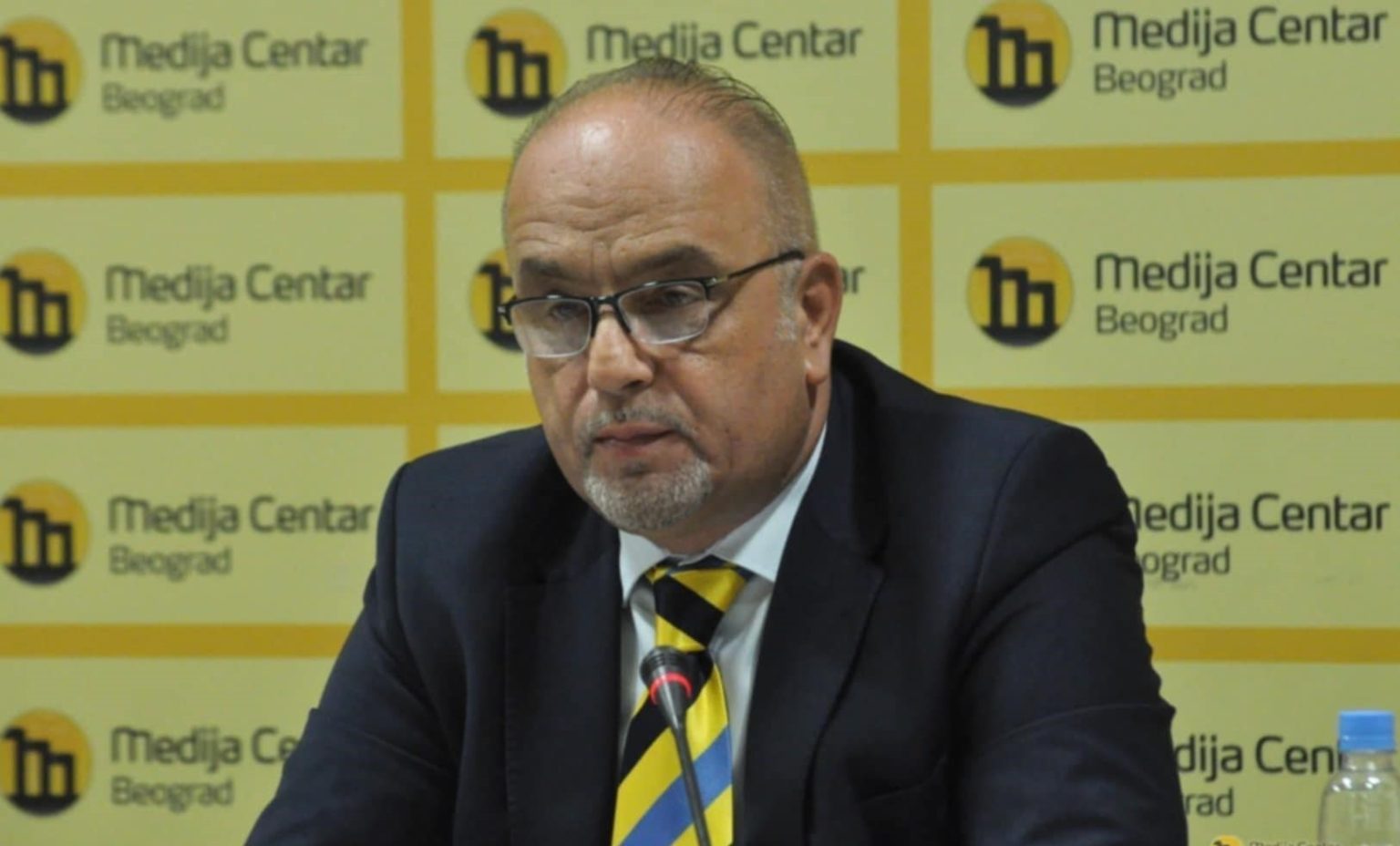
BELGRADE/SARAJEVO, Oct. 23 (BalkanView) – Relations between Serbia and Bosnia and Herzegovina could deteriorate further unless Belgrade undergoes significant political change, Serbian university professor Ivan Videnović has warned, citing persistent nationalism, disputes over the legacy of the Balkan wars and growing concerns about Serbia’s political direction.
In an interview with Bosnian news outlet Bosnainfo published on October 21, Videnović said Serbia was approaching its October 25 parliamentary elections amid political instability and allegations of electoral irregularities.
He also questioned whether a change of government would be sufficient to overcome nationalist narratives that have shaped relations between Serbia and its neighbours for decades.
“If there are no serious changes in Serbia, relations with Bosnia and Herzegovina will become increasingly worse,” Videnović told Bosnainfo.
He said a decisive democratic political shift could gradually improve relations, although reconciliation would likely be slow.
Serbia’s elections raise concerns over instability
Videnović warned that Serbia could enter a prolonged period of political uncertainty following the parliamentary vote.
“It is certain that after the elections in Serbia we will enter a period of prolonged instability. We will see how explosive it becomes,” he said.
The professor alleged that significant irregularities were already evident in the electoral process.
He cited figures suggesting that 236,000 new identity cards had been issued to adults between May and October 2026, while more than half a million people on the electoral register lacked recorded addresses.
He also questioned the relationship between Serbia’s population and the number of registered voters, citing figures of 6.65 million residents and 6.45 million eligible voters.
The figures and allegations could not be independently verified from the interview. The issuance of identity documents does not, by itself, establish electoral fraud.
Videnović also criticised the country’s media environment, accusing major outlets, including public broadcasters, of favouring the political establishment.
He warned that even an electoral defeat for the governing political forces might not result in a straightforward transfer of power.
According to Videnović, political pressure, intimidation and attempts to influence lawmakers could complicate any transition.
Vučić’s departure from presidency does not end political debate
The interview also addressed the departure of Aleksandar Vučić from Serbia’s presidency and his continued influence over the country’s political landscape.
Videnović welcomed Vučić’s departure from formal state office but accused him of retaining political influence and benefiting from favourable media coverage.
He said the parliamentary elections would provide an opportunity to measure public support for Serbia’s political leadership.
The professor’s comments reflect the broader political divisions surrounding the country’s leadership, which intensified after the deadly railway station canopy collapse in Novi Sad triggered protests and demands for accountability.
The disaster became a focal point for wider grievances over corruption, public institutions and government responsibility.
Mladić funeral exposes unresolved wartime divisions
Beyond Serbia’s domestic politics, Videnović expressed concern about the continuing influence of nationalist narratives on relations with Bosnia and Herzegovina.
The interview followed controversy over the funeral of Ratko Mladić, the former Bosnian Serb military commander convicted of genocide and other war crimes by an international tribunal.
His burial in Belgrade, accompanied by official honours according to Bosnainfo’s reporting, provoked criticism in Bosnia and Herzegovina and renewed debate over Serbia’s treatment of convicted wartime figures.
Videnović said such events illustrated the persistence of political attitudes that have obstructed reconciliation since the wars of the 1990s.
He also expressed concern about nationalist symbols and images associated with convicted war criminals appearing at some anti-government gatherings in Serbia.
Even if democratic forces achieved a major political breakthrough, he argued, distancing Serbian politics from longstanding nationalist positions would take time.
“It will not happen quickly or spectacularly,” he said, adding that a change in leadership could nevertheless bring a significant moderation in political rhetoric.
Bosnia’s elections reveal another political obstacle
Videnović also discussed the results of Bosnia and Herzegovina’s general elections, arguing that they demonstrated the continued strength of ethnically based political narratives.
He pointed to the enduring influence of nationalist parties and questioned whether domestic political forces were capable of overcoming divisions that have persisted for more than three decades.
“The election results in Bosnia and Herzegovina, which repeat themselves from cycle to cycle, show that there is no internal force capable of confronting nationalist narratives that are more than 30 years old,” he said.
He was particularly critical of the political environment in Republika Srpska, Bosnia’s Serb-majority entity, arguing that opposition alternatives had failed to establish a sufficiently distinct civic political agenda.
His comments come amid continuing disagreements over Bosnia’s constitutional structure, the distribution of power between state and entity institutions, and the country’s path towards European integration.
Could EU integration offer a way forward?
Videnović argued that the European Union could play an important role in improving relations between Serbia and Bosnia and Herzegovina.
He said progress would depend partly on Serbia abandoning policies he described as destabilising towards its neighbour, alongside stronger European engagement in Bosnia’s institutional development.
“The key to the solution is obviously outside Bosnia and Herzegovina,” he said.
He called for a more substantial EU effort to help transform Bosnia into a functional state with a credible membership perspective.
Videnović cited Montenegro’s progress towards EU accession as an example of how the prospect of membership could encourage political compromise and institutional reforms.
His remarks highlight a central challenge for the Western Balkans: domestic political change alone may not resolve disputes rooted in the region’s wartime history, competing national identities and unresolved constitutional questions.
For Serbia and Bosnia and Herzegovina, he argued, a lasting improvement in relations would require changes in political rhetoric, regional policy and the broader framework of European integration.