


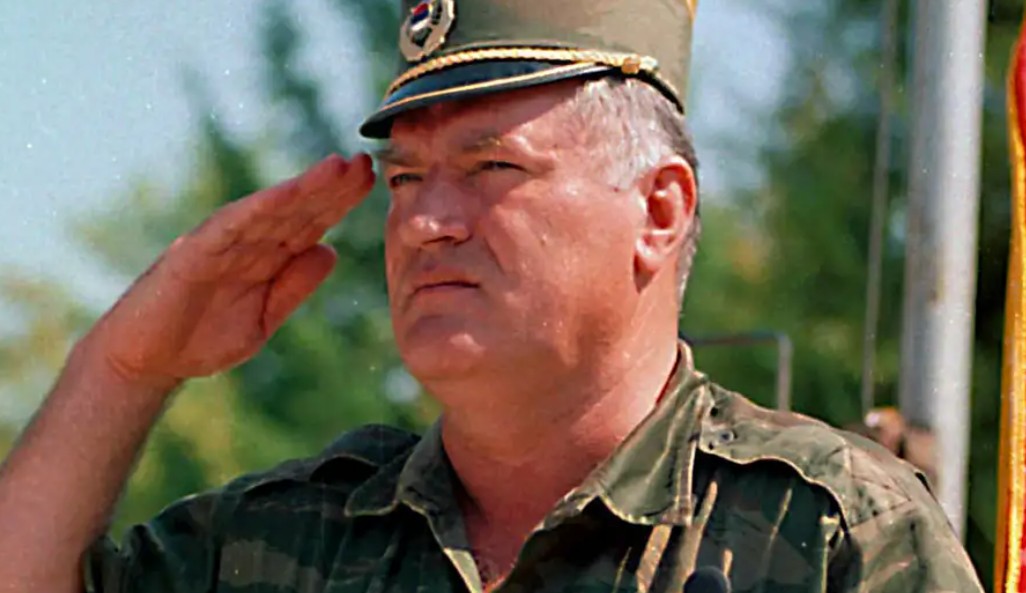
THE HAGUE, Aug 27 — Ratko Mladić, the former Bosnian Serb military commander convicted of genocide, crimes against humanity and war crimes during the 1992-95 Bosnian war, has died while serving a life sentence in The Hague. He was 84, according to regional media reports.
His death immediately revived some of the Balkans’ most painful divisions, with reactions ranging from remembrance of the victims of Srebrenica and Sarajevo to praise for Mladić among some Serbian nationalist circles.
Mladić commanded the Army of Republika Srpska during the Bosnian war and became one of the most notorious figures of the violent breakup of Yugoslavia.
The International Criminal Tribunal for the former Yugoslavia convicted him in 2017. Appeals judges upheld his life sentence in 2021.
He was convicted of genocide in Srebrenica, where more than 8,000 Bosniak men and boys were killed after Bosnian Serb forces captured the United Nations-designated safe area in July 1995.
He was also convicted over persecution, extermination, murder, deportation and forcible transfer, as well as the campaign of shelling and sniper fire against Sarajevo and the taking of U.N. personnel hostage.
The words that followed Mladić to The Hague
Recordings and intercepted conversations used during proceedings against Mladić documented the language accompanying his military campaigns.
At a Bosnian Serb assembly session in May 1992, discussing plans to separate populations along ethnic lines, Mladić himself warned that completely removing non-Serbs from territory claimed by Serbs would amount to genocide.
“That, people, is genocide,” he said.
Weeks later, according to an intercepted conversation cited at his trial, Mladić ordered shelling of Sarajevo neighbourhoods where he said relatively few Serbs lived.
During the siege, another recording captured him speaking casually about killing people while passing Sarajevo.
After Bosnian Serb forces entered Srebrenica on July 11, 1995, Mladić appeared before television cameras and described the captured town as a gift to the Serbian people.
He then spoke of the time having come to take revenge on “the Turks”, a derogatory reference he used for Bosniaks.
In the days that followed, Bosnian Serb forces separated Bosniak men and boys from women and children. More than 8,000 men and boys were killed, with victims buried in mass graves, some of which were later disturbed and the remains moved in attempts to conceal the killings.
Fugitive for nearly 16 years
Mladić avoided arrest for almost 16 years after the war.
Serbian authorities captured him on May 26, 2011, in a village north of Belgrade, ending one of Europe’s longest-running searches for a war-crimes suspect.
He was subsequently transferred to The Hague.
His health deteriorated during his years in detention, prompting repeated attempts by his defence and supporters to secure his release.
Regional reports said Serbian President Aleksandar Vučić had appealed only days before Mladić’s death for him to be allowed to spend his final days in Serbia, but the request was rejected.
Mladić had reportedly wanted to be buried alongside his daughter Ana in Belgrade.
Death does not end the dispute over his legacy
Mladić’s death has again exposed radically different interpretations of the wars that accompanied Yugoslavia’s collapse.
For survivors and relatives of victims, particularly in Bosnia and Herzegovina, his name remains inseparable from Srebrenica, the siege of Sarajevo, mass graves and ethnic cleansing.
For some Serbs, however, Mladić has continued to be portrayed as a military commander who defended the Serbian population during the war.
That divide has persisted despite the final judgments of international courts.
His death therefore closes the life of one of the most consequential military figures of the Yugoslav wars — but not the political and historical battle over how those wars are remembered.