


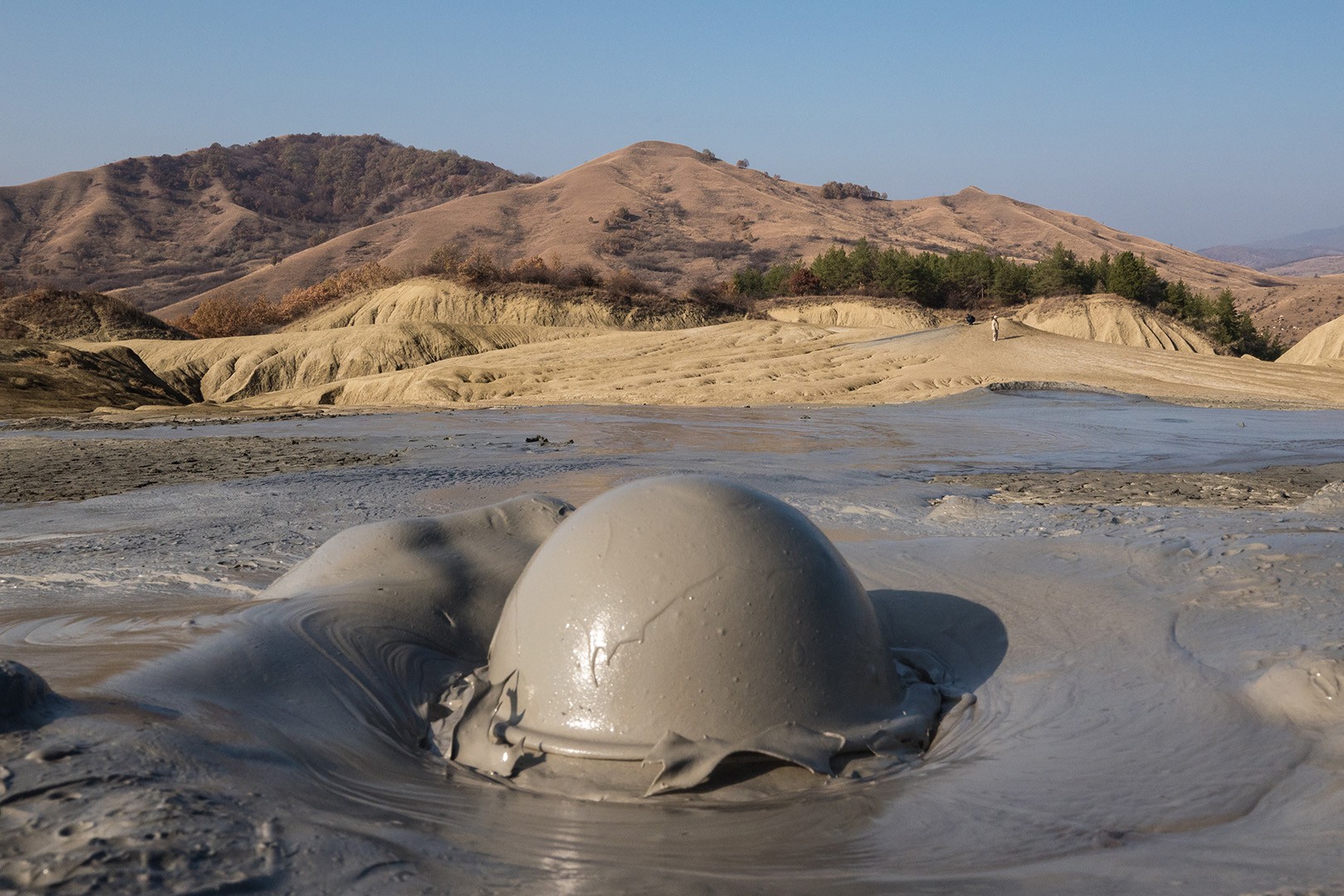
A rare mud volcano has emerged in central Albania on the Dumre plateau near the town of Belsh, releasing natural gas and large quantities of hot mud and prompting authorities to cordon off the area as geologists investigate the phenomenon.
According to initial reports, the crater opened suddenly without preceding earthquakes or other warning signs. Witnesses said the eruption expelled natural gas and thousands of tonnes of sulfur-rich mud, creating an unusual geological spectacle.
Geologists and other specialists arrived at the site shortly after the event to determine its cause and assess any potential risks to nearby communities.
Preliminary assessments suggest the eruption was caused by a build-up of natural gases trapped beneath underground geological formations.
Authorities have secured the area and urged residents to stay away until safety inspections and scientific analyses are completed.
Experts plan to analyze the composition of the gases and mud and evaluate any environmental or public safety risks.
The Dumre region is known for its extensive gypsum and salt deposits within a karst geological system, conditions that can allow underground gas pressure to accumulate and occasionally force mud and gases to the surface.
Unlike conventional volcanoes, mud volcanoes do not emit lava or magma. Instead, they eject a mixture of mud, water and natural gases. Although uncommon, they are a recognized geological phenomenon in several parts of the world.
Scientists said monitoring of the site will continue to determine whether further eruptions are possible.