


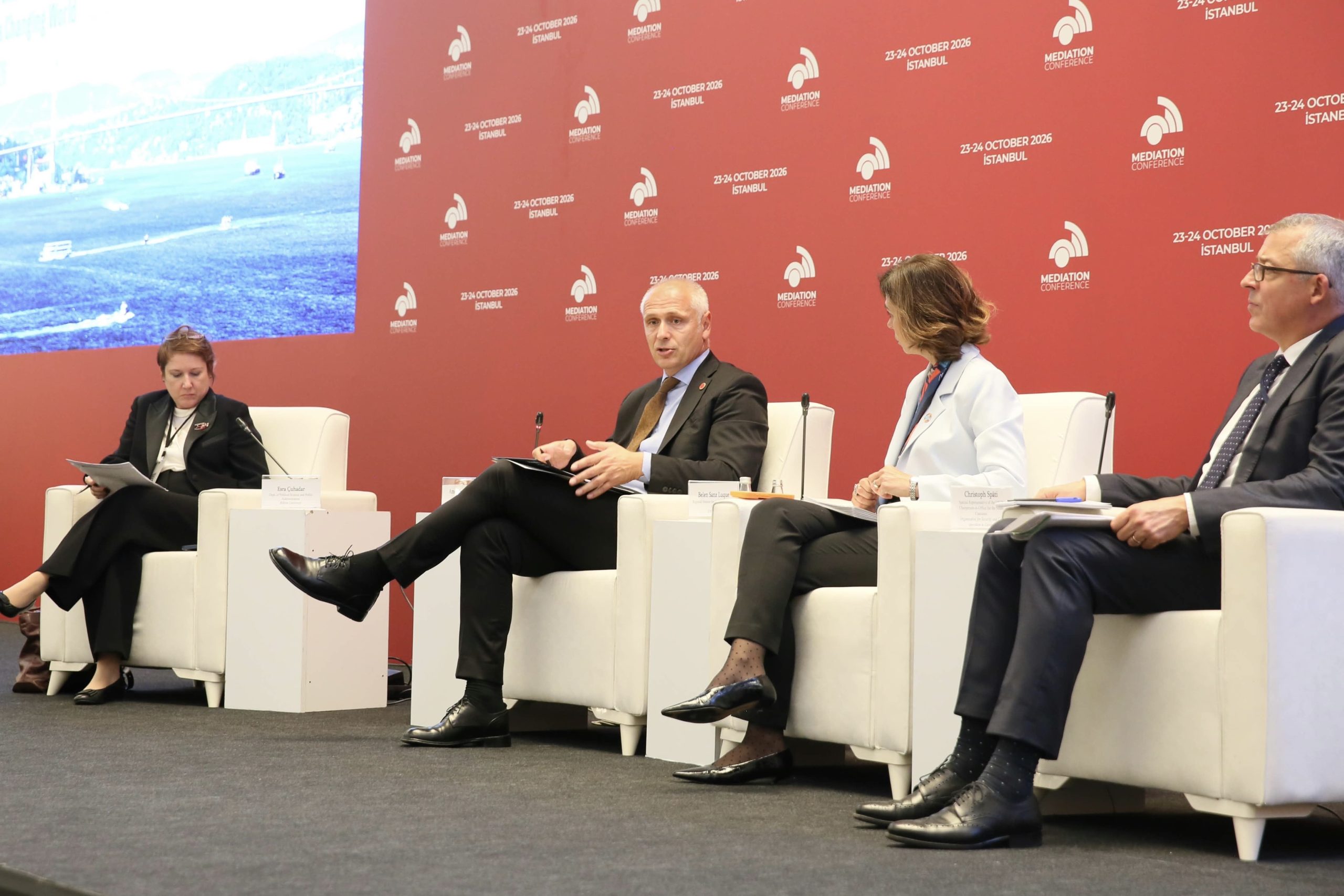
Signing a peace agreement may end a war, but it cannot guarantee lasting stability. At an international mediation conference in Istanbul, Regional Cooperation Council chief Amer Kapetanović warned that reconciliation requires years of dialogue, trust-building and economic cooperation, while discussing stronger ties between Türkiye and the Western Balkans.
ISTANBUL, Oct. 24 (BalkanView) – Lasting peace requires more than diplomatic agreements, the head of the Regional Cooperation Council (RCC) said at an international conference in Istanbul, urging governments and regional organisations to strengthen cooperation, maintain dialogue and address the underlying causes of conflict.
RCC Secretary General Amer Kapetanović delivered the message at the ninth Istanbul Mediation Conference, organised by Türkiye’s Ministry of Foreign Affairs on October 23.
During his visit, Kapetanović also met Türkiye’s Deputy Foreign Minister and Director for EU Affairs, Mehmed Kemal Bozay, to discuss regional integration, economic connectivity and cooperation between Türkiye and the Western Balkans.
The discussions highlighted the role of regional organisations in preventing conflicts and building sustainable peace, drawing on South East Europe’s experience of war, reconciliation and post-conflict cooperation.
Peace agreements stop wars, but reconciliation takes years
Addressing a panel titled “Reflections from Regional Organisations: Synchronising Efforts,” Kapetanović said that peacebuilding must continue long after political leaders sign agreements.
“Peace is not built only when agreements are signed. A peace agreement stops the war; it does not finish the work,” he said.
“Peace is built in the years that follow, when institutions keep talking despite disagreement, when people look at their neighbours with a little less suspicion, when leaders keep a door open even when there is little political reward for doing so.”
Kapetanović said South East Europe’s experience demonstrated that sustainable peace depends on sustained political engagement, institutional dialogue and practical cooperation.
He described the RCC as an organisation rooted in the region’s post-conflict reconciliation efforts, with a mandate to strengthen stability through cooperation.
Regional integration as a tool for reconciliation
Kapetanović pointed to agreements facilitating regional mobility, lower roaming costs and the recognition of professional and academic qualifications as examples of cooperation that can strengthen relations between countries.
He also highlighted the Common Regional Market, alongside initiatives supporting young people and women entrepreneurs.
Such programmes, he argued, create shared economic and social interests that can help reduce mistrust and strengthen ties between communities.
“This is not reconciliation in the abstract. It is reconciliation through experience,” Kapetanović said.
He added that economic interdependence can support mediation by increasing the costs of abandoning dialogue.
“It does not replace talks, but it raises the price of walking away from the table,” he said.
The RCC has been involved in coordinating regional initiatives aimed at improving economic integration and cooperation among the six Western Balkan economies.
Türkiye and Western Balkans discuss stronger economic ties
In his meeting with Bozay, Kapetanović discussed opportunities to deepen cooperation between Türkiye and the Western Balkans Six, particularly through the Common Regional Market and the Green Agenda for the Western Balkans.
The talks also addressed closer coordination under the South East Europe 2030 Strategy, a regional framework for sustainable development.
Kapetanović thanked Türkiye for its support for the strategy, including an additional voluntary financial contribution towards its implementation.
The two officials discussed ways to translate regional priorities into concrete benefits for businesses and citizens.
Areas of potential cooperation included trade, investment, sustainable growth, digital transformation and infrastructure connectivity.
Bozay expressed support for the RCC’s efforts to advance regional cooperation in South East Europe.
EU Global Gateway initiatives on the agenda
The meeting also explored opportunities to improve transport and economic connections between South East Europe and neighbouring regions.
Kapetanović highlighted potential cooperation under the European Union’s Global Gateway framework, which seeks to support infrastructure, connectivity and sustainable investment.
The discussions covered transport networks, investment opportunities and development financing.
Stronger coordination in these areas could help improve the Western Balkans’ economic competitiveness and resilience, according to the RCC.
The officials also exchanged views on current political developments in South East Europe.
Türkiye’s role in regional mediation
Kapetanović welcomed Türkiye’s longstanding involvement in international mediation, including its Balkan Peace Platform initiative.
He emphasised the importance of linking high-level political dialogue with regional mechanisms capable of producing practical results.
The Istanbul conference, held under the theme “Partnerships and New Perspectives for Peace: Mediation in a Changing World,” brought together senior government officials, representatives of international and regional organisations, and mediation specialists.
Participants discussed conflict prevention, peaceful dispute resolution and cooperation between institutions involved in mediation.
For the Western Balkans, where unresolved political disputes continue to affect regional relations, Kapetanović’s message placed emphasis on maintaining dialogue even when immediate political progress appears difficult.
His central argument was that lasting stability depends not only on diplomatic agreements but also on the everyday cooperation that builds trust between governments, institutions and citizens.