


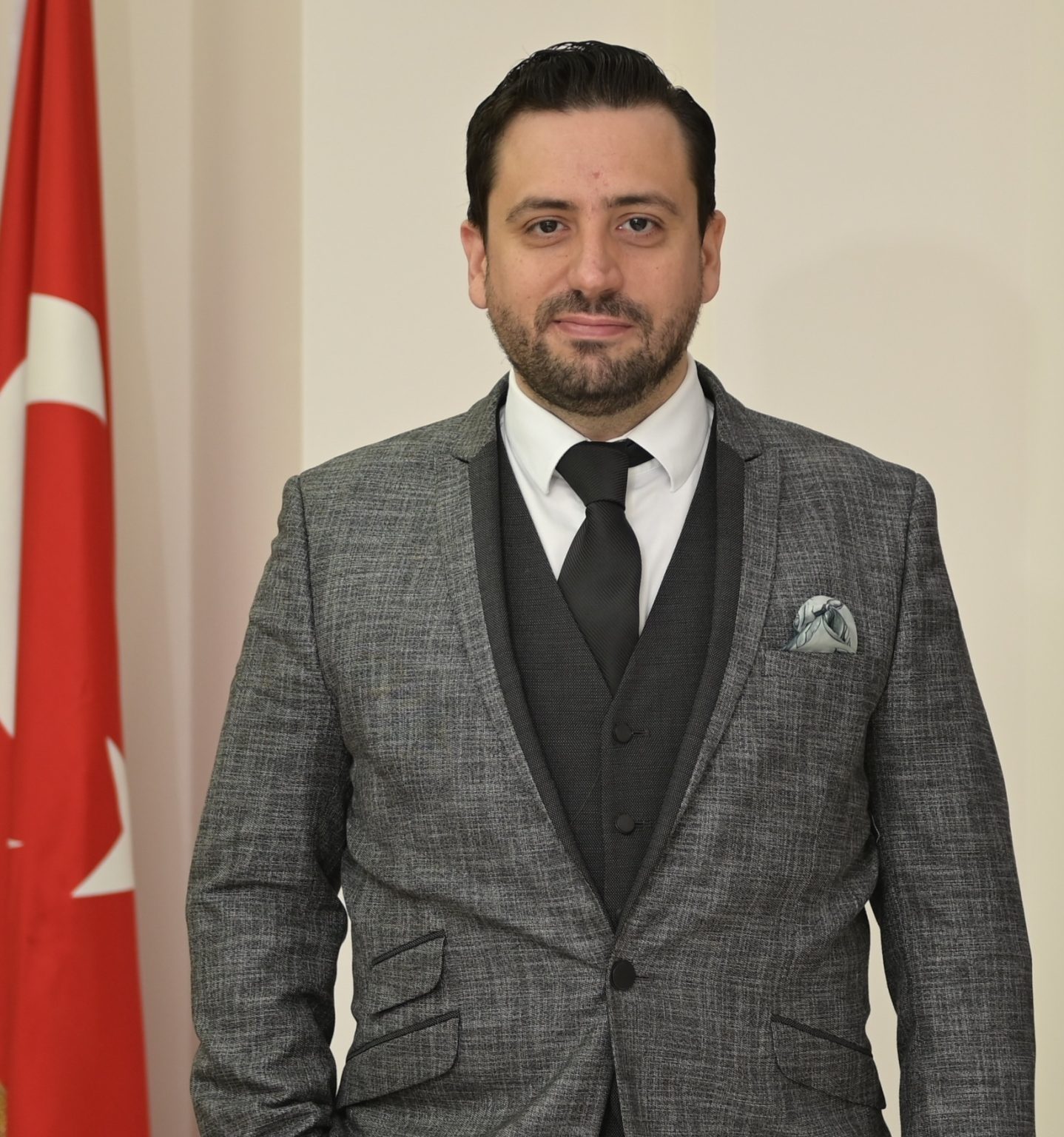
A Turkish businessman who served as North Macedonia’s honorary consul in Izmir is at the centre of investigations in two Balkan countries. In Skopje, authorities suspect thousands of patients paid for eye surgeries already covered by public insurance. In Tirana, a clinic linked to his healthcare group was shut down amid allegations of tax evasion and unsafe medical practices.
SKOPJE/TIRANA, Oct. 31 (BalkanView) – Turkish businessman Bilal Kara, the owner of the Sante Plus healthcare group and a former honorary consul of North Macedonia in Izmir, has come under scrutiny in separate investigations into alleged financial misconduct involving private healthcare institutions in North Macedonia and Albania.
In North Macedonia, investigators suspect that a private eye hospital received payments from the public Health Insurance Fund (HIF) while also charging patients privately for the same medical procedures.
Police estimate that between 3,000 and 4,000 patients may have been affected and that the HIF suffered losses of approximately 1.7 million euros.
The hospital is suspected of obtaining around 4.25 million euros in unlawful financial benefits between 2022 and 2025.
In Albania, authorities shut down a private aesthetic clinic linked to the Sante Plus group in September 2025 after an investigation into alleged tax evasion, unregistered medical products and irregularities in patient treatment.
The two cases involve different institutions and suspected offences, but reporting by North Macedonian investigative outlet Inbox7 and information released by Albanian prosecutors establish business links through Kara and the Sante Plus group.
There is no publicly confirmed evidence that the alleged misconduct in the two countries formed part of a coordinated criminal operation.
Eleven suspects in North Macedonia’s healthcare investigation
North Macedonia’s Interior Ministry launched a police operation on October 29 following an investigation into payments made by the HIF to a private eye hospital.
Criminal complaints were filed against 11 individuals and one legal entity, while eight people were initially detained.
Among those named in the investigation were former HIF directors Den Donchev and Orhan Ramadani, alongside other former and current officials and representatives of the private hospital.
Several North Macedonian media outlets subsequently reported that Kara, the owner of Sante Plus Group and chairman of the European Eye Hospital’s management board, was among those detained.
According to Telma and Sitel television, the Criminal Court imposed precautionary measures on nine suspects, including Kara.
He was reportedly ordered to surrender his passport, prohibited from leaving North Macedonia and required to report regularly to the court.
Some of those initially detained were later released from police custody, with proceedings against them continuing through the regular judicial process.
The release of suspects from custody does not mean that criminal proceedings have been terminated.
How the alleged double-billing scheme worked
The North Macedonian investigation centres on a contract signed in 2020 between the HIF and the private healthcare institution.
Police suspect that the agreement was concluded in violation of the Fund’s internal procedures and applicable regulations.
Investigators allege that inaccurate information was subsequently entered into the Fund’s electronic system and that invoices containing false details were submitted for reimbursement.
Under the suspected arrangement, the HIF paid for eye operations while patients were also required to pay private treatment prices, in addition to the legally prescribed co-payment.
Investigators believe some patients were not informed that their medical procedures were already covered by public insurance.
According to the Interior Ministry, the estimated damage to the HIF amounts to 104,818,754 denars, or approximately 1.7 million euros.
An additional 525,000 denars relates to contractual penalties that were allegedly not collected.
The private healthcare institution is suspected of obtaining 261,271,961 denars, approximately 4.25 million euros, in unlawful financial benefits between 2022 and 2025.
These amounts represent different categories in the criminal complaint and should not automatically be added together as a single estimate of financial damage.
Police also seized approximately 50,000 euros and mobile phones during searches in Skopje, Tetovo and Kumanovo.
Allegations of failures inside the Health Insurance Fund
The investigation extends beyond the private hospital to the officials responsible for approving and supervising its payments.
According to police, three suspects face allegations of abuse of official position and authority.
Others are suspected of offences including negligent performance of official duties, falsification or destruction of business records, and fraud in office.
The private healthcare institution faces a criminal complaint concerning suspected money laundering and proceeds of crime.
Investigators also suspect that HIF officials failed to submit reports documenting irregularities, delayed inspections and neglected to collect contractual penalties.
Police believe these omissions may have allowed questionable payments to continue over several years.
The investigation is expected to establish who authorised the payments, how the invoices were checked and whether public officials knowingly enabled the alleged scheme.
A clinic shut down in Tirana a year earlier
The North Macedonian investigation follows a separate case involving a Sante Plus-linked clinic in Albania.
On September 7, 2025, Inbox7 reported that Albanian police had shut down International Medicare, a private aesthetic clinic in central Tirana, after a months-long investigation into suspected tax evasion and unlawful medical practices.
According to the report, the clinic was accused of evading more than one million euros in taxes and carrying out aesthetic procedures using prohibited, smuggled or expired medical products.
Investigators reportedly discovered more than 100 sets of unregistered invoices and 27 types of illegal or expired medical preparations.
The clinic allegedly used Botox, fillers and other products while accepting cash payments without issuing fiscal receipts.
Five employees were also reportedly found working without registered social insurance contributions.
Albanian police arrested the clinic’s 62-year-old administrator, Edmond Zaja.
At the time, Albanian authorities were reported to be seeking Kara and his Albanian business partner, Gërzhana Arapi, in connection with the investigation.
Those reports described both as fugitives. Their subsequent procedural status in Albania has not been established by the information available here.
Portuguese patient’s complaint triggered investigation
Official information subsequently published by the Tirana Prosecutor’s Office provided further details about the Albanian case.
The investigation, registered under case number 5022/2024, began after a Portuguese citizen complained that he had paid 5,200 euros for three medical services that were not delivered as originally agreed.
After repeated postponements, the patient sought a refund but was unsuccessful.
Investigators subsequently identified suspected undeclared income, unpaid value-added tax, unreported salaries and other tax liabilities.
Prosecutors sought measures to secure movable and immovable assets belonging to International Medicare and Sante Plus Group.
The prosecution also identified ownership and management links between the two companies.
Kara was identified by the initials B.K. as a shareholder in Sante Plus Group.
These findings establish a business connection between the companies involved in the Albanian proceedings, although they do not prove criminal responsibility.
From honorary consul to criminal suspect
Kara’s business and diplomatic background adds another dimension to the investigations.
He previously served as North Macedonia’s honorary consul in Izmir during the tenure of former Foreign Minister Bujar Osmani.
He was also involved in regional business organisations, including the Turkish-Macedonian Business Council within Turkey’s Foreign Economic Relations Board, known as DEIK.
His activities extended across Turkey, North Macedonia and Albania, particularly in the private healthcare sector.
The emergence of investigations involving companies associated with him raises questions about whether North Macedonian institutions were aware of the Albanian proceedings before the October 2026 police operation in Skopje.
It remains unclear whether North Macedonia’s healthcare and financial authorities requested information from Albanian investigators after the closure of the Tirana clinic.
There is also no publicly available confirmation that the Foreign Ministry reviewed Kara’s honorary consular status following the allegations reported in Albania.
Who will return the patients’ money?
The North Macedonian case raises a question that extends beyond the criminal investigation: what happens to patients who may have paid for operations already covered by public insurance?
If the allegations are substantiated, thousands of patients could potentially have claims for reimbursement.
However, no dedicated procedure has been publicly announced for identifying affected patients, calculating individual losses or arranging compensation.
It is also unclear whether the HIF has initiated a comprehensive review of its contracts and payments involving the private hospital.
The investigation must determine not only whether public funds were improperly paid but also whether patients suffered direct financial losses and how any such losses might be recovered.
Two investigations, one unresolved question
The Albanian and North Macedonian investigations involve different alleged offences.
In Albania, the focus is on tax compliance, undeclared revenue, medical products and the operation of a private clinic.
In North Macedonia, the case concerns public healthcare reimbursements, suspected double billing, alleged failures of institutional oversight and possible money laundering.
The business connection through Sante Plus does not establish that the two investigations concern a single criminal scheme.
Nevertheless, the cases raise broader questions about how private healthcare groups operating across borders are supervised and how regulatory information is exchanged between neighbouring countries.
All suspects are presumed innocent unless proven guilty by a final court judgment.
For North Macedonia’s authorities, the unanswered questions are whether the alleged double billing could have been detected earlier, whether warnings from Albania were examined and how patients and public funds can be compensated if the suspected wrongdoing is established.