



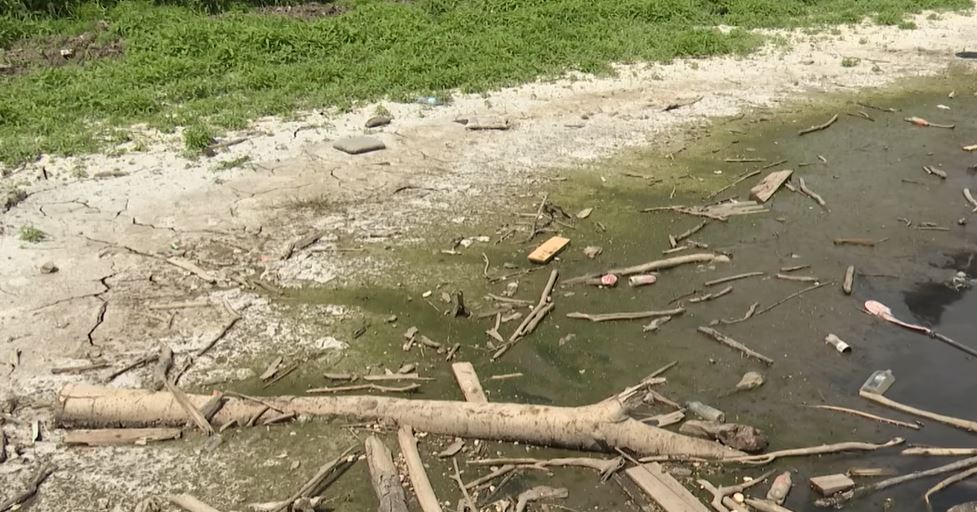
Exceptionally low water levels along the Danube have exposed wartime explosives, discarded appliances, bridge remains and prehistoric fossils in Serbia and neighbouring countries, while experts warn that deteriorating water quality poses environmental and public-safety risks.
In Novi Sad, the receding river revealed part of a former pillar of the Liberty Bridge near Štrand, one of the city’s most popular beaches, according to Serbian media reports.
Residents and visitors have walked across newly exposed sandbanks, but water-quality tests at much of Štrand reportedly showed a low ecological status. Experts also recorded increased algae growth and higher concentrations of organic matter.
Swimmers have been advised to shower immediately after leaving the river.
WWII explosives found near Novi Sad
A mortar shell dating from World War Two was discovered near Petrovaradin, following an earlier report of an aircraft bomb in the area.
Residents also reported seeing what appeared to be live ammunition, along with abandoned washing machines, sinks and other waste exposed by the retreating water.
Low river levels have uncovered unexploded ordnance elsewhere along the Danube. Near Batina in Croatia, authorities found and destroyed two aircraft bombs weighing about 150 kilograms each, according to regional media.
The discoveries highlight the continuing danger posed by wartime explosives buried beneath riverbeds across the Balkans. Residents have been urged not to touch suspicious objects and to notify the police immediately.
Mammoth fossils surface in Bulgaria
Near the Bulgarian village of Ryahovo, the retreating Danube reportedly exposed fossilised bones believed to belong to a prehistoric mammoth.
While the unusual discoveries have attracted visitors and widespread attention on social media, environmental experts warn that the shrinking river is also affecting ecosystems, navigation and water quality.
Prolonged heat and low rainfall have contributed to falling water levels across parts of the Danube basin.