


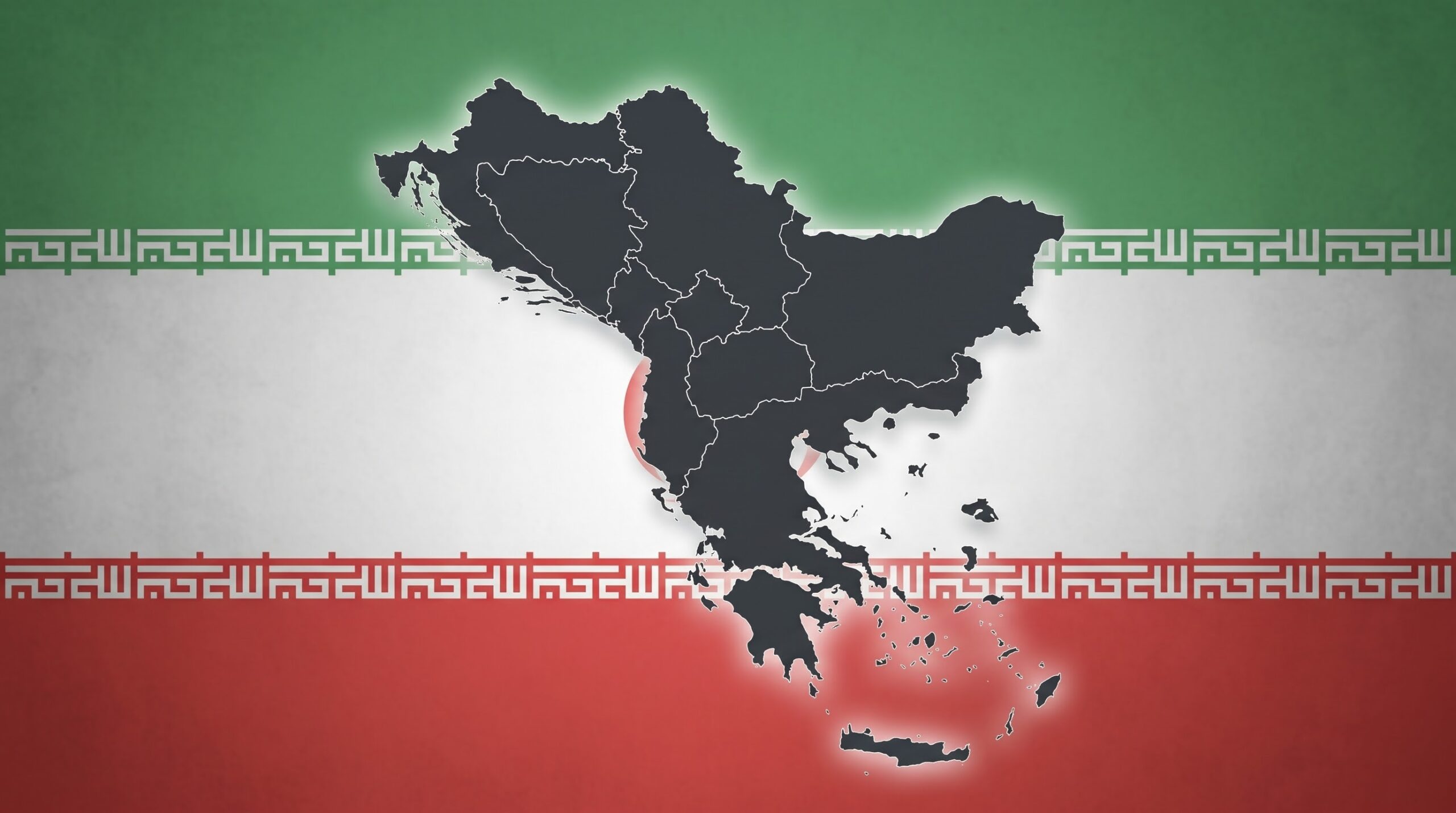
North Macedonia’s intelligence agency says it uncovered a criminal network allegedly preparing an assassination in Greece under the direction of an Iranian national suspected of intelligence connections. The revelation comes as authorities maintain that the domestic terrorism threat remains low despite U.S. security warnings across Europe.
SKOPJE, Nov. 17, 2026 (BalkanView) – North Macedonia’s intelligence agency has uncovered an alleged Iran-linked network that was preparing a targeted assassination in neighbouring Greece, the country’s intelligence chief said on Tuesday, revealing details of a months-long investigation into suspected terrorist activities.
Bojan Hristovski, director of the National Security Agency (ANB), said individuals associated with criminal organisations in North Macedonia had carried out preparatory and logistical activities under instructions from an Iranian national believed to have links to Iranian intelligence networks.
The alleged operation targeted a previously identified individual in Greece, although Hristovski did not disclose the intended victim’s identity, the planned location or whether arrests had been made.
The investigation lasted approximately nine to 10 months and involved cooperation with foreign intelligence partners, according to the agency’s director.
The disclosure came during a joint news conference with Aleksandar Janev, director of North Macedonia’s Public Security Bureau, at which Hristovski also addressed recent U.S. warnings about possible terrorist attacks across Europe.
Alleged Iranian network operated through North Macedonia
Hristovski identified the Iranian national at the centre of the investigation as Edris Jahangiri Mavaneh, whom he described as a person of interest to security services.
According to the intelligence chief, the network included individuals already established within criminal structures in North Macedonia.
“Regarding the Macedonian network, these are individuals embedded in criminal structures in our country who, acting on direct instructions from the Iranian national, undertook preparatory logistical activities for a terrorist act — the assassination of a previously identified target located in Greece,” Hristovski said.
The ANB director said the agency had conducted operational, technical and analytical activities to identify the network and establish how it functioned.
The investigation also examined contacts between the Iranian national and other individuals of interest to intelligence services.
Hristovski named Naji Sharifi Zindashti, an Iranian national associated with international organised crime, among those allegedly connected to Mavaneh.
The intelligence chief said the suspect had access to an extensive network of intermediaries and contacts.
He added that intelligence findings suggested Mavaneh was likely cooperating with Iranian security and intelligence services.
Secret meetings in Iran and other countries
Hristovski said cooperation with foreign partner agencies had helped uncover the network’s methods of operation.
According to the ANB, individuals associated with the alleged network maintained contacts through clandestine meetings in third countries, including Iran.
The intelligence chief did not identify the foreign agencies involved or specify whether Greek authorities had initiated criminal proceedings related to the alleged assassination preparations.
He also did not provide details about the intended target, the suspected motive or the stage the alleged operation had reached when it was detected.
The disclosure nevertheless points to the possible use of criminal intermediaries in North Macedonia for an operation directed at a target outside the country.
Such arrangements can complicate investigations because the individuals involved may operate across multiple jurisdictions and maintain both criminal and intelligence-related contacts.
Terrorism threat in North Macedonia remains low
Despite the alleged assassination preparations, Hristovski said the overall risk of terrorist attacks inside North Macedonia remained low.
“I can say that the risk of terrorist activities or acts in our country remains low, as it has been for a considerable period, despite global trends indicating increased threats from violent extremism,” he said.
However, he warned that individual acts of violence could never be entirely excluded.
“Of course, I would emphasise that the risk of individual acts of violence, the so-called ‘lone wolves’, always remains.”
Hristovski said the National Security Agency, Ministry of Interior and Public Security Bureau were jointly monitoring potential threats to public order and national security.
“We, together with the Ministry of Interior and the Public Security Bureau, within our respective competencies, are monitoring these phenomena to prevent any activities that could disrupt public order and national security,” he said.
The distinction between the alleged cross-border assassination preparations and the general domestic terrorism assessment is significant.
The suspected operation was directed at an individual in Greece, while the agency’s low-risk assessment concerned the likelihood of terrorist attacks within North Macedonia.
U.S. issues holiday security warnings across Europe
Hristovski’s comments came after U.S. diplomatic missions in the region, including embassies in Sofia and Pristina, circulated security advisories ahead of the holiday season.
The U.S. State Department warned American citizens travelling or residing in Europe that crowded public events could be targeted by organised terrorist groups or individuals acting independently.
Potentially vulnerable locations included Christmas markets, holiday festivals, tourist attractions, shopping centres, transport hubs and places of worship.
The advisory cautioned that attacks could occur with little or no warning.
Hristovski said the U.S. Embassy’s notice in Bulgaria was a general warning that did not identify a specific location.
The American advisory did not publicly identify North Macedonia as the target of an imminent terrorist attack.
U.S. authorities also warned travellers about possible disruptions caused by strikes, demonstrations and false bomb threats affecting civilian aviation.
Americans were advised to monitor local media, follow police instructions and enrol in the State Department’s Smart Traveler Enrollment Program.
Cross-border security cooperation under scrutiny
The alleged assassination preparations highlight the importance of intelligence cooperation between North Macedonia and its international partners.
The case involves suspected activities organised within North Macedonia, an Iranian national allegedly directing the network and an intended target in Greece.
Hristovski’s account suggests that the investigation required intelligence gathering and coordination beyond North Macedonia’s borders.
However, several important questions remain unanswered, including whether the alleged plot was disrupted before it reached an operational stage, whether suspects are in custody and whether prosecutors have opened criminal cases.
It is also unclear whether Greek authorities have identified or taken protective measures concerning the intended target.
The ANB director’s statements provide an account of the agency’s findings, but the allegations have not been independently established through publicly disclosed court proceedings.
A low-risk country facing transnational threats
North Macedonia’s intelligence chief presented two distinct assessments on Tuesday: that the country remains at low risk of domestic terrorist attacks, and that its territory was allegedly used by a network preparing violence abroad.
The distinction underscores how a country with a relatively stable domestic security environment can still become a logistical base for cross-border operations.
For the authorities in Skopje, the alleged case raises questions about the links between organised crime and foreign intelligence networks, the movement of suspected operatives across borders and the effectiveness of preventive intelligence cooperation.
For Greece, the central issue is the reported identification of an assassination target on its territory.
And for the wider Western Balkans, the disclosure draws attention to the potential security implications of transnational criminal networks operating across the region.
Hristovski maintained that North Macedonia’s overall security situation was stable, while warning that security institutions must continue monitoring both individual extremists and more complex networks operating across borders.
The reported Iran-linked operation, if substantiated, would represent a significant example of how alleged foreign-directed violence can involve logistical networks in the Western Balkans even when the intended attack is planned elsewhere.