


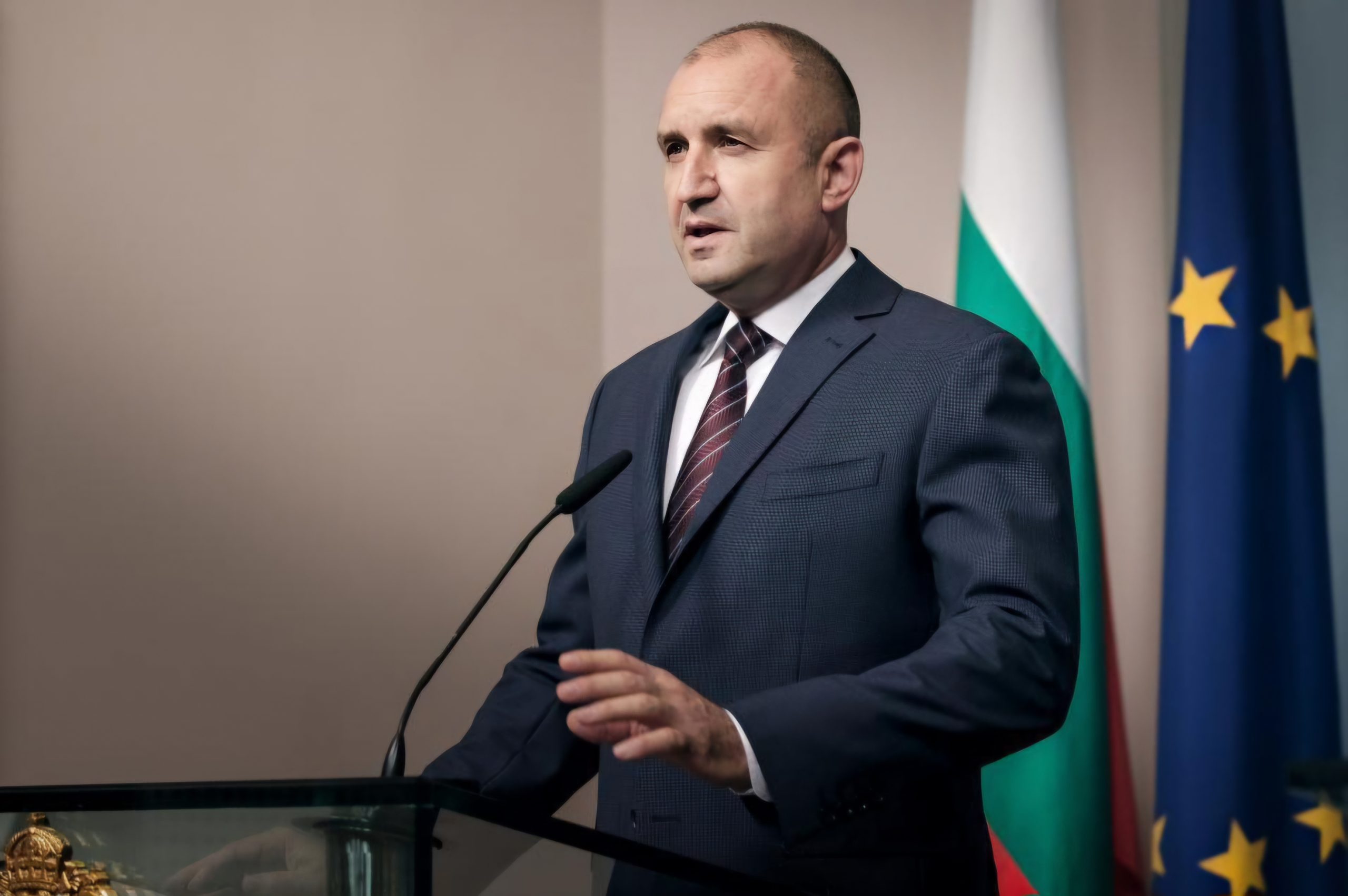
Bulgaria’s caretaker agriculture minister spent the past few months livestreaming police raids, reopening buried cases, and filing complaints with prosecutors and EU investigators. In a matter of days, he will hand power over to a new government and lose his office.
Ivan Hristanov believes his anti-corruption campaign may outlive his mandate. Whether that happens now depends on Rumen Radev, the former president whose newly formed party Progressive Bulgaria won a parliamentary majority in the April 19 elections after promising to dismantle what it called Bulgaria’s “oligarchic model of governance.” The same machinery Hristanov spent his brief tenure documenting is now becoming Radev’s first political test.
“I embodied two roles,” Hristanov told Politico. “The first is minister. The second is whistleblower. They can remove me from government, but my role as a whistleblower will live long after that.”
Bulgaria remains the EU’s worst-ranked country, tied with Hungary in Transparency International’s latest corruption index. EU funds, the country’s largest source of public investment, have been linked to hundreds of fraud investigations in recent years, including phantom farms, inflated contracts and politically connected intermediaries.
Hristanov was appointed in February in a caretaker cabinet led by Prime Minister Andrey Gyurov after the previous government collapsed in December following the largest anti-corruption protests Bulgaria had seen in decades. While caretaker governments in Bulgaria usually focus only on organizing elections, this administration aggressively pursued corruption cases.
During a recent interview with Politico, Hristanov spent the first minutes adjusting his suit, tie and documents as if preparing for a television broadcast rather than a conversation with a journalist. For a minister who turned his short tenure into a livestreamed anti-corruption campaign, gathering more than 70 million Facebook views by his own count, the distinction had become blurred.
The machinery of looking away
Hristanov described investigations unfolding under intense time pressure. In two state irrigation tenders worth 169 million euros financed with EU funds, he said construction costs had been inflated more than twentyfold. Work estimated at around 43,000 euros had allegedly been invoiced at nearly 1 million euros.
He also revisited a livestock-burning fraud case first reported while he served as deputy minister in 2022, only to discover that every trace of his original complaint — both digital and paper — had disappeared from the records of four agricultural and food safety agencies.
A meat-processing factory accused of distributing contaminated meat to schools was allegedly owned by the wife of a lawmaker from the party of Delyan Peevski, the media oligarch sanctioned by the United States under the Global Magnitsky Act for corruption. Peevski has denied wrongdoing and described the sanctions as unacceptable.
“Lack of any further reaction from the Bulgarian prosecution remains the main bottleneck,” said Ruslan Stefanov, chief economist at the Center for the Study of Democracy in Sofia. EU institutions and civil society organizations have long documented the same pattern: investigations stall, files disappear and very few cases reach court.
“Like one of those places where rich men go with escort girls”
Hristanov also focused attention on a luxury ski lodge high on Mount Vitosha, overlooking Sofia. The property, owned by the agriculture ministry, includes panoramic views, 20 rooms, a ski lift nearby, and surrounding parkland maintained at state expense.
The previous administration had agreed to sell it to a company linked to Bulgarian businessman Roumen Gaitanski for 500,000 euros. The deal had been signed but not finalized before Hristanov took office. Gaitanski, known in local media as “The Wolf,” has been in custody since August 2024 on separate embezzlement charges linked to a state development bank loan, allegations he denies.
“For 500,000 euros you can buy an average apartment in central Sofia,” Hristanov said. He personally visited the lodge, filming the property and publishing footage on Facebook the same day.
“It looked like one of those places where rich people go with escort girls,” he said. “Expensive furniture, enormous beds, literally like six apartments combined.”
The video drew more than 600,000 views on Facebook alone, according to Hristanov. His ministry later blocked the sale and proposed transferring the property to the education ministry for student use. Hristanov said the buyer requested 1 million euros in compensation. Gaitanski’s lawyers did not respond to requests for comment.
Radev’s anti-corruption test
Radev, who resigned as president in January to contest the election, secured nearly 45 percent of the vote. His victory prompted the immediate resignation of acting prosecutor general Borislav Sarafov, whom reform advocates and opposition lawmakers had long accused of protecting powerful figures, including former Prime Minister Boyko Borissov and Peevski. Sarafov said he had decided to resign earlier and delayed the move to avoid destabilizing the prosecution service. He did not address the allegations directly.
The new parliament now has the supermajority needed to reform Bulgaria’s Supreme Judicial Council and appoint a new prosecutor general, a reform Brussels has demanded for years. Anti-corruption reforms were central to Radev’s campaign, with the former president declaring on election day that Bulgaria had a “historic chance to break once and for all with the Peevski-Borissov oligarchic model.”
Brussels welcomed the election outcome. European Commission President Ursula von der Leyen and European Council President António Costa congratulated Radev, describing Bulgaria as a “proud member of the European family,” despite concerns in Brussels over his softer approach toward Russia.
Analysts, however, remain cautious. Radev assembled Progressive Bulgaria from former ministers, presidential advisers and politicians who drifted away from the now-collapsed Bulgarian Socialist Party. His coalition attracted Eurosceptic voters, critics of eurozone integration and Bulgarians sympathetic toward Moscow.
“Anti-corruption is the logical unifier,” said Maria Simeonova of the European Council on Foreign Relations in Sofia. But she warned that governing requires alliances and patronage networks, making deep reforms politically risky.
Even Sarafov’s resignation may amount to political theater rather than structural change, according to Emilia Zankina, a Bulgaria specialist at Temple University Rome.
“A few people may change here and there,” she said, “but the Peevski-Borissov model may simply be replaced by Radev’s own model of one-man rule.”
A minister without a political seat
Hristanov founded his anti-corruption movement Unity in 2023. In January, it joined three smaller parties in an anti-corruption bloc contesting the April elections, but the coalition failed to cross the 4 percent threshold needed for parliamentary representation. Hristanov himself did not appear on the ballot, saying he wanted to keep the caretaker government “equally distant from all political parties.”
Asked whether he trusts Radev, Hristanov paused.
“Every new government deserves its first 100 days. Let’s give them that credit of trust, and then we’ll see.”
And after those 100 days?
“If they are good, they are good. If they are bad, then we strike.”