


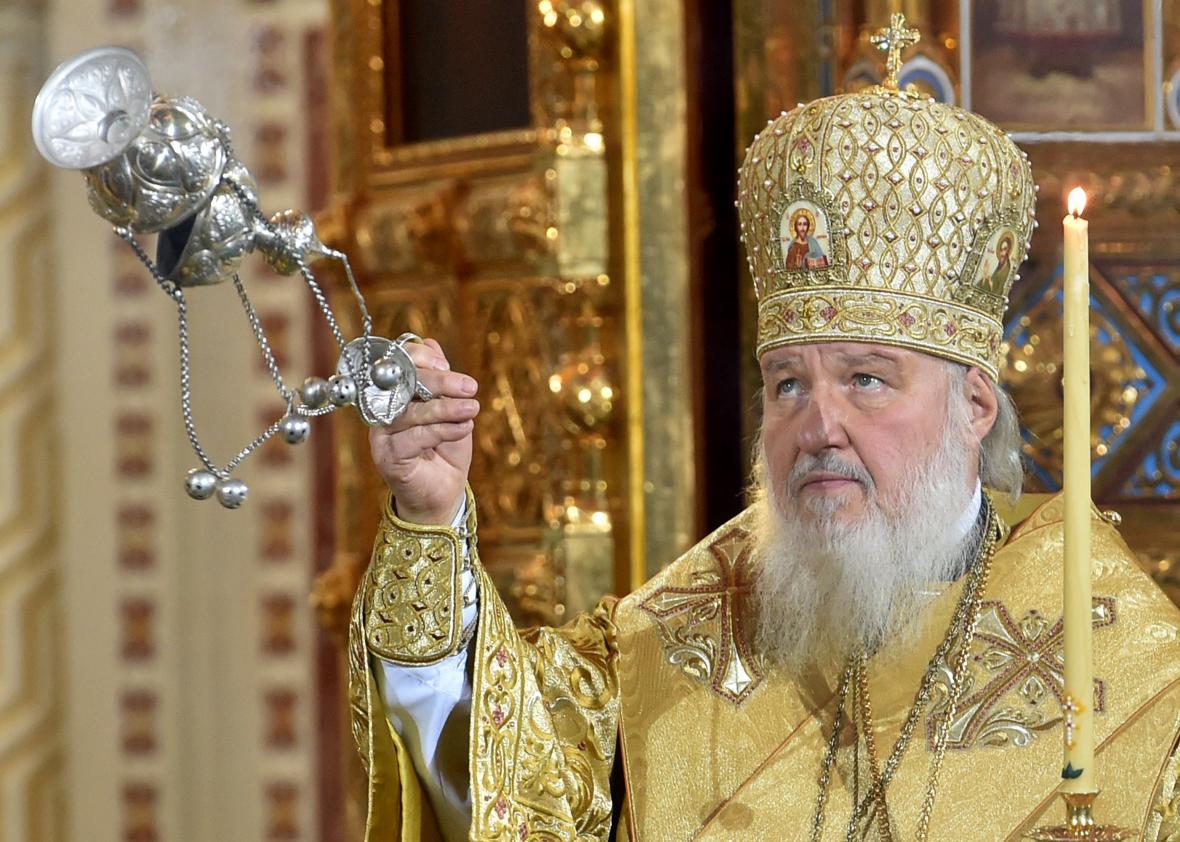
Bulgaria’s parliament debated whether Russian Patriarch Kirill should be included in the European Union’s 21st sanctions package over allegations that he had worked as an agent for the Soviet KGB, but the government said its security services have found no evidence to support the claims.
Deputy Foreign Minister Velislava Petrova told lawmakers that neither the Military Intelligence Service nor the State Intelligence Agency had provided information indicating that Patriarch Kirill, born Vladimir Gundyaev, had served as a KGB agent.
The issue was raised by Democratic Bulgaria lawmaker Ivaylo Mirchev, who asked whether intelligence assessments had been taken into account in Bulgaria’s position opposing sanctions against the head of the Russian Orthodox Church.
According to Petrova, all proposed EU restrictive measures are reviewed by Bulgaria’s competent institutions, which submit assessments within their areas of responsibility.
The Bulgarian government has argued that sanctions against Kirill would have little practical impact on Russia’s war effort. Foreign Minister Georg Georgiev has previously said freezing the patriarch’s financial assets would not influence the conflict, while Prime Minister Rumen Radev described the proposed sanctions as largely symbolic.
The European Union has considered sanctioning Patriarch Kirill since 2022, accusing him of providing ideological support for Russia’s invasion of Ukraine through public statements portraying the war as a “holy” mission and promoting anti-Western rhetoric.
Allegations linking Kirill to Soviet intelligence have resurfaced following media reports citing declassified Swiss police archives. Investigations published by Swiss newspapers SonntagsZeitung and Le Matin in 2023 reported that Gundyaev allegedly operated in Geneva during the 1970s under the codename “Mikhailov” while serving as the Moscow Patriarchate’s representative to the World Council of Churches.
The reports alleged that his role included gathering information and influencing international church organizations on behalf of Soviet intelligence.
The Bulgarian government, however, maintains that its intelligence agencies have not confirmed those allegations.