


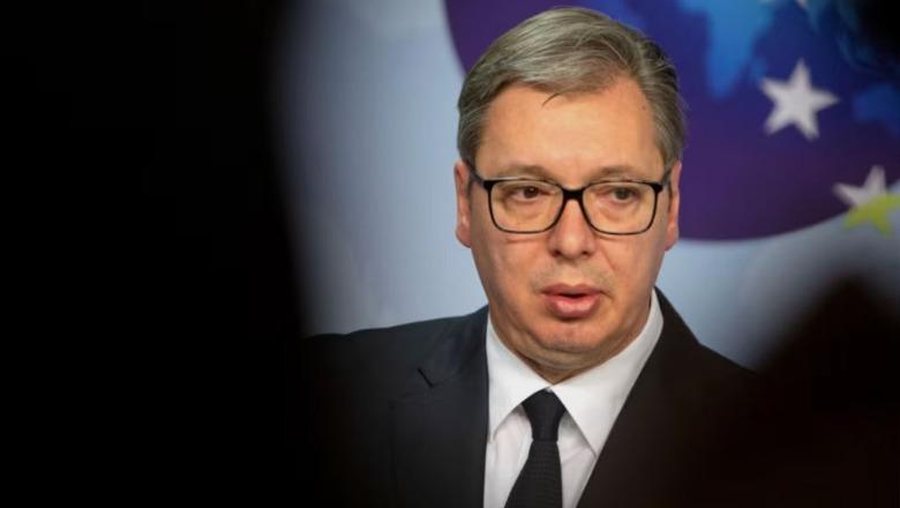
Serbia’s student-led protest movement could emerge as a serious political challenger to President Aleksandar Vučić, potentially transforming public anger over corruption into an electoral force.
If the movement forms a political party, Vladan Đokić, rector of the University of Belgrade, could become one of its leading figures in elections expected in the autumn.
Đokić has publicly backed the students who took to the streets following the deadly collapse of a concrete canopy at Novi Sad railway station on November 1, 2024. Sixteen people were killed in the disaster, which triggered nationwide protests over alleged corruption, negligence and a lack of transparency in public infrastructure projects.
“From the beginning, I have supported the students, their genuinely democratic way of thinking and their intention to change the country in accordance with European values,” Đokić, an architect and urban planner, told Spanish newspaper El Mundo.
“I believe that most citizens are moving in the same direction,” he said.
Đokić described the protests as pro-European and criticised what he called attacks on the freedom and autonomy of Serbia’s academic institutions.
The movement’s main political opponent is Vučić, the dominant figure in Serbian politics and leader of the conservative Serbian Progressive Party. Serbia is formally seeking membership of the European Union but maintains close relations with Russia and has refused to align with EU sanctions against Moscow.
Vučić has suggested that he could step down as president and later seek the premiership, a position he held between 2014 and 2017.
“If the party wants it, I will help it win the people’s confidence,” he said, raising the prospect of another reshuffle at the top of Serbia’s political system.
However, Vučić faces growing resistance within the EU.
Serbia’s refusal to impose sanctions on Russia, together with concerns over democratic standards, media freedom and the rule of law, has weakened support for accelerating its accession negotiations.
A group of EU members — including the Netherlands, Sweden, Finland and the Baltic states — has opposed opening a new negotiating cluster with Serbia, a position reiterated recently in Brussels.
Serbia’s political landscape is shifting. Whether the student movement can convert months of street protests into a credible electoral alternative remains uncertain. But the pressure on Vučić is growing — both at home and in Europe.