


Greece, Bulgaria, Serbia and North Macedonia are building a new north-south energy axis through the Balkans, linking LNG terminals in Greece with markets further north while preparing closer electricity cooperation for winter and exploring a Thessaloniki-Skopje-Niš fuel pipeline.
BELGRADE, Oct 7 (BalkanView) — Greece, Bulgaria, Serbia and North Macedonia have agreed to deepen cooperation on gas, electricity and energy storage as a series of new interconnectors promises to strengthen the Balkans’ role as an energy corridor between the Mediterranean and Central Europe.
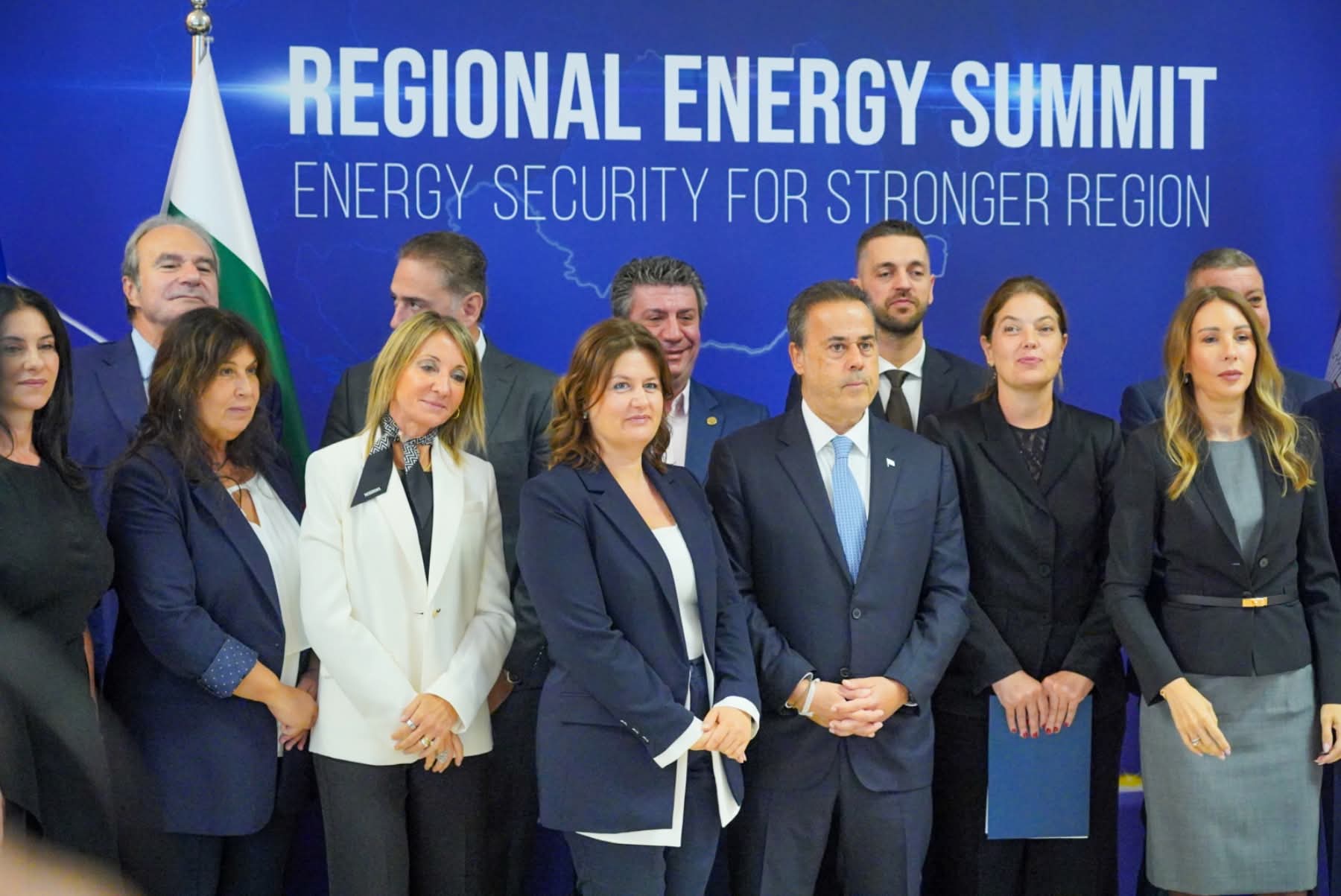
Energy ministers from the four countries met in Belgrade on Oct. 6 for their second ministerial summit, focusing on security of supply, diversification, cross-border electricity trading and infrastructure that could carry gas from Greek LNG terminals northwards.
The meeting brought together Greek Environment and Energy Minister Stavros Papastavrou, Bulgarian Energy Minister Iva Petrova, Serbian Mining and Energy Minister Dubravka Đedović Handanović and North Macedonian Energy, Mining and Mineral Resources Minister Sanja Božinovska.
The ministers also discussed preparations for the winter electricity season and agreed to improve exchanges of information about the readiness of national transmission systems and the availability of electricity for cross-border trade.
But the most strategically significant part of the talks centred on gas.
A new gas route through the Balkans
Serbia and North Macedonia’s inclusion in the Vertical Gas Corridor was welcomed at the meeting, potentially extending an emerging network connecting LNG infrastructure in Greece with markets across Southeast and Central Europe.
The corridor is designed to facilitate northbound gas flows through Greece and Bulgaria towards countries further north.
For North Macedonia and Serbia, the missing links are now being built.
Construction of the Serbia-North Macedonia gas interconnector is expected to begin soon, with the first pipes for the Serbian section already delivered, according to statements following the Belgrade meeting.
That connection is intended to link with the Greece-North Macedonia interconnector currently under construction.
The Greek section is expected to be completed by the end of 2026, while the North Macedonian section is expected to follow during 2027.
Once interconnected, the infrastructure would provide Serbia and North Macedonia with another route for natural gas supplied through Greece, including LNG entering through the port of Alexandroupolis.
The projects would complement existing diversified gas routes through Bulgaria.
Greek gas export capacity towards the north is expected to reach 9.5 billion cubic metres annually by 2027, according to information presented at the meeting.
For EU members in the region, the infrastructure is also part of efforts to gradually phase out Russian gas in line with the European Union’s REPowerEU policy.
North Macedonia moves towards becoming a transit link
The emerging network could significantly change North Macedonia’s position on the regional energy map.
Rather than remaining primarily an end market dependent on a limited number of supply routes, the country could become a link between Greek LNG infrastructure to the south and Serbia and Central European markets to the north.
The Greece-North Macedonia and North Macedonia-Serbia interconnectors would effectively create a continuous gas route running from the Aegean northwards.
The ministers also discussed whether gas infrastructure being developed today could eventually be adapted to transport hydrogen, potentially extending its usefulness as Europe moves towards lower-carbon energy sources.
The strategy is not limited to gas.
Officials discussed transmission grids, renewable energy, pumped-storage hydropower plants and large battery systems, which are becoming increasingly important as solar and wind power account for a larger share of electricity generation.
Skopje and Sofia seek another electricity connection
On the sidelines of the summit, Božinovska held bilateral talks with Bulgarian Energy Minister Petrova focusing on closer cooperation between North Macedonia and Bulgaria.
Božinovska said battery energy-storage systems were one of the priorities, citing Bulgaria’s experience as potentially useful for North Macedonia.
The two ministers also discussed closer integration of their electricity markets, cross-border electricity exchanges and policies addressing energy poverty.
Particular attention was given to the East-West Electricity Corridor initiative, which envisages additional electricity connectivity between North Macedonia and Bulgaria.
The two countries also discussed the possibility of jointly approaching international financial institutions to finance strategic energy infrastructure.
Božinovska said cooperation would extend to an operational level, including closer links between North Macedonian energy operators MEPSO, NOMAGAS and MEMO and their Bulgarian counterparts.
“The goal is more interconnections, greater transmission capacity, better integrated markets and a more secure energy system for citizens and the economy,” Božinovska said.
Thessaloniki-Skopje-Niš route back on the table
Another potentially significant project discussed in Belgrade was the development of a pipeline for petroleum products along the Thessaloniki-Skopje-Niš route.
Such infrastructure could connect Serbia, through North Macedonia, directly with the energy infrastructure and port facilities of Thessaloniki.
If developed, it would add another north-south energy route through North Macedonia alongside the planned gas connections.
The discussions underline the increasing importance of Greece’s northern ports and energy infrastructure for landlocked Balkan countries seeking alternative supply routes.
Preparing for winter
Electricity security was another central issue.
The four countries agreed to improve coordination ahead of winter, including exchanges of information on the readiness of their electricity transmission systems and the possibility of cross-border electricity exchanges when shortages emerge.
Closer integration could allow countries with available electricity to support neighbours facing temporary shortages or peaks in demand.
Ministers also discussed the stability of Southeast Europe’s electricity system and the need to expand cross-border interconnection capacity.
Renewable energy is making storage increasingly important because electricity generated by wind and solar power fluctuates according to weather conditions.
That has pushed battery storage and pumped-storage hydropower higher on the regional energy agenda.
EU carbon rules add pressure
The talks also addressed the Western Balkans’ transition towards lower-carbon energy and the financial cost of adapting to EU environmental rules.
Serbia and North Macedonia are not EU members but their economies and electricity markets are closely linked with the bloc.
Ministers discussed the European Union’s Carbon Border Adjustment Mechanism, or CBAM, and called for adequate financial support to help Western Balkan economies adjust to new requirements.
They said closer integration of electricity markets between EU member states and the contracting parties of the Energy Community would strengthen both security and resilience.
The combination of new gas connections, electricity interconnectors, storage facilities and market integration is gradually creating an energy network that cuts across the traditional borders separating EU members from candidate countries.
For North Macedonia, positioned between Greece, Bulgaria and Serbia, that transformation could be particularly significant.
The country sits directly on the emerging north-south gas route from Greece and is simultaneously seeking stronger east-west electricity links with Bulgaria.
The four energy ministers agreed to continue the format, with their third ministerial meeting scheduled to take place in Sofia in 2027.