



A Serbian bank loses its licence. Its North Macedonian subsidiary comes under emergency administration. Around €2 million has already been withdrawn, and customers now face strict limits on accessing their money. Regulators insist the local bank is financially sound, but the crisis raises uncomfortable questions about oversight, ownership and depositor protection.
SKOPJE, Nov. 1, 2026 (BalkanView) — North Macedonia’s central bank imposed temporary administration on Alta Banka AD Bitola on Sunday and restricted withdrawals and other outflows from personal accounts to 10,000 denars ($185) a week, after the bank’s Serbian majority shareholder lost its banking licence.
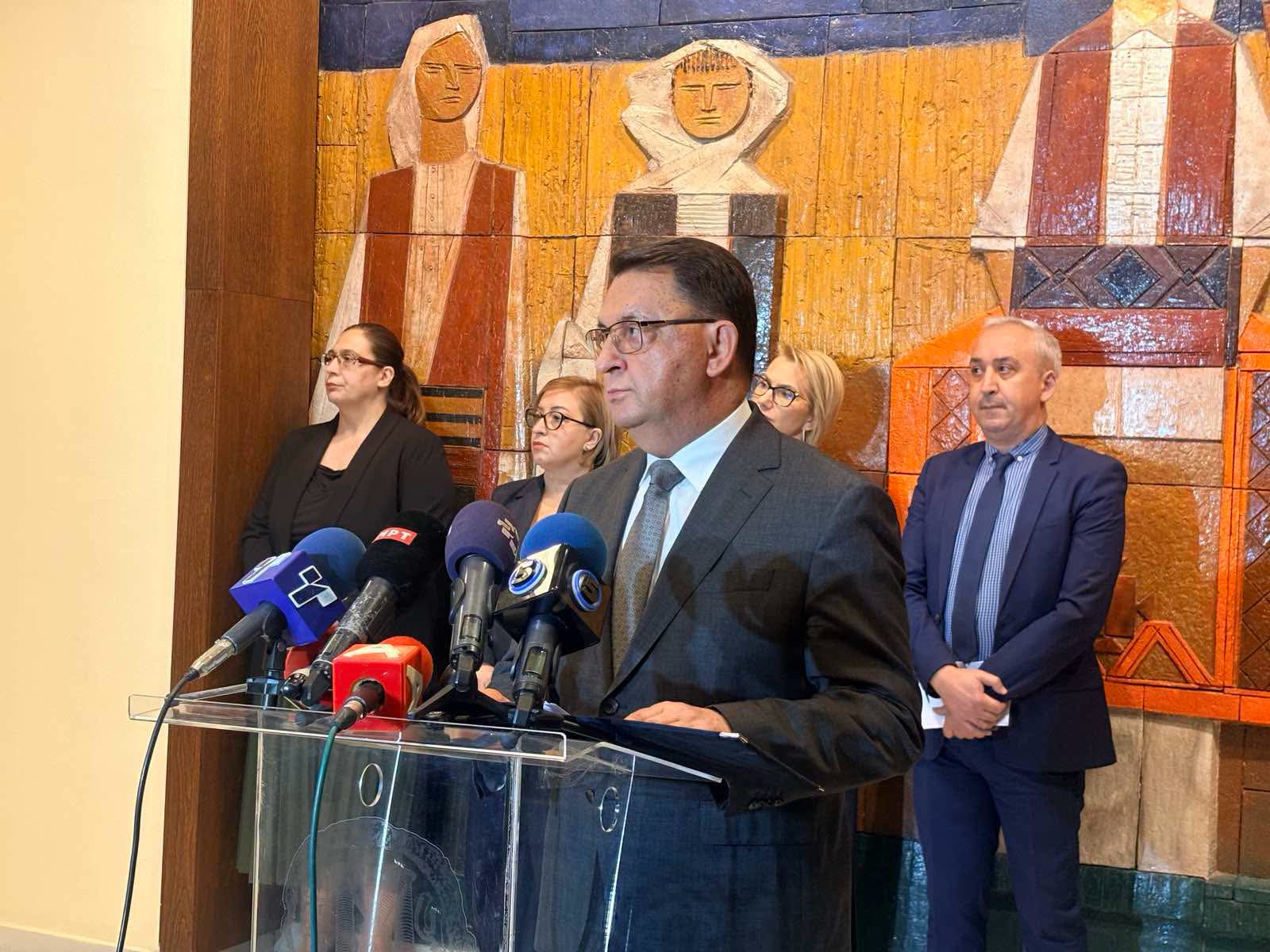
The emergency intervention followed the withdrawal of approximately €2 million from the Macedonian bank in cash and transfers by the end of Saturday, according to central bank Governor Trajko Slaveski.
The National Bank of Serbia revoked the licence of Alta Banka AD Belgrade on October 31, citing a significant deterioration in its financial condition despite earlier supervisory measures.
The Serbian lender owns more than 95% of Alta Banka Bitola, formerly known as Stopanska Banka Bitola.
The developments have exposed a cross-border banking problem that has left customers in North Macedonia facing restrictions even as their regulator maintains that the local institution remains liquid and well capitalised.
Slaveski said the intervention was preventive and intended to protect the bank’s assets, depositors and creditors.
But the contrast between the regulator’s assurances and restrictions on access to funds has raised questions about the effectiveness of banking supervision and the risks associated with foreign ownership.
A solvent bank under emergency control
Under the measures announced on November 1, the National Bank appointed temporary administrators to manage Alta Banka Bitola.
Individuals are limited to outflows of 10,000 denars per week, with access through bank-issued payment cards.
Transfers between accounts held within Alta Banka Bitola remain unrestricted for both individuals and businesses.
The central bank has not fully clarified which other categories of payments may be affected or whether exceptions will apply to urgent expenses.
The temporary administration can remain in place for up to three months, although it could end earlier.
Slaveski said Alta Banka Bitola remained liquid, highly capitalised and possessed a sound loan portfolio.
The governor also stressed that the Macedonian institution was legally separate from its Serbian shareholder and that the regulatory intervention did not amount to revoking the local bank’s licence.
For customers, however, the distinction offers limited immediate relief if they need access to funds exceeding the weekly limit.
How did the Serbian bank gain control?
Alta Banka Belgrade began its takeover of Stopanska Banka Bitola in 2025.
On September 10, 2025, North Macedonia’s Securities and Exchange Commission authorised a takeover offer involving 371,538 voting shares at 3,777 denars per share.
The Serbian bank subsequently acquired a controlling stake.
According to bank documents cited by the investigative outlet Inbox7.mk, Alta Banka Belgrade held approximately 95.13% of the Macedonian institution’s issued shares in January 2026.
The securities regulator’s approval of a takeover offer is distinct from the prudential assessment carried out by the National Bank when an investor seeks to acquire a qualifying stake in a regulated bank.
That distinction has become particularly important following the collapse of the Serbian shareholder’s banking licence.
The central question is what financial, ownership and governance assessments the Macedonian central bank conducted before approving the acquisition, and whether it identified potential risks associated with the investor.
The subsequent loss of the Serbian bank’s licence does not establish that the original approval was improper.
It does, however, provide grounds for examining whether the risks were adequately assessed and monitored.
When did Macedonian regulators learn of the Serbian bank’s problems?
The National Bank of Serbia said its decision to revoke Alta Banka Belgrade’s licence followed previous supervisory actions intended to improve the institution’s liquidity.
According to the Serbian regulator, the bank’s financial condition had deteriorated significantly, creating risks to depositors.
This indicates that supervisory concerns existed before the final decision on October 31.
What remains unclear is when those problems first emerged and whether Serbian authorities notified their Macedonian counterparts before the licence was withdrawn.
The timing matters because Alta Banka Belgrade controlled nearly all the shares in a separately regulated Macedonian bank.
It is also unknown whether the National Bank of North Macedonia had increased its scrutiny of Alta Banka Bitola in response to developments at its parent institution.
Cross-border banking supervision depends partly on cooperation and timely information exchange between national regulators.
The Macedonian central bank has not publicly provided a detailed chronology of any supervisory communications with Serbia concerning the shareholder’s deteriorating condition.
Why restrict withdrawals if the bank is liquid?
Slaveski said approximately €2 million had been withdrawn from Alta Banka Bitola before the emergency measures were imposed.
The figure was provided by the bank’s management during discussions with the central bank, according to the governor.
The withdrawals followed news of the Serbian regulator’s intervention.
Even a financially sound bank can face liquidity pressure if large numbers of customers attempt to withdraw their deposits simultaneously.
The Macedonian regulator appears to be seeking to prevent a sudden acceleration of outflows while protecting the bank’s balance sheet.
But the restrictions raise practical questions for depositors.
A customer needing to pay a medical bill, transfer funds to another bank or meet an urgent family obligation may be unable to access the required amount under the weekly limit.
The central bank has not publicly detailed the precise legal provisions supporting the 10,000-denar threshold or explained how that amount was determined.
It has also not fully specified whether exemptions will be available for essential payments.
For depositors, those details may be as important as the regulator’s assessment of the bank’s capital and liquidity.
Are customer deposits protected?
North Macedonia operates a deposit insurance system covering eligible deposits of individuals up to €30,000 in denar equivalent per depositor per bank, subject to statutory conditions.
The coverage includes principal and accrued interest within the applicable limit.
However, temporary administration does not automatically trigger deposit insurance payouts.
Alta Banka Bitola remains a licensed institution operating under temporary management, rather than a bank whose licence has been revoked.
The situation differs from Serbia, where Alta Banka Belgrade has lost its licence and the Serbian deposit insurance framework provides coverage of up to €50,000 per eligible depositor.
The distinction is crucial.
Customers in North Macedonia should not confuse the Serbian deposit insurance threshold with the lower limit applicable to deposits in their own country.
Nor does the existence of deposit insurance guarantee immediate access to all account balances during a period of regulatory restrictions.
The central bank has not released a comprehensive public breakdown of Alta Banka Bitola’s total deposits, number of depositors or the proportion of deposits covered by insurance.
Those figures would help establish the scale of the potential exposure faced by households.
How exposed is the North Macedonian bank to its Serbian shareholder?
Alta Banka Bitola is a separate legal entity from Alta Banka Belgrade.
Nevertheless, its ownership structure creates questions about possible financial links between the two institutions.
These could include interbank deposits, loans, guarantees, receivables or other financial arrangements.
No evidence has been presented that such exposures have caused losses at the Macedonian bank or that unlawful transfers have occurred.
But understanding their existence and size would be important for assessing whether problems at the Serbian shareholder could affect the local institution’s balance sheet.
The National Bank has not publicly provided a detailed account of any such exposures.
The issue is especially relevant because the Serbian regulator has determined that the parent institution’s financial condition warrants licence revocation and the initiation of bankruptcy proceedings.
Customers must still repay their loans
Despite the temporary restrictions, the Macedonian central bank has told borrowers that their contractual obligations remain unchanged.
Individuals and businesses with loans from Alta Banka Bitola must continue making scheduled repayments.
Temporary administration does not suspend, cancel or forgive outstanding loans.
The bank is expected to continue operating under the management of administrators appointed by the regulator.
Could a new owner end the crisis?
Slaveski said domestic and foreign institutions had expressed interest in acquiring shares in Alta Banka Bitola.
He did not identify prospective buyers or announce a completed agreement.
Any ownership transfer would require compliance with the relevant legal procedures and regulatory approvals.
A new shareholder could potentially help stabilise confidence in the institution, but no timetable for a transaction has been disclosed.
The governor urged caution in public statements, warning that rhetoric capable of triggering panic could further complicate the situation.
A test of confidence in banking supervision
The Alta Banka case is emerging as a test of how effectively North Macedonia can protect a domestic financial institution when its foreign majority shareholder encounters severe financial problems.
The Macedonian regulator maintains that the local bank is financially sound.
Yet the introduction of temporary administration and restrictions on customer outflows illustrates how rapidly confidence can be affected by events outside a bank’s immediate operations.
The case does not, on the information currently available, demonstrate that Macedonian regulators acted unlawfully or that the 2025 takeover approval was improper.
But it leaves significant questions unanswered about the original acquisition assessment, cross-border supervisory cooperation, the bank’s exposure to its Serbian shareholder and the conditions for restoring unrestricted access to customer funds.
For depositors, the immediate concern is when they will regain normal access to their money.
For the banking system, the larger issue is whether supervisory safeguards can identify and contain risks before they undermine public confidence.