


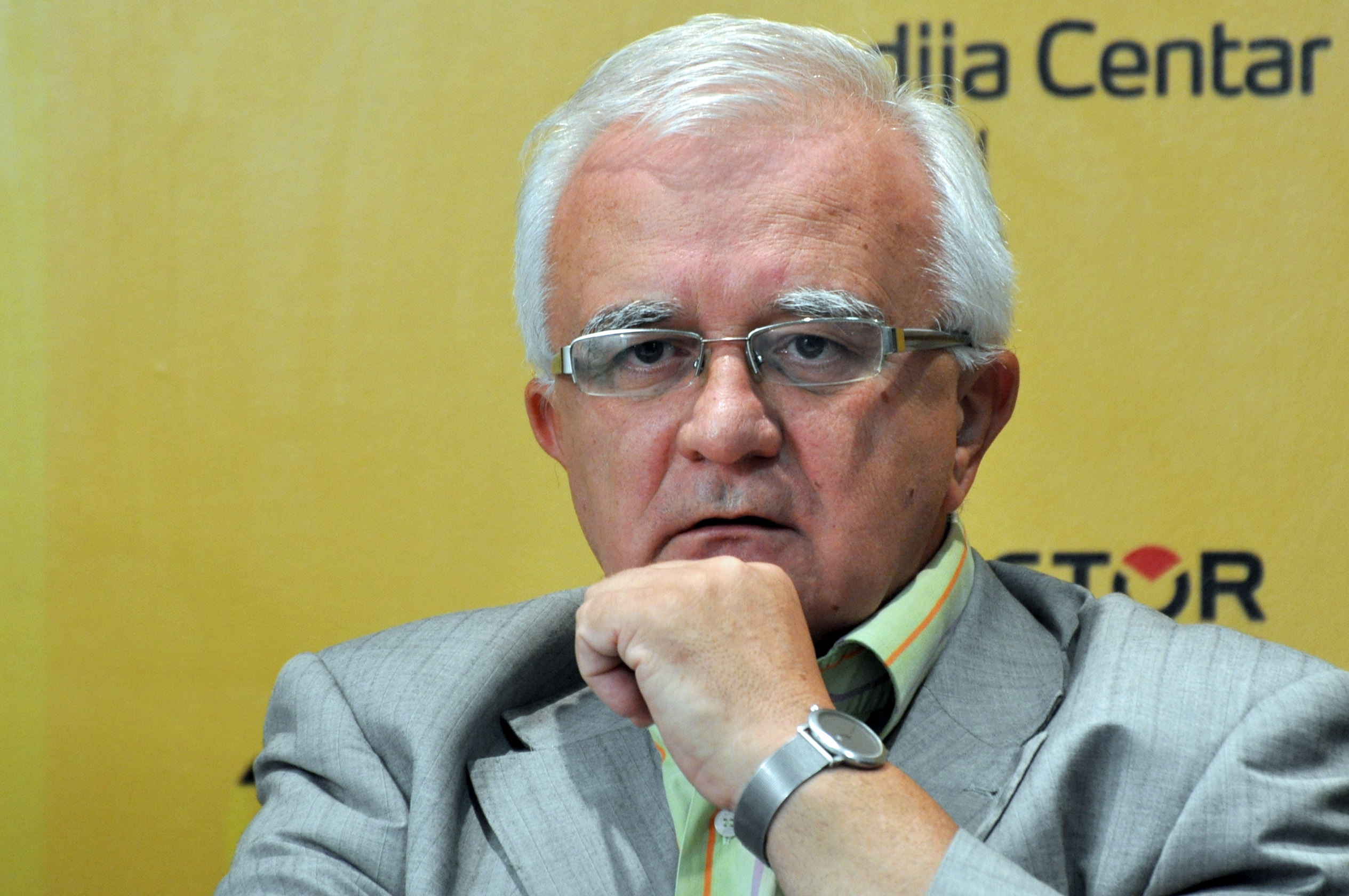
Serbia is entering a new political era following the October 25 elections, with citizens beginning to overcome years of fear and political pressure, while the incoming government faces major economic, institutional and security challenges, Serbian political analyst Dušan Janjić said.
In an interview with BalkanView, Janjić said changes in Serbian society were already visible, but warned that the new government would inherit an economy and state institutions that, in his assessment, had entered a process of self-destruction.
He expects sweeping reforms of the intelligence and security services, a campaign against corruption and organized crime, and a review of government contracts and investments made during Aleksandar Vučić’s rule.
Janjić also predicts a shift in Serbia’s foreign policy priorities toward Europe, alongside stronger relations with neighboring countries, including North Macedonia. He said cooperation would increasingly focus on economic ties and relations between citizens rather than personal connections between political leaders.
On Kosovo, Janjić said restarting the stalled EU-facilitated normalization dialogue would not be among the incoming government’s most urgent priorities. However, he expects greater transparency and renewed attention to the self-governance of Kosovo’s Serb community, the Association of Serb-majority Municipalities, property disputes, pensions and social protection.
BalkanView: What will Serbia look like after these elections?
Dušan Janjić: Even today, social life and people’s behavior in Serbia are different from what they were before the October 25 elections.
There is a visible sense of liberation from the pressure and fear spread by Aleksandar Vučić’s media and propaganda machinery, police repression and threats to use the army and police against dissatisfied citizens.
Almost overnight, a genuine intelligence and espionage campaign directed against dissenters and political opponents came to an end.
Growing public enthusiasm has translated into new forms of civic engagement, including alerting the public to developments such as the destruction of documents.
People are demanding resignations and criminal proceedings against those who violated the Constitution and the law, abused their positions of power, particularly those who collaborated with organized crime and encouraged corruption.
Following the constitution of parliament, expected on November 9 or 10, and the election of a new government shortly afterward, Serbia will enter a period of confronting major challenges.
First, there must be a comprehensive assessment of the real situation left behind by the Serbian Progressive Party (SNS) government.
We are talking about an economy and institutions that have entered a process of self-destruction.
The next steps will involve ensuring financial and monetary stability, addressing rising unemployment among tens of thousands of citizens who are currently employed only on paper or whose jobs lack economic justification, restructuring failed banks and repaying outstanding domestic and foreign debts.
There will also be a need to establish procedures and launch a medium-term fight against crime and corruption, a process carrying significant political and social risks.
At the same time, comprehensive reform of the intelligence and security system must begin, particularly the Security Information Agency (BIA) and the National Security Council. The role of the president of the republic must also be clearly defined.
Further elections will follow, including those for national minority councils, the presidency, provincial authorities and local governments.
Without these elections, there can be no revival of institutions that have effectively become paralyzed.
All in all, there is an enormous amount of work ahead, under the watchful eyes of an engaged public.
As for Aleksandar Vučić, the self-styled leader of Serbia and all Serbs, or “Aca the Serb,” it is more difficult for him and those closest to him than for the public to get used to the fact that he is no longer present everywhere, at every moment and on every occasion.
BalkanView: What foreign policy will the new government pursue toward the West and the East?
Dušan Janjić: It is already clear that a period of change, broad cooperation and improved relations with neighboring countries is approaching, particularly with the Western Balkan states.
There are also visible signs of improved cooperation between Serbia and the international community, as well as a more positive attitude toward Serbia internationally.
Judging by the Student List’s program, Serbia’s new government will pursue a “multi-vector foreign policy.”
The order of priorities will change, but the countries and partners with which Serbia cooperates will remain the same.
The new order of priorities will be as follows:
First, Europe, understood as a united Europe, meaning relations with the European Union and other European countries, including Serbia’s neighbors.
Second, the United States.
Third, Russia.
Fourth, China.
And fifth, other countries, particularly middle powers such as Japan, South Korea and Canada, as well as countries of the Global South.
The Student List has promised that foreign policy, like domestic policy, will be guided by Serbia’s interests in stabilization, democratization and development.
To achieve these objectives, many arrangements concluded by the previous government will be reviewed.
This includes both interstate agreements and commercial arrangements, particularly investments in infrastructure construction, energy, water resources and the extraction of rare minerals.
BalkanView: How will Belgrade’s relations with neighboring countries, including North Macedonia, develop?
Dušan Janjić: These relations will also be established in accordance with Serbia’s needs and interests, while respecting its international obligations.
Cooperation will no longer be reduced, as it has been until now, to relationships between political leaders and ruling parties.
This means cooperation will become more intensive and more focused on economic ties, as well as encouraging direct cooperation between citizens.
BalkanView: What will happen to Serbia’s relations with Kosovo?
Dušan Janjić: Restarting the stalled dialogue on normalizing relations with Kosovo is, objectively speaking, not among the most urgent priorities.
There will first be a period during which the new authorities familiarize themselves with the commitments Serbia’s previous governments undertook during the dialogue.
The Serbian public will then be informed about those commitments.
There is no doubt that the principle of transparency and active public participation will be introduced, both within Serbia and in the dialogue itself, including the participation of members of the Serbian community in Kosovo.
There is also a need to clarify the previous failure to respect the text and spirit of Chapter 5 of the agreement concerning Serbia’s integration into the European Union.
I expect this issue to be resolved as a preliminary matter before the normalization dialogue resumes.
It is certain that the new government, as well as the Serbian public, will insist on addressing neglected issues concerning the status of the Serbian community, particularly the realization of self-government or self-administration for Kosovo Serbs.
This also includes implementing previously reached agreements concerning the Association of Serb-majority Municipalities.
Other issues will include mutual claims, including the transfer or privatization of property carried out so far, as well as resolving problems related to pensions, healthcare insurance and social security.
Overall, this dialogue will no longer be limited solely to the question of Kosovo’s status.