


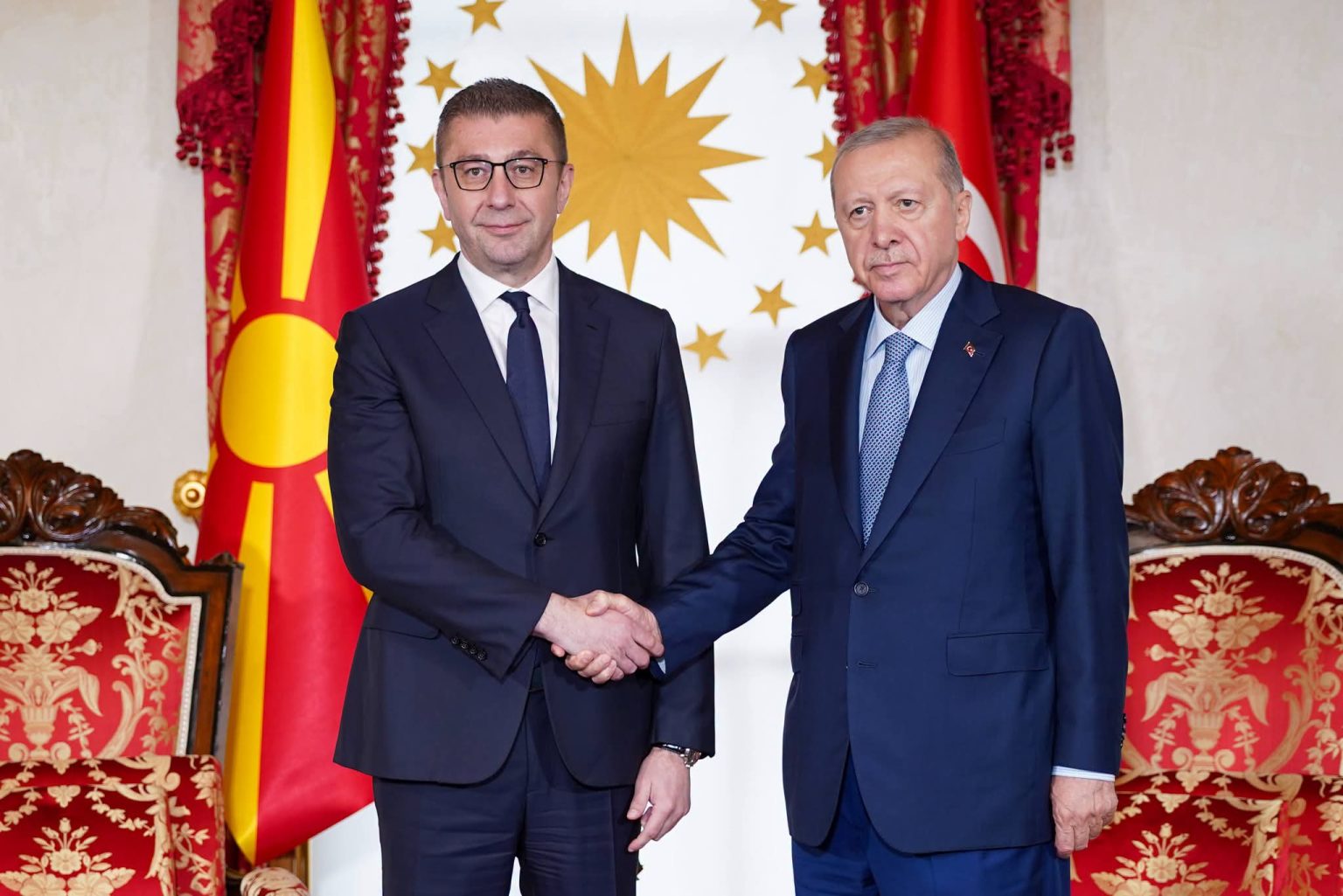
ISTANBUL, June 14 (BV) – Turkish President Recep Tayyip Erdogan and North Macedonian Prime Minister Hristijan Mickoski pledged to deepen economic, trade and strategic cooperation during closed-door talks in Istanbul, as Ankara seeks to expand its influence and investment footprint across the Western Balkans.
The meeting took place at Erdogan’s working office in the Dolmabahce Palace and was closed to the media, Turkey’s state-run Anadolu Agency reported.
Following the talks, Mickoski said both leaders reaffirmed the traditionally close and friendly relations between North Macedonia and Turkey and discussed ways to expand bilateral cooperation in several sectors.
“We discussed opportunities for further strengthening economic cooperation, increasing trade exchange, attracting new investments, and advancing collaboration in infrastructure, energy, tourism, education and defence,” Mickoski wrote on social media.
The North Macedonian prime minister described Turkey as one of his country’s most important economic and political partners and said his government remained committed to creating favourable conditions for new Turkish investments.
Turkey is among North Macedonia’s leading foreign investors and trading partners, with Turkish companies active in banking, healthcare, education, construction, manufacturing and infrastructure projects.
According to data presented at the recent Turkey–North Macedonia Business Forum in Istanbul, Turkish investors rank among the largest foreign investors in the country, while bilateral trade has continued to expand in recent years.
Mickoski said Erdogan reaffirmed Turkey’s support for North Macedonia’s development and prosperity and expressed readiness to further strengthen bilateral ties.
The two leaders also exchanged views on regional and international developments, underlining the importance of stability, economic growth and cooperation in the Balkans.
The meeting comes amid increasing Turkish diplomatic and economic engagement in Southeast Europe, where Ankara has been seeking to strengthen trade links, infrastructure connectivity and political partnerships.
While no specific agreements were announced after the talks, analysts say the meeting reflects a broader effort by both governments to deepen strategic cooperation at a time of growing geopolitical uncertainty and competition for investment across the Western Balkans.