


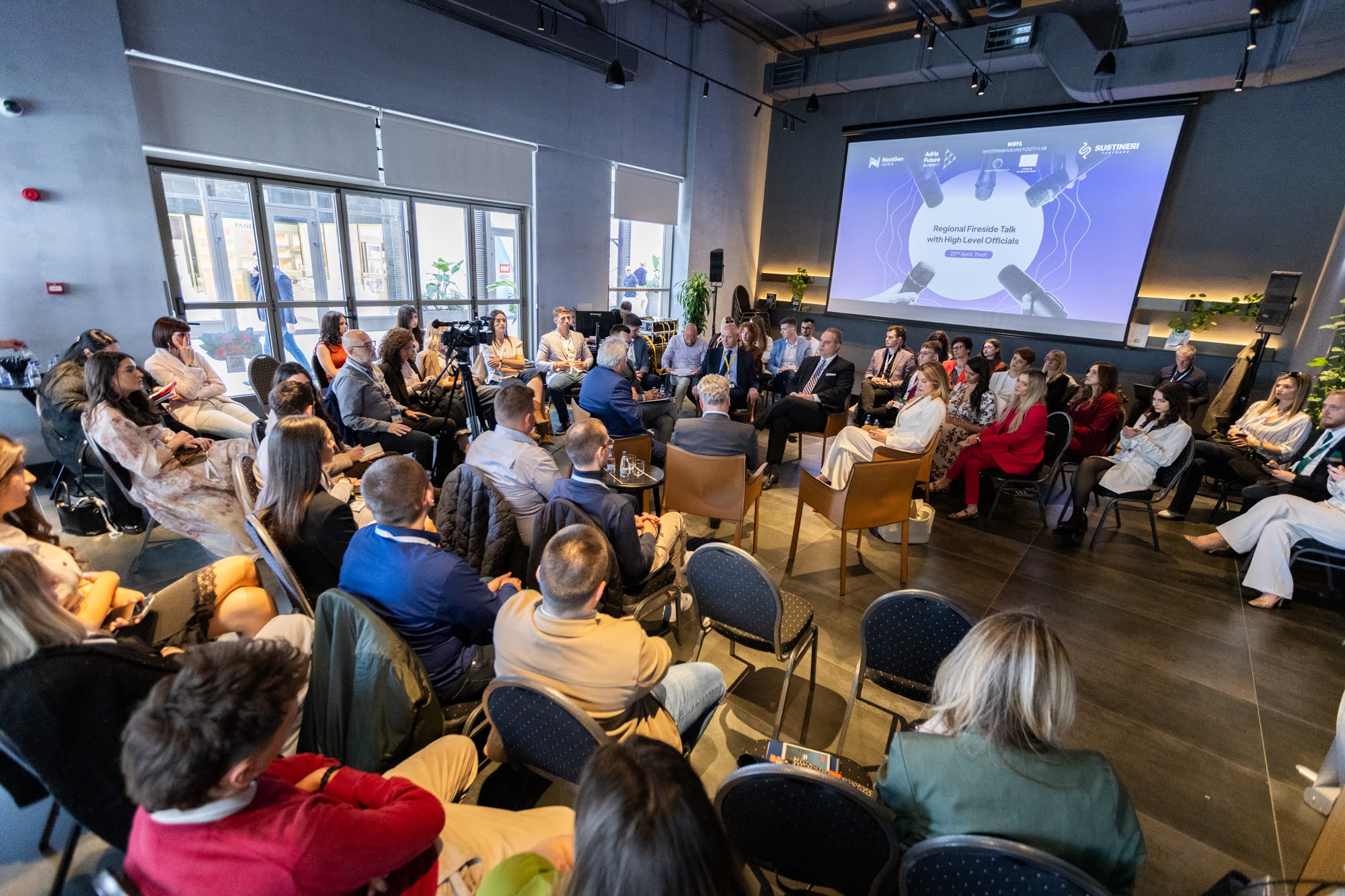
The Regional Cooperation Council (RCC), through the European Union-funded Western Balkans Youth Lab (WBYL2), hosted the fifth “Fireside Talk” with senior officials as part of the Adria Future 2026 Summit in Tivat.
The event, titled “Shaping the Future: Youth Cooperation and EU Integration,” provided a platform for direct dialogue between young people and policymakers.
Young participants from six Western Balkan countries took an active role, posing questions and steering the discussion toward issues of key importance to their generation, in front of senior officials including RCC Secretary General Amer Kapetanović, Montenegro’s Deputy Prime Minister for Foreign and European Affairs Filip Ivanović, Ireland’s Ambassador to Serbia and Montenegro Kevin Colgan, the European Union Ambassador to Montenegro Johan Sattler, and Biljana Brethuejt, founder of Sustineri Partners and the Adria Future Summit.
Topics discussed included stability in the Western Balkans, progress in the European Union integration process, and strengthening regional cooperation. The panel was moderated by Ognjen Marković, Team Leader of WBYL2 at the RCC.
Kapetanović highlighted the importance of integrating youth into broader policy frameworks.
“The Regional Cooperation Council plays a key role in ensuring that young people are not treated in isolation, but are included in broader strategies and recognized as a cross-cutting priority linked to economic growth, social cohesion and democratic resilience,” he said, adding that initiatives such as WBYL2 aim to translate youth voices into concrete outcomes.
Ivanović underlined Montenegro’s leading position in the EU accession process, describing the goal of full membership by 2028 as realistic.
“We cannot achieve this goal without the energy and critical thinking of younger generations,” he said, adding that through chairing the Berlin Process and hosting the upcoming EU–Western Balkans summit, Montenegro is demonstrating its commitment to regional stability, with youth playing an active role in policymaking.
During the discussion, young participants raised questions about the EU integration process, calling for clearer timelines and greater inclusion. They also stressed the need for expanded opportunities, including quality education, mobility programmes and fair employment prospects within the region.
They emphasized that staying in the Western Balkans should be a sustainable and attractive choice, while calling for stronger involvement in decision-making processes.
Sattler stressed the need to engage, connect and empower young people by giving them a structured role in shaping the European agenda, expanding opportunities through programmes such as Erasmus+, and ensuring that investments in education and skills translate into real opportunities, resilience and long-term trust in the European path.
Colgan pointed to Ireland’s experience as a strong example of the transformative impact of EU membership, highlighting the importance of open dialogue and the decisive role of youth in addressing complex societal challenges.
Brethuejt also emphasized the importance of platforms that connect different stakeholders, noting that investing in knowledge and opportunities for young people is essential for building a sustainable future in the region.
The session was marked by a high level of engagement from young participants, who actively contributed to shaping the discussion and described this open and direct format as the way they want to be heard and involved in decision-making processes affecting their future.
Ahead of the session, Kapetanović delivered a keynote address at the opening of the Adria Future Summit on regional cooperation and the path toward EU integration.
As part of ongoing efforts, WBYL2 is also organizing the Youth Policy Lab Midterm Conference on Disinformation and Media Literacy on April 23 in Tivat, further strengthening engagement in addressing key challenges affecting young people across the region.