


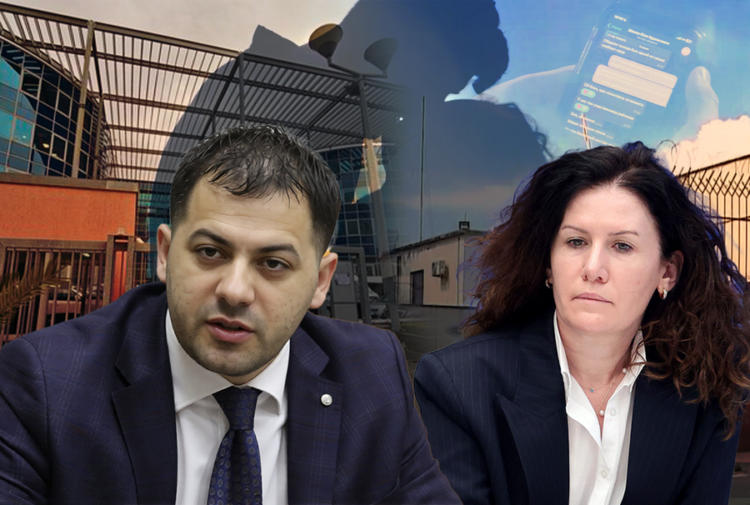
Albania’s former intelligence chief is under house arrest in an investigation into the alleged disclosure of classified information to a businessman. The case has widened into a debate over the security of NATO-member Albania’s intelligence system after the former spy chief also accused a prominent investigative journalist of meeting Serbian agents.
TIRANA, Sept 24 (BalkanView) – An investigation into Albania’s former intelligence chief has developed into one of the country’s most sensitive security cases in years, involving allegations of leaked state secrets, hundreds of contacts with a businessman under investigation and questions over whether intelligence information may have been used against journalists.
Vlora Hyseni, until recently head of Albania’s State Intelligence Service, known by its Albanian acronym SHISH, is under house arrest while prosecutors investigate suspected disclosure of classified information and assistance to a person under criminal investigation.
Hyseni denies wrongdoing. No court has ruled on her guilt and the proceedings remain at the investigative stage.
The case is particularly sensitive because Albania has been a NATO member since 2009 and its intelligence service exchanges information with Western partner agencies.
President Bajram Begaj is expected to convene Albania’s National Security Council next week following the developments, Top Channel reported, citing presidential sources.
Who is Vlora Hyseni?
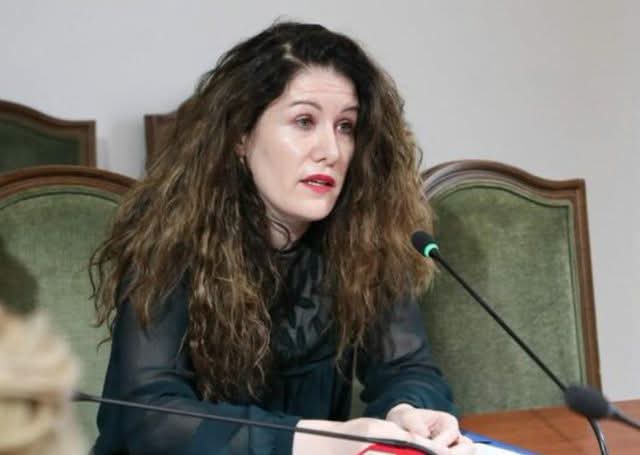
Hyseni took over SHISH in 2023 after previously serving in senior positions in neighbouring Kosovo’s intelligence agency.
Her appointment attracted attention because it placed a former Kosovo intelligence official at the head of Albania’s principal civilian intelligence service.
The latest investigation centres on her contacts with Ergys Agasi, an Albanian businessman whose name has emerged in a broader investigation involving the National Agency for Information Society, or AKSHI, the institution responsible for much of Albania’s government digital infrastructure.
Prosecutors suspect Hyseni disclosed classified information and assisted Agasi, according to accounts of the investigation published by Albanian media.
Hyseni has disputed the allegations.
Hundreds of communications under scrutiny
Investigators are examining extensive communications between Hyseni and Agasi, including telephone calls, video calls and exchanges of electronic material.
Some Albanian media have reported more than 500 contacts between them during the period under investigation.
Hyseni has said her communications with Agasi were connected to intelligence cooperation.
Details of the evidence remain restricted, however, and a special court has prohibited publication of information from Thursday’s closed hearing.
Journalist Anila Hoxha of Top Channel, citing sources familiar with the proceedings, reported that Hyseni denied the allegations during the hearing and requested that her seized mobile phone be examined by partner agencies outside Albania.
She also maintained that she had not disclosed classified documents while running SHISH, according to Hoxha.
The request concerning her telephone could become important because electronic communications appear to form a significant part of the investigation.
A second controversy: the journalist
The case acquired another dimension when Hyseni confronted Klodiana Lala, one of Albania’s best-known investigative journalists, outside the Special Court.
Lala, whose reporting has focused for years on organised crime, corruption and the justice system, questioned Hyseni about her relationship with Agasi.
Instead of answering directly, Hyseni asked Lala how she attended meetings with “Serbian agents” in rooms at Tirana’s Rogner Hotel.
Hyseni did not publicly present evidence supporting the allegation.
Lala rejected the claim and announced that she would file a criminal complaint.
The exchange prompted condemnation from Albanian journalist organisations and the regional SafeJournalists network, which raised concerns about possible intimidation of a reporter.
The incident is particularly sensitive because Hyseni previously controlled an intelligence agency with access to classified information.
It is not publicly established whether SHISH ever monitored Lala, whether information concerning her professional contacts existed in intelligence records, or how Hyseni obtained the information on which she based her allegation.
Those questions have now become part of the public debate surrounding the case.
Separating evidence from viral claims
The investigation has generated a flood of allegations in Albania’s highly competitive television and online media environment, making the distinction between documented evidence and unverified claims increasingly important.
One example is a purported message attributed to Hyseni and Agasi containing the phrase: “I’ll turn off the radars for you.”
The phrase circulated widely on social media and was subsequently repeated by several Albanian outlets.
Other media later reported that they could not find that specific message in the SPAK investigative material they had reviewed.
Its authenticity therefore remains unconfirmed.
What has been reported more consistently is that investigators possess extensive records of communications between Hyseni and Agasi. Prosecutors are seeking to determine whether those contacts involved the unauthorised transfer of classified information.
Why the case matters beyond Albania
For foreign observers, the importance of the investigation extends beyond the personalities involved.
Albania is a NATO member, an EU candidate country and a close security partner of the United States and European countries. Its intelligence institutions therefore operate within a broader network in which the protection of classified information is essential.
The case also comes as Albania’s Special Structure Against Corruption and Organised Crime, commonly known as SPAK, has become an increasingly influential institution in investigations involving senior officials, politicians and business figures.
Opposition politicians have portrayed the Hyseni investigation as evidence of a wider failure of state security under Prime Minister Edi Rama’s government.
Former prime minister and opposition Democratic Party leader Sali Berisha has alleged that criminal groups penetrated state institutions and warned that the case could damage Albania’s credibility with international security partners.
Those are political claims and have not been established by the investigation.
The government and Hyseni’s defence are also entitled to challenge the allegations and evidence through the judicial process.
A test for Albania’s institutions
The investigation now presents several tests for Albania.
Prosecutors will have to establish whether classified information was actually disclosed, what information was involved, who received it and whether national security was compromised.
The authorities may also face pressure to clarify whether intelligence resources were ever used to obtain information about journalists and their sources.
For the media, the challenge is different: separating evidence contained in the criminal investigation from politically charged allegations, television commentary and viral social-media claims.
Hyseni remains under house arrest while the investigation continues. The measure restricts her liberty but does not amount to a conviction.
What began as an investigation into alleged contacts between an intelligence chief and a businessman has therefore grown into a broader examination of how Albania protects its secrets, controls its intelligence institutions and safeguards journalists scrutinising the country’s most powerful officials.