



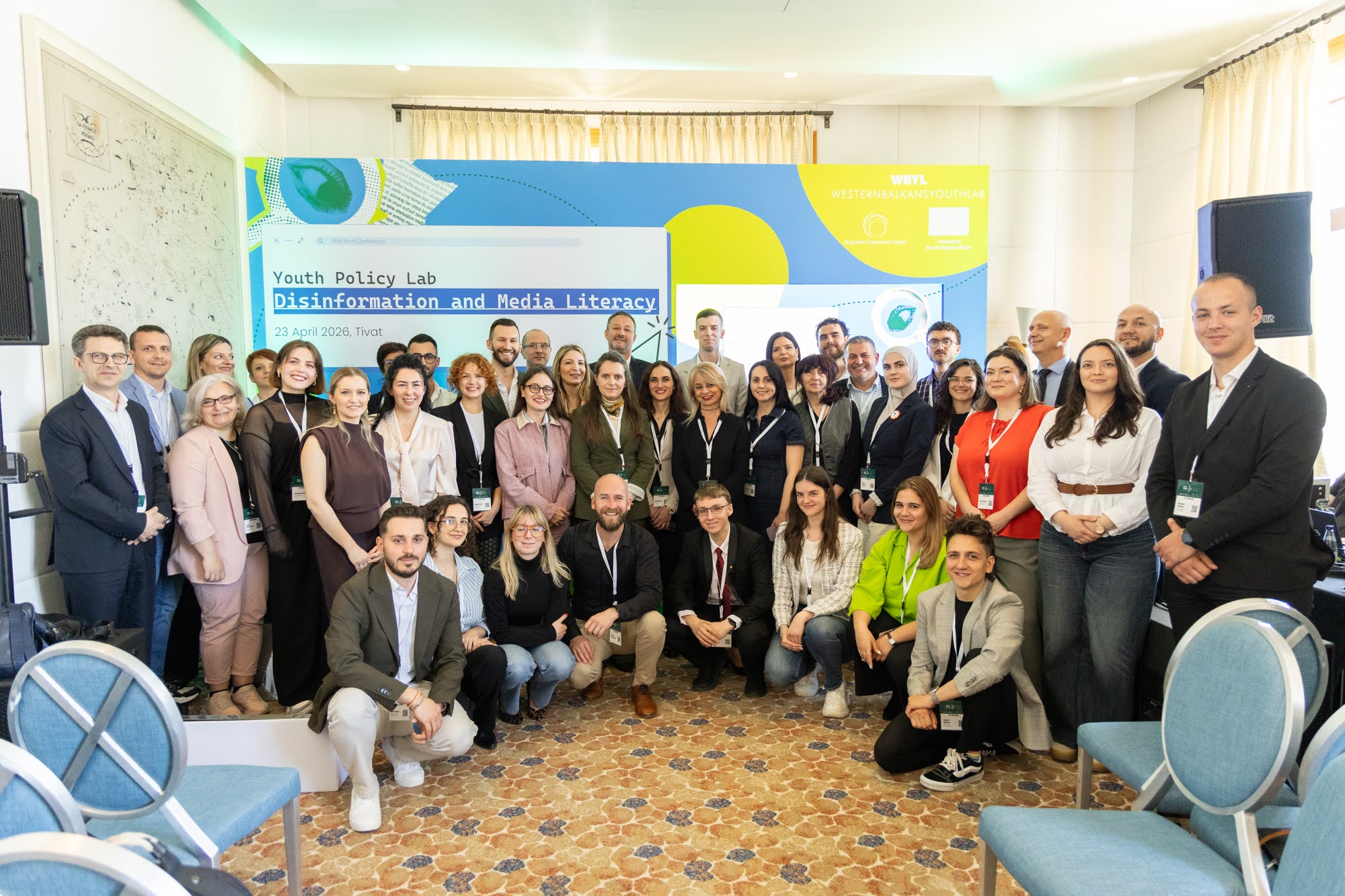
A regional initiative backed by the European Union is stepping up efforts to tackle disinformation and strengthen media literacy among young people in the Western Balkans, as policymakers and youth representatives met to assess progress and outline next steps.
The mid-term review conference, organised by the Regional Cooperation Council under its Western Balkans Youth Lab 2 (WBYL2) programme, brought together youth, civil society and government stakeholders in Tivat.
RCC Secretary General Amer Kapetanović said improving critical thinking and public engagement among young people is essential for democratic governance and long-term regional stability.
“Strengthening these capacities is not only a priority, but a strategic necessity for the future of our societies,” he said.
From dialogue to implementation
Participants presented ongoing projects aimed at countering disinformation, including research on the use of artificial intelligence tools, development of a code of conduct for social media influencers and preparation of guidelines to improve youth representation in media.
Other initiatives include proposals to introduce media literacy as an elective subject in school curricula, as well as training programmes and outreach campaigns to enhance youth participation in public discourse.
Organisers said the next phase of the programme will focus on implementing these initiatives over the coming six months.
Regional cooperation focus
The Youth Policy Lab is part of a broader effort to promote structured dialogue between young people and policymakers across the Western Balkans, with the aim of co-creating policies and strengthening youth participation in decision-making.
The current lab on disinformation and media literacy follows previous programmes addressing youth unemployment, mental health and environmental issues.
Officials said the initiative reflects growing concern over the impact of disinformation on democratic processes and the need for coordinated regional responses.