


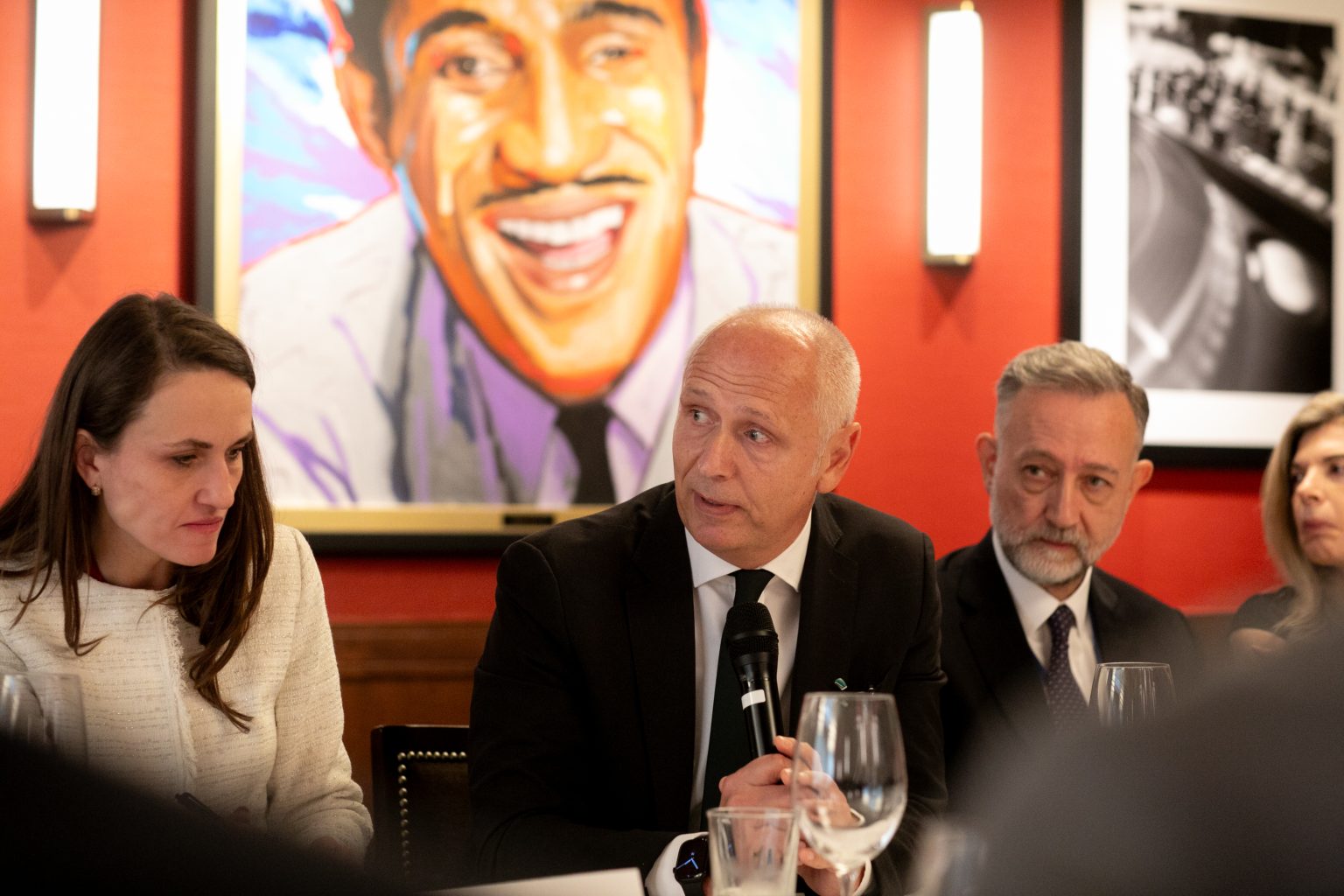
Western Balkan countries cannot wait for political tensions to ease before working together, RCC Secretary General Amer Kapetanović said in New York, arguing that regional cooperation will increasingly be tested by whether it can deliver practical results despite political disagreements.
NEW YORK, Sept 24 (BalkanView) – Regional cooperation in Southeast Europe must continue to deliver even when political relations become strained, Regional Cooperation Council Secretary General Amer Kapetanović said on Thursday, calling for a stronger focus on practical cooperation in connectivity, resilience and human capital.
Kapetanović was speaking at a meeting of foreign ministers from the South-East European Cooperation Process (SEECP), held in New York on the sidelines of the United Nations General Assembly High-level Week.
The meeting, organised under the Bucharest chairmanships of the SEECP and the Central European Initiative (CEI), focused on how regional cooperation frameworks can contribute to stability, resilience and sustainable economic growth.
“Regional cooperation is no longer measured by what we agree with when politics is easy, but by what continues to work when politics becomes difficult,” Kapetanović said.
“We cannot wait for a better political climate before we cooperate. It is through cooperation that we begin to create one.”
EU accession will not change geography
Kapetanović said regional cooperation remained an important bridge between European Union member states and countries aspiring to join the bloc, even as their individual paths towards membership progress at different speeds.
He identified human capital, connectivity, resilience, climate adaptation and disaster preparedness as areas where governments could achieve tangible results through joint action.
The Western Balkans have developed several regional cooperation mechanisms over the past two decades, many of them designed to complement the countries’ EU integration process.
Kapetanović rejected the idea that such mechanisms should merely serve as temporary substitutes for EU membership.
“If regional cooperation and the RCC were a waiting room, they would have emptied long ago,” he said.
“Accession changes our institutional relationships. It does not change our geography.”
Rather than creating additional regional structures, Kapetanović said governments should strengthen links between existing mechanisms and concentrate resources on initiatives capable of producing measurable benefits for citizens and businesses.
Ministers back RCC role
Foreign ministers participating in the meeting welcomed the RCC’s contribution to regional cooperation and its efforts to turn political commitments into concrete initiatives, according to the organisation.
The discussions come as Western Balkan countries continue to pursue EU membership while dealing with economic disparities, demographic pressures, infrastructure gaps and political disputes that have at times slowed regional initiatives.
The RCC, based in Sarajevo, works with governments and regional partners on economic integration, connectivity, digital transformation, human capital, security and other areas linked to the region’s European integration.
Talks with EU envoy Sørensen
During his visit to New York, Kapetanović also met EU Special Representative Peter Sørensen for talks on regional developments, cooperation and the European perspective of the Western Balkans.
He separately met Hungary’s Deputy State Secretary for International Cooperation István Lakatos.
Their discussions covered Hungary’s support for regional cooperation, connectivity and economic development, as well as European integration and possibilities for closer cooperation, according to the RCC.
Kapetanović’s message in New York centred on a broader argument: political disagreements need not prevent governments from cooperating in areas where their interests overlap.
For the RCC, the test will increasingly be whether regional mechanisms can continue producing practical results precisely when political consensus is hardest to achieve.