



The measure of success of this reform will be assessed by how much time we have given back to people, how many unnecessary trips we have prevented, how many timely consultations we have enabled, and how much we have reduced the injustice created by geographic distance.
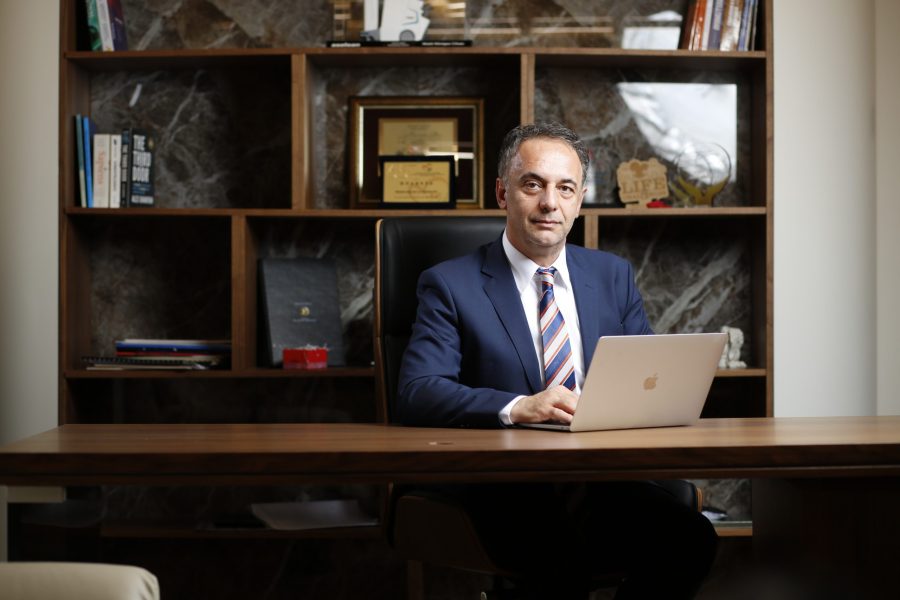
By Azir Aliu
The World Health Organization (WHO) announced in 2024 that telemedicine brings shorter waiting times, better monitoring of health conditions, lower costs, and greater accessibility of services. This assessment was not aimed at pointing to some distant future; its intention was to set the direction in which the development of serious healthcare systems is expected to move. At the same time, WHO adds that digital health should support equal and universal access to quality services, implying that telemedicine should not be perceived as an expression of technological fashion, but as a new organization of healthcare justice.
For this reason, the understanding of telemedicine can never be reduced solely to an installed and software-connected network of screens and cameras. Part of its essential nature also lies in whether the state has the will to reduce the burden that the patient has carried for too long while navigating the healthcare system. In our healthcare system, too often the first proof that the system is not sufficiently well organized is not the medical finding, but the journey from one point to another to meet a specific health-related need. Put simply, this burden is measured in hours and days lost on buses, in waiting rooms, in the need for certain families to adjust their rhythm to the appointment time of a member who needs a check-up. Nor is it unfamiliar for a person to spend more time reaching a health service than the duration of the examination itself.
In that context, the successful pilot project connecting Debar–Skopje–Delchevo carries significance that goes beyond the technical format of its implementation. It establishes a link between three points in the system, through which patients with skin conditions from Debar and Delchevo can receive expert diagnosis and recommendations from specialists at the Dermatology Clinic in Skopje without the need for physical presence. At the same time, processes are underway to further develop the technical infrastructure, train medical staff, and establish protocols for quality and safety of the service. Additional weight to this model is given by international experience, which shows that teledermatology has high efficiency, with 60 to 90 percent accuracy in diagnosis, 80 to 90 percent accuracy in prescribing therapy, providing advice and medical education, and up to 98 percent accuracy in assessing whether a patient should be referred to a higher level and how urgent that referral is. In this way, telemedicine ceases to be an abstract idea and becomes a real healthcare practice that shortens waiting times, reduces travel costs, and eases pressure on institutions in the capital.
Our idea is not to demonstrate that a certain connection works; on the contrary, our ambition is to show that a different logic can be established here as well—one different from the one we are accustomed to: medical knowledge moving toward the patient, instead of the patient always moving toward knowledge. This is a fundamental difference, one that carries a strong reform dimension in transforming part of our system.
This pilot showed something we have long hesitated to say and admit openly: not every medical problem requires travel, and not every healthcare service must be tied to physical presence in one place. There are conditions, follow-ups, consultations, and second opinions where the most valuable element is not the physical arrival at the facility where the service is provided, but timely access to knowledge. If knowledge can reach the person faster, in a more organized and closer way, then it is the obligation of institutions to make that happen.
In fact, this is the clearest way to understand the meaning that digitalization can bring into the real lives of patients. Telemedicine breaks down bureaucratic walls and administrative forms, freeing digitalization from the risk of being trapped in technical terminology and self-sustaining systems of the status quo. A social environment is created in which digitalization becomes a shorter path to the doctor, less lost time, faster access to specialists, and reduced institutional fatigue. Telemedicine is one of the most visible forms in which the patient directly feels the benefits of the digital transformation of healthcare.
I do not see telemedicine as a secondary branch of a broader digital agenda; on the contrary, I recognize in it its most human face. Where digitalization is infrastructure, telemedicine is its real or experiential consequence. Where the system builds new tools, telemedicine is the moment when those tools gain meaning in the life of a concrete individual. There is no clearer proof that a reform is real than when a citizen says, “today was easier for me.”
This is precisely why WHO addresses this topic as part of the broader effort to build more efficient, sustainable, and fair healthcare systems. In their strategic vision, digital health is not an end in itself; it is positioned as a means to ensure higher-quality, more accessible, and fair healthcare. This is an important lesson for us as well—technology has no value if it does not create greater closeness (both physical and in values) between the system and the individual.
The expansion of telemedicine to other cities, therefore, should not be understood as a technical expansion of a service, but as the spread of a new culture of healthcare. The OECD noted in 2025 that telemedicine is increasingly evolving from a pandemic necessity into a pillar of modern healthcare systems, and that its future depends on whether it will be embedded in everyday care, with equal access, sustainable financing, and smart use of data. This is an important message for us as well: place of residence must not be a punishment for the patient, and local healthcare facilities must not remain isolated peripheries of the system.
Particularly important is the next step, which plans to extend telemedicine to psychiatry, giving it the dimension of a deeper civilizational issue. Mental health has for too long been pushed to the margins of public policy—caught between stigma, inaccessibility, and silence. When distance is added to that, the system becomes even more difficult for those who need help the most. The American Psychiatric Association today states that telepsychiatry is a validated and effective medical practice that increases access to care, supported by a strong evidence base of better outcomes and higher patient satisfaction. This shows that including psychiatry in the next phase is a logical step for the development of modern healthcare in our country.
Of course, no serious actor claims that telemedicine is a replacement for everything. Not every condition can be monitored remotely, not every clinical assessment should be made through a screen, nor should every interaction between doctor and patient be digitalized. The basic idea is that where knowledge can travel without reducing the quality of care, the patient must not remain the only one who always has to travel. Therefore, the development of telemedicine is a political decision for the state to become closer, fairer, and more rational.
In the end, the success of this reform will be measured by how much time we have given back to people, how many unnecessary journeys we have prevented, how many timely consultations we have enabled, and how much we have reduced the injustice created by geographic distance. Otherwise, if digitalization cannot be felt in the daily life of the patient, it will remain only the technical language of institutions.
The author is Minister of Health of North Macedonia