


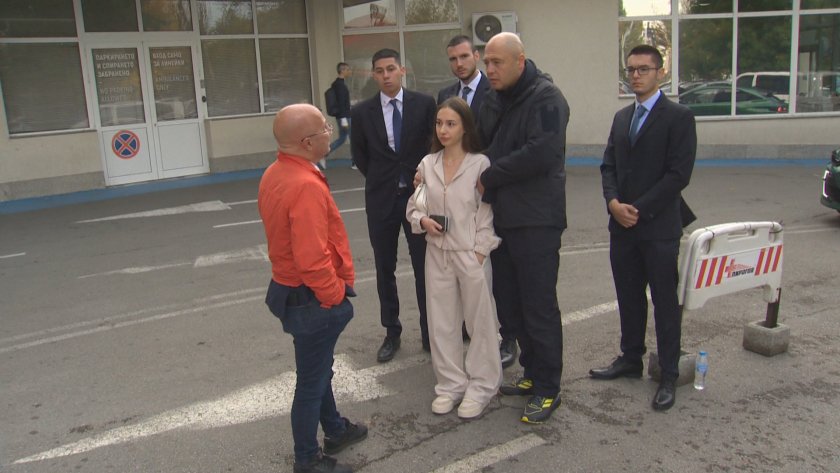
A 23-year-old woman facing trial over a fatal traffic accident has triggered a diplomatic dispute between North Macedonia and Bulgaria after appearing in Sofia despite a court-imposed travel ban. Skopje has now issued an international arrest warrant, raising a new question: Will Bulgaria hand over one of its own citizens?
SKOPJE, Oct. 13 (BalkanView) — North Macedonia has issued a national and international arrest warrant for Iva Mihajlova, a dual Macedonian-Bulgarian citizen facing criminal proceedings over a fatal road accident, after she travelled to Bulgaria despite a court order prohibiting her from leaving the country.
The warrant was issued at the request of the Basic Court in Kočani after prosecutors sought her detention, arguing that she had violated restrictions imposed to ensure her presence during the criminal proceedings.
According to Macedonian media reports, the court ordered 30 days of detention.
Mihajlova, 23, is currently in Bulgaria, where she has been receiving medical examinations and treatment at Sofia’s Pirogov emergency hospital.
Her unexpected arrival has sparked a diplomatic confrontation between Skopje and Sofia, with the two countries offering conflicting accounts of how she crossed the border and whether Bulgarian authorities should cooperate in securing her return.
Two passports confiscated, but she reached Bulgaria
The central question is how Mihajlova managed to leave North Macedonia despite having both her Macedonian and Bulgarian passports confiscated.
According to the prosecution, the documents were seized in October 2025 following a fatal traffic accident for which she is now facing criminal proceedings.
The court also prohibited her from crossing the border using an identity card.
Prosecutors had previously opposed requests to return her travel documents, citing the risk that she might leave the country.
Nevertheless, Mihajlova appeared in Bulgaria on Oct. 12.
North Macedonia’s Interior Ministry said its border control system contained no record of her departure.
According to information Macedonian authorities said they obtained from Bulgaria, there was also no registered legal entry into Bulgarian territory.
Interior Minister Panče Toškovski said Mihajlova had left North Macedonia and entered Bulgaria illegally.
However, Mihajlova and her Bulgarian lawyer, Nikolay Dimitrov, dispute that account.
Mihajlova claims border police allowed her to pass
Speaking to Bulgarian National Television, Mihajlova said she and Dimitrov crossed through an official border checkpoint.
She said she presented her Macedonian identity card when leaving North Macedonia and her Bulgarian identity card upon entering Bulgaria.
Asked how she was allowed to cross, Mihajlova said border police had cooperated with them.
Dimitrov gave a similar account, saying he collected Mihajlova from her hometown and accompanied her to Bulgaria because she required urgent medical treatment.
He insisted that they encountered no difficulties at the border.
Their statements directly contradict the border records described by the Macedonian authorities.
It remains unclear whether the crossing was improperly recorded, whether the pair used another route or whether other circumstances explain the discrepancy.
No publicly presented evidence has established that border officials deliberately helped Mihajlova evade the court restrictions.
Bulgaria’s ambassador summoned in Skopje
The case escalated diplomatically after North Macedonia’s Foreign Ministry summoned Bulgarian Ambassador Željazko Radukov.
Skopje expressed concern about Mihajlova’s arrival in Bulgaria and the potential implications for an ongoing criminal case.
Macedonian authorities stressed that holding another country’s citizenship should not provide protection from judicial proceedings.
They also said Bulgaria, as an EU member state, was expected to respect the rule of law and cooperate through established legal procedures.
Radukov rejected suggestions that the Bulgarian authorities had organised Mihajlova’s arrival or officially received her at a high level.
He said her appearance in Sofia had surprised the Bulgarian side.
The ambassador described the case as a humanitarian matter that should not have become a political dispute.
He also criticised the handling of Mihajlova’s requests to receive medical treatment abroad, arguing that legal mechanisms existed to permit such treatment even when an individual was subject to restrictions.
Macedonian prosecutors, however, have maintained that the travel restrictions were justified by the risk of flight.
The Basic Court in Kočani had previously refused to return Mihajlova’s travel documents, a decision upheld by the Court of Appeal in Štip.
Sofia frames the case as humanitarian
Bulgarian officials have emphasised Mihajlova’s medical needs and her Bulgarian citizenship.
Bulgarian President Iliana Yotova said she had not been informed in advance of Mihajlova’s arrival and learned about the development through media reports.
She expressed interest in the medical assessment being carried out at Pirogov hospital and indicated that she was prepared to meet Mihajlova.
The Bulgarian Foreign Ministry also said it had not participated in organising her journey.
Mihajlova’s Bulgarian lawyer has argued that medical considerations justified her travel and said the defence was prepared to challenge any international police notice through the appropriate procedures.
However, the need for medical treatment and the legal consequences of violating a court-imposed travel ban are separate questions.
The existence of an international arrest warrant does not automatically mean that Bulgarian authorities must immediately extradite her. Any transfer would depend on applicable legal procedures, the nature of the warrant and decisions by the competent Bulgarian authorities.
Opposition demands resignations over border security failure
The case has also triggered political controversy within North Macedonia.
The opposition Social Democratic Union of Macedonia (SDSM) demanded the resignation of Interior Minister Panče Toškovski and a full investigation into how Mihajlova left the country.
SDSM official Andrej Žernovski alleged that her departure may have been politically arranged, linking the incident to recent contacts between Macedonian and Bulgarian officials.
No evidence has been publicly presented to substantiate that allegation.
The political platform Conversations for the Future 12:05 called for the resignations of Toškovski, Foreign Minister Timčo Mucunski and Justice Minister Jeton Šašivari.
It questioned whether Mihajlova’s departure had been discussed during a recent meeting between Mucunski and Bulgarian Foreign Minister Velislava Petrova-Chamova in Sofia.
The opposition party Levica also demanded accountability.
The government has not confirmed any arrangement facilitating Mihajlova’s departure, and the circumstances of her border crossing remain under investigation.
International warrant creates new legal challenge
The issuance of an international arrest warrant moves the dispute beyond questions of border control and diplomatic protocol.
North Macedonia is now formally seeking Mihajlova through international police cooperation mechanisms.
Toškovski said the Interior Ministry would process the court’s decision and expected Bulgaria to act in accordance with international rules and European legal standards.
However, an international police alert and an extradition request are not identical procedures.
An Interpol Red Notice, if issued, is a request to locate and provisionally arrest a person pending extradition or similar legal action. It is not itself an international arrest warrant that automatically obliges another country to detain or surrender the individual.
Bulgarian authorities would have to assess any applicable request under domestic law and relevant international agreements.
Mihajlova’s Bulgarian citizenship could also become a factor in the legal process.
A criminal case becomes a bilateral dispute
The controversy comes at a sensitive moment in relations between North Macedonia and Bulgaria, which remain strained by disagreements over identity, minority rights and Skopje’s European Union accession process.
Bulgarian officials have presented Mihajlova’s situation primarily through the lens of medical treatment and the protection of a Bulgarian citizen.
Macedonian authorities have focused on the enforceability of judicial decisions and the principle that individuals facing criminal proceedings must remain accountable before the courts.
The two positions are not necessarily legally incompatible, but the unresolved circumstances of her departure have intensified mistrust.
Three questions remain central to the investigation: how Mihajlova crossed the border, whether any officials or other individuals assisted her in violating the restrictions, and how Bulgaria will respond to North Macedonia’s formal request.
The next stage will test whether Sofia and Skopje can separate a criminal justice matter from their broader political disagreements while respecting Mihajlova’s procedural rights and medical needs.