


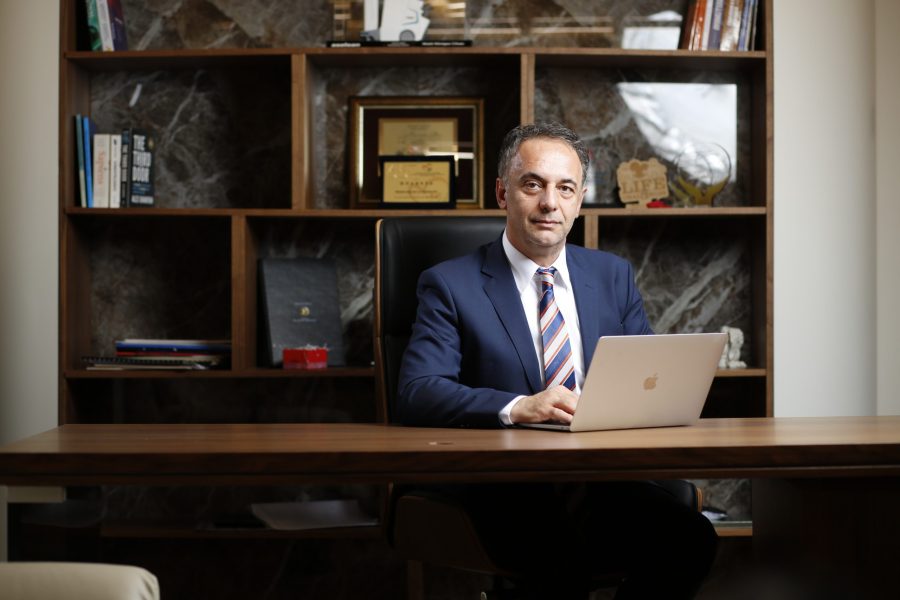
By Azir Aliu
For decades, we have perceived the hospital as a physical metaphor of healthcare—a solid structure one enters in pain and leaves with hope. Its limited and strictly defined spatial architecture has also become an architecture of our way of thinking about health, moving from the entrance, through admission, to the ward, to the bed, and to waiting for the doctor’s visit. But the most interesting healthcare processes and reforms taking place around the world today are changing this understanding, shaped by our localized experience. Increasingly, the question today is not where the hospital is located, but how far hospital care can reach. The answer to this dilemma requires defining the contours of the idea of a “hospital without walls.”
This is not a poetic idea or an image, nor a science fiction story or an illusion of the human mind. On the contrary, this idea should be accepted as a mature reorganization of medical responsibility within the system—something that is already characteristic of the most advanced healthcare systems in the world.
In England, virtual wards are defined as “hospital at home,” meaning hospital care delivered in the patient’s home, with the aim of providing treatment in a more natural environment while keeping hospital beds available for those who truly need them. In the United States, the program “Acute Hospital Care at Home” has already reached broad institutional scale; CMS (Centers for Medicare & Medicaid Services) reported that by October 2024, 366 hospitals were participating in this initiative, with more than 31,000 patients treated. In Australia, “Hospital in the Home” has long been part of the institutional vocabulary of the public healthcare system.
The value of these experiences lies not only in their novelty or in the enthusiasm they may generate in less developed systems. It lies in the fact that they are increasingly backed by concrete results, not merely institutional enthusiasm.
A study published in JAMA Network Open in 2025, conducted in rural areas of the United States and Canada, shows that some adult patients with acute conditions can be successfully treated at home when the care provided by the system is well organized. This means that the quality of care depends not only on the walls that surround it, but on the precision with which it is organized.
Of course, this is where more serious aspects of the topic begin to emerge. A hospital without walls requires a higher level of systemic discipline and institutional responsibility. It requires careful patient selection, home visits, remote monitoring, 24-hour availability of medical teams, and a clear distribution of responsibilities. In the best models functioning around the world, the home becomes an extension of the hospital because protocols are firmly established and their implementation is precisely coordinated. Where these preconditions are lacking, the idea may remain only an appealing phrase.
The question that naturally arises is whether this concept makes sense for North Macedonia. My assessment is that it does—but only if it is approached gradually, with clinical rigor and without rhetorical exaggeration. In the report “North Macedonia: Health system summary 2025,” published by the European Observatory on Health Systems and Policies in March 2026, it is emphasized that the country is expanding digitalization through “Moj Termin,” electronic health records, e-prescriptions, the “My Health” portal, and telemedicine capabilities. This is not yet “hospital at home,” but it is precisely the foundation without which such an idea cannot take sustainable shape, legal certainty, and clinical validation.
Within this picture, there is also a domestic signal that the direction can already be discerned. In Debar, a pilot project for telemedicine in dermatovenereology was launched, connecting Skopje, Debar, and Delchevo. The choice of these regions was not accidental; they are peripheral areas where the lack of specialists and distance from larger centers directly affect access to healthcare. This pilot project is not a “hospital without walls” in the full sense of the term, but it is part of the same reform logic: bringing knowledge closer to the patient, instead of always placing the burden of the system on the patient.
This is precisely where it is worth addressing the criticism that may arise: is it justified to open such a topic at a time when there are waiting lists, staff shortages, inequalities in access, and organizational weaknesses? These very problems make the topic relevant. In a system where traveling to a specialist often means cost, fatigue, and lost time, where a hospital bed is a limited resource and some patients stay longer than necessary, any model that safely brings care closer to the home represents a more rational organization of existing capacities. In other words, this is not a discussion about some luxurious future, but about using the present more wisely.
For North Macedonia, the most reasonable path would be a carefully designed pilot project with clearly defined patient categories. For example: patients receiving intravenous antibiotic therapy, stabilized cardiology and pulmonology patients, certain post-acute conditions requiring supervision but not full hospitalization, as well as cases from rural areas where distance itself represents an additional risk. This would require mobile medical teams, clinical protocols for admission and discharge, remote monitoring, clearly regulated responsibilities, and a financing model that recognizes the service, not just the physical use of a bed. International experience suggests that gradual implementation is the safest path toward sustainable practice.
At its core, this is about a deeper shift in healthcare culture. Modern medicine is built around institutions. But people live at home—with their families, their habits, their fears—often on the periphery. When the healthcare system matures enough to transfer part of its clinical power precisely there, it not only preserves its seriousness, but also deepens its humanism.
Therefore, the hospital without walls deserves to be introduced in our context as well—with caution and a sense of reality—as a careful step toward a more flexible and fair system that connects technology, clinical rigor, and the dignity of the patient.
The author is Minister of Health of North Macedonia