


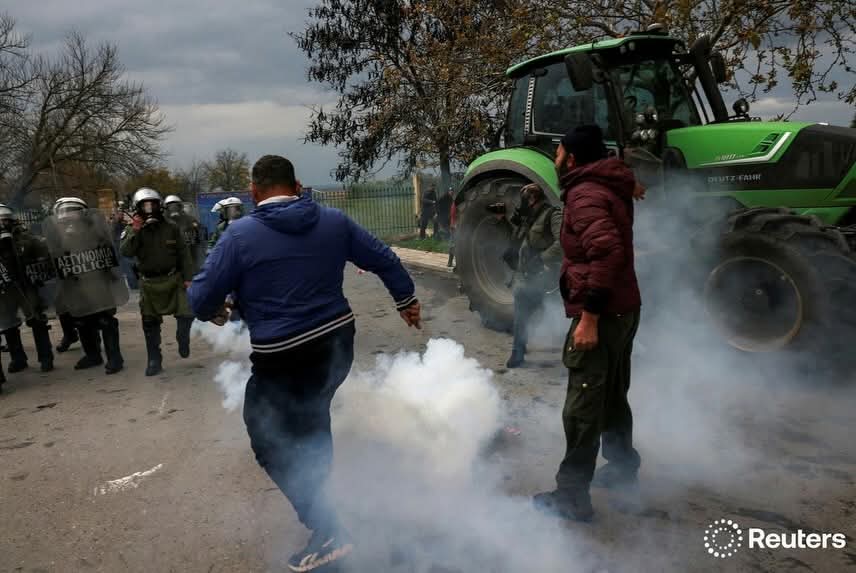
Greek riot police fired tear gas on Friday to stop farmers from blocking the main access road to Thessaloniki’s international airport, as protests over delayed EU-backed subsidy payments widened across the country.
Farmers have deployed thousands of tractors at border crossings and major highways, disrupting traffic and threatening full blockades of roads, airports and ports.
Police have redirected traffic in parts of northern and central Greece to avoid the blockades. Farmer protests at Greece’s borders with Bulgaria, Turkey and North Macedonia have already slowed truck movement, causing long queues of freight vehicles.
The delays follow a government review of subsidy claims after revelations of widespread fraud in applications for EU farm payments. Farmers say the holdup amounts to collective punishment, leaving many unable to buy seeds and fertiliser or plant crops for next season. The sector has also been hit by an outbreak of sheep and goat pox that forced mass culls.
“We’re bankrupt,” said farmer Vasilis Mavroskas. “We should be sowing, and instead we’re on the streets. If we stop producing, think about what will happen to food supplies in the cities.”
Around 200–300 farmers with more than 100 tractors blocked a road near Thessaloniki airport. A small group attempted to break through a police line to cut off the terminal’s main access road.
Public Order Minister Michalis Chrisochoidis said the government remained open to dialogue but would not allow blockades of critical transport routes.
Christos Tsilias, vice president of the Thessaloniki farmers’ union, urged the public to support the protesters. “At this moment the plains of Thessaloniki and nearby Halkidiki are not planted,” he said. “We don’t have money to buy raw materials.”
Farmer protests over subsidies are frequent in Greece, and previous blockades have halted road links between the country’s north and south for weeks.
The subsidy scandal led to the resignation of five senior officials in June and the gradual closure of the state agency that managed agricultural payments. Dozens of people have been arrested over alleged false claims following an investigation by the European Public Prosecutor’s Office.
The EU fraud office said in October the case involved “a systematic large-scale subsidy fraud scheme and money-laundering activities.”