


Western Balkans agree new green agenda as climate costs
ŽABLJAK, Montenegro, Sept 18 (BalkanView) – Ministers from the six Western Balkan economies endorsed a 2026 declaration on the Green Agenda on Friday, setting out new regional commitments on climate resilience, biodiversity, forests and plastic waste ahead of the Berlin Process summit in October.
The declaration was adopted at the Third Annual Ministerial Meeting on the Green Agenda for the Western Balkans in Žabljak, Montenegro, organised by the Regional Cooperation Council (RCC) with the Montenegrin government and German and European Union support.
The package includes a Western Balkans climate adaptation strategy, a biodiversity plan to 2030, a forest landscape restoration plan and measures aimed at reducing some of the most common single-use plastics.
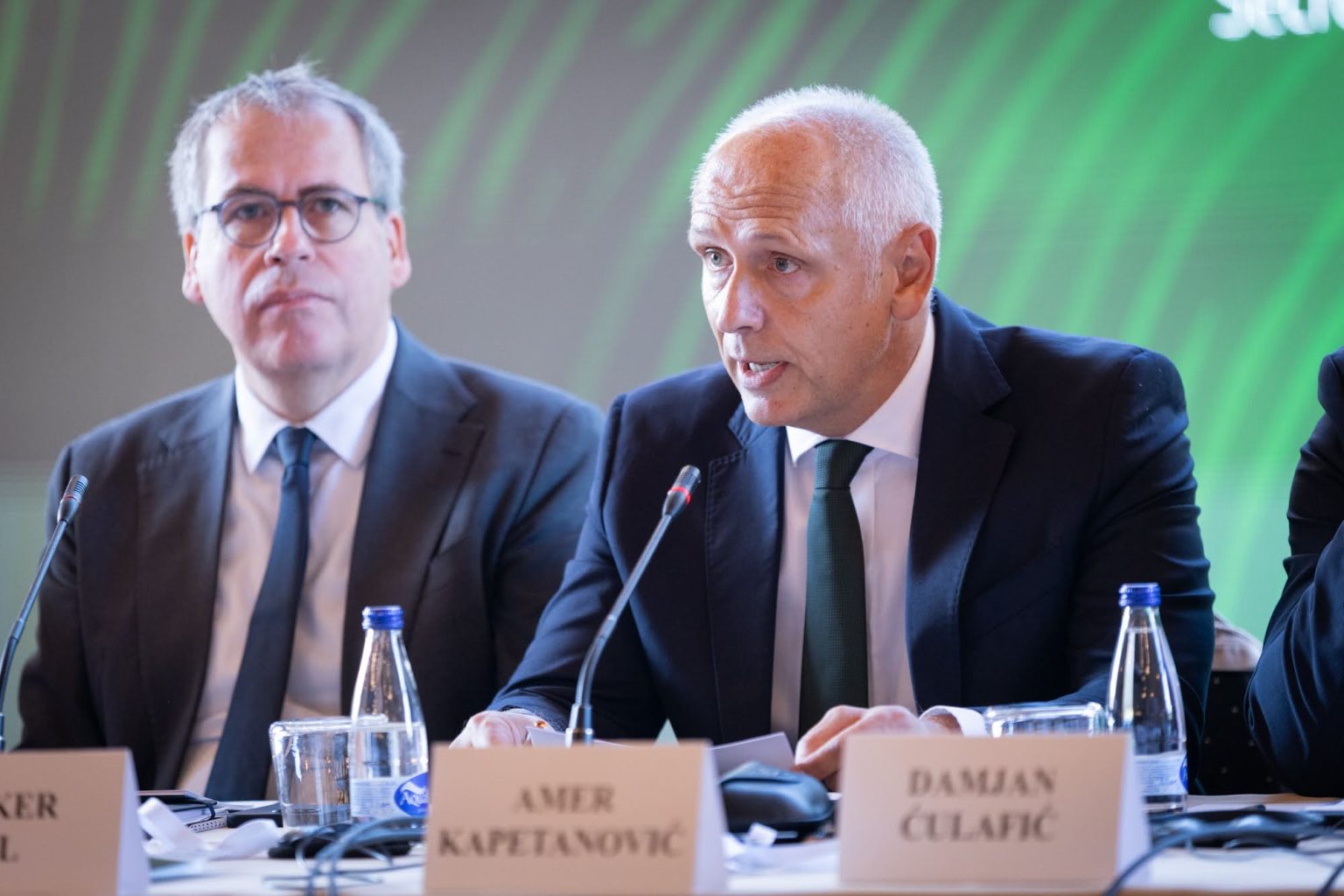
But RCC Secretary General Amer Kapetanović warned that endorsement alone would not be enough.
“Last year alone, 225,000 hectares burned across the Western Balkans in more than 430 large wildfires,” Kapetanović said.
“The cost of the transition arrived before the transition did.”
He said regional initiatives on climate adaptation, biodiversity, plastics and forest restoration were now taking shape, but highlighted the gap between political commitments and implementation.
“None of it yet has a budget, or a responsible name behind it,” he said. “Making that happen is the test for our joint work ahead.”
Climate adaptation and water resilience
One of the central measures endorsed by ministers is the WB6 Climate Adaptation Strategy.
It is intended to establish a more structured system of regional cooperation on adaptation planning, climate risks and water resilience.
Climate-related risks have become increasingly prominent across the Western Balkans, with wildfires, droughts, floods and pressure on water resources posing challenges that often cross national borders.
The declaration calls for faster and more measurable implementation of the Green Agenda rather than a new set of broad environmental aspirations.
Montenegro’s Minister of Ecology, Sustainable Development and Northern Region Development Damjan Ćulafić said the agreement should provide political direction for the next phase.
“This Declaration is not the end of the process, but a political confirmation of our commitment to faster, more measurable and better-coordinated progress across the region,” Ćulafić said.
New plan for forests and biodiversity
Ministers also endorsed the WB6 Biodiversity Strategic Plan 2030.
The plan is aligned with the EU Biodiversity Strategy for 2030 and the Kunming-Montreal Global Biodiversity Framework and is intended to strengthen regional cooperation on protecting ecosystems and biodiversity.
A separate WB6 Forest Landscape Restoration Plan identifies priority measures for restoring forest ecosystems considered important for biodiversity and climate resilience.
The measures come against the backdrop of the wildfire figures cited by Kapetanović, which the RCC said showed the increasing economic and environmental cost of climate change.
Western Balkans target single-use plastics
Plastic pollution is another major element of the new regional package.
The six economies endorsed a regional pledge to phase out the five most commonly littered single-use plastic products.
The initiative is intended to encourage harmonised action across the region rather than different rules in each economy.
Ministers also backed a Regional Extended Producer Responsibility Framework for Plastic Packaging.
Under the approach, producers would assume greater responsibility for managing waste generated by packaging placed on the market.
Regional harmonisation could become particularly important as Western Balkan economies progressively align their environmental legislation with EU standards.
Germany: Green transition is about competitiveness too
Germany, which supports the process through its Regional Climate Partnership with the Western Balkans Six, said environmental reform should also be viewed through the prism of economic competitiveness and security.
Bettina Hagedorn, Parliamentary State Secretary at Germany’s Federal Ministry for the Environment, Climate Protection, Nature Conservation and Nuclear Safety, said the agreements demonstrated the region’s commitment to cooperation and a shared European future.
Moving rapidly from political endorsement to practical implementation would strengthen “resilience, security and competitiveness” across the Western Balkans, she said.
The EU has made the green transition a central component of its economic and regulatory agenda, meaning environmental standards are also increasingly important for Western Balkan economies seeking closer integration with the bloc.
From Žabljak to the Berlin Process summit
The location of the meeting carried symbolic importance for Montenegro.
Žabljak was where Montenegro adopted its declaration defining the country as an ecological state 35 years ago.
Montenegro is also chairing the Berlin Process in 2026 and is due to host its leaders’ summit in October.
Ćulafić said the outcomes from Žabljak should be transformed into a concrete contribution to the summit’s conclusions.
The ministerial meeting brought together representatives of the Western Balkans Six, the European Commission, Germany, regional organisations and international partners.
Discussions covered climate and water resilience, biodiversity, nature protection, the circular economy and sustainable financing.
The meeting continues on Saturday with sessions focusing on how to implement the commitments, including plastic pollution, producer responsibility, biodiversity and ecosystem restoration, monitoring and verification systems and sustainable finance.
Those discussions could prove as important as Friday’s political declaration.