


Western Balkan leaders meet in Montenegro as the EU searches for a faster enlargement formula
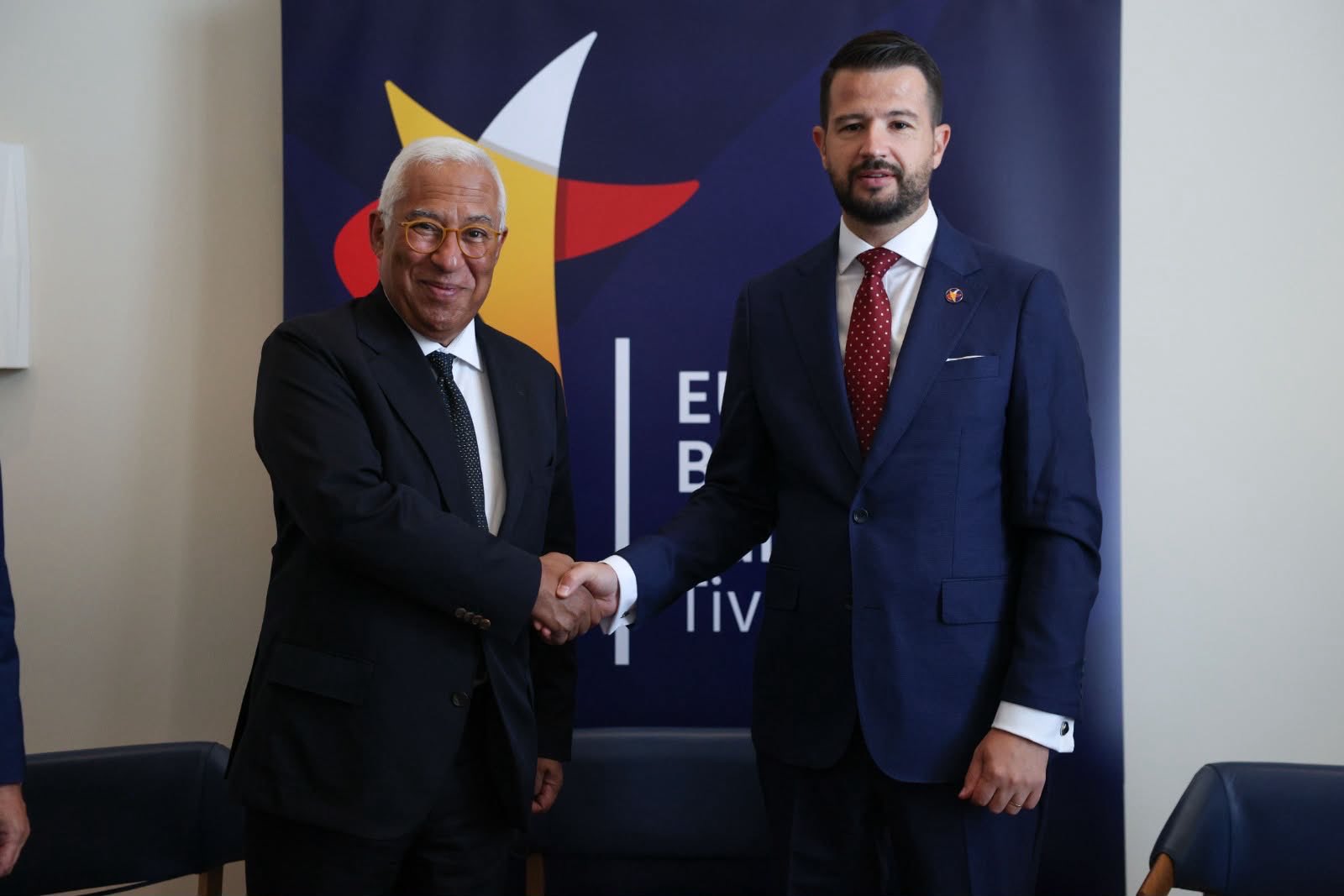
TIVAT, Montenegro, June 5 (BV)– European Union leaders met their Western Balkan counterparts in Montenegro on Friday in a summit aimed at reassuring the region that EU membership remains a real prospect, even as the bloc debates how to expand without weakening its own institutions.
French President Emmanuel Macron, German Chancellor Friedrich Merz, Italian Prime Minister Giorgia Meloni, European Commission President Ursula von der Leyen and European Council President António Costa joined leaders from Albania, Bosnia and Herzegovina, Kosovo, Montenegro, North Macedonia and Serbia in the coastal town of Tivat.
The summit focused on bringing the six Western Balkan countries closer to the EU single market, while exploring new incentives to speed up reforms and keep the region anchored to Europe.
According to European officials, Montenegro and Albania are now seen as the most advanced candidates. Montenegro hopes to become the EU’s 28th member by 2028, while Albania has received praise for progress in rule-of-law and judicial reforms.
But the rest of the region remains stuck in different political traps.
North Macedonia is blocked by the dispute over constitutional amendments linked to Bulgaria. Serbia faces criticism over democratic backsliding and its close ties with Russia and China. Kosovo’s path is complicated by non-recognition from five EU member states and the stalled dialogue with Belgrade. Bosnia and Herzegovina continues to struggle with internal divisions and slow reforms.
The summit is also expected to support a Franco-German initiative designed to give candidate countries earlier access to parts of the EU single market and possible observer roles in EU institutions before full membership.
Supporters say this could keep enlargement alive and prevent frustration in the region. Critics warn it could create a “second-class membership” model, where Balkan countries receive limited benefits without real decision-making power.
Costa said enlargement was no longer only a political promise, but a strategic necessity.
“For the EU, enlargement to the Western Balkans is the most important geopolitical investment,” he said during his regional tour.
The renewed push comes as Ukraine and Moldova also seek EU membership, raising concerns in the Balkans that newer candidates could overtake countries that have waited for decades.
For Brussels, the message from Tivat is clear: the door remains open. But the speed of entry will depend on reforms, political stability and each country’s ability to meet EU conditions.
For North Macedonia, the summit brings no new shortcut. The EU position remains unchanged: constitutional amendments are the next step. Without them, Skopje risks falling further behind Albania and Montenegro in the race toward membership.