


BRUSSELS (BalkanView) — Travellers between the European Union and the Western Balkans could eventually use their mobile phones at domestic rates after the European Commission proposed opening negotiations to bring all six Western Balkan economies into the EU’s “Roam Like at Home” system.
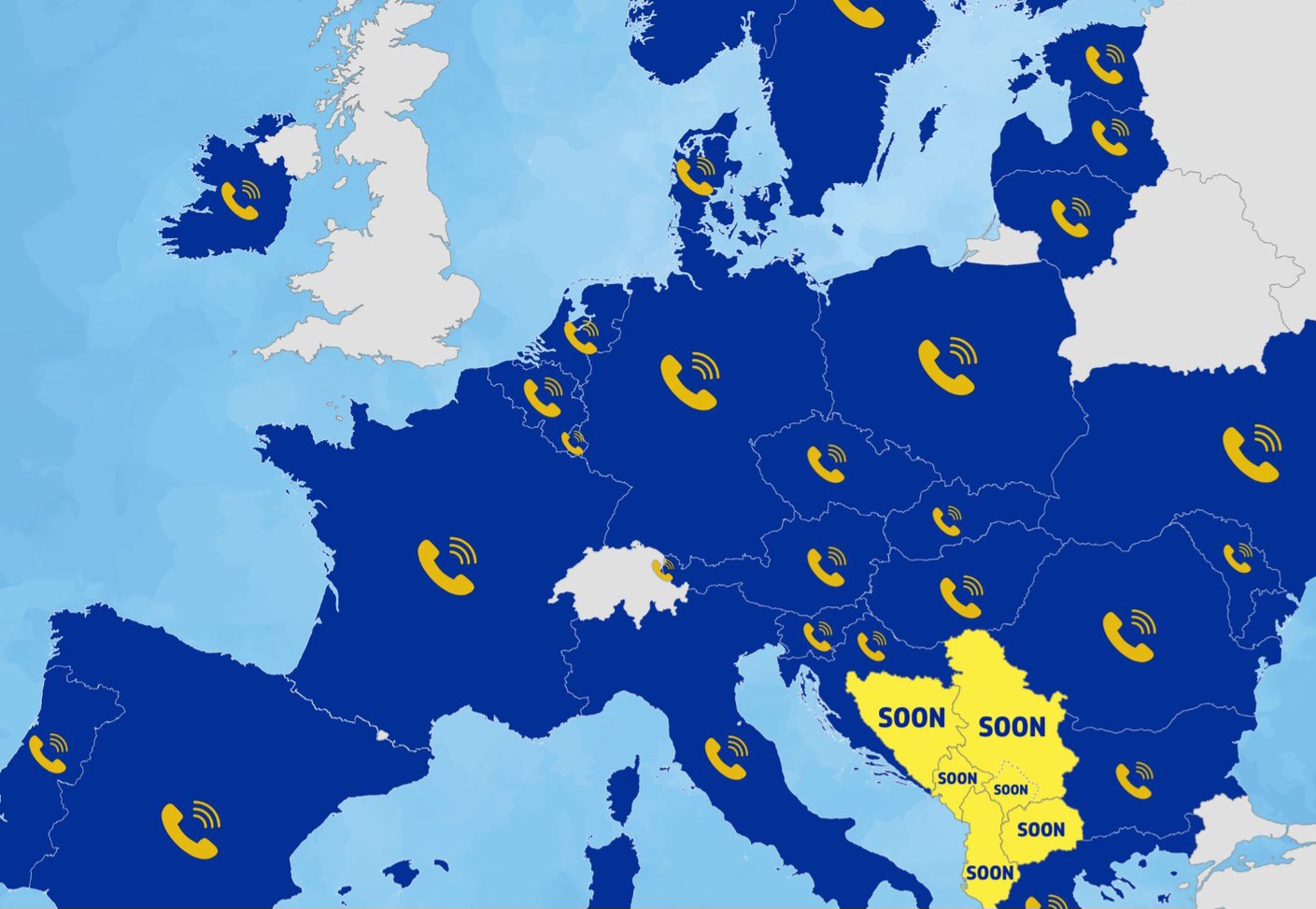
The proposal covers Albania, Bosnia and Herzegovina, Kosovo, Montenegro, North Macedonia and Serbia, potentially removing one of the everyday costs that still separates the region from the EU’s single market.
If agreements are concluded and each Western Balkan partner fully aligns its legislation with EU roaming rules, travellers would be able to make calls, send SMS messages and use mobile data without additional roaming surcharges.
The change would work in both directions.
That means Western Balkan citizens travelling to EU countries could use their phones under domestic-rate conditions, while EU residents visiting the six Western Balkan economies would receive the same benefit.
Where can Europeans already roam without extra charges?
The EU’s “Roam Like at Home” regime currently allows travellers within the 27 EU member states, as well as Iceland, Liechtenstein and Norway, to use calls, SMS and mobile data under domestic-rate conditions.
Moldova and Ukraine have also joined the EU roaming area.
The Western Balkans Six would represent the next major geographical extension if negotiations are successfully completed.
The six countries waiting to join
The European Commission’s proposal covers Albania, Bosnia and Herzegovina, Kosovo, Montenegro, North Macedonia, and Serbia
The Commission proposed opening negotiations on Feb. 25, 2026.
But travellers should not throw away their roaming packages yet.
The Commission’s proposal does not mean EU roaming charges have already disappeared in the Western Balkans.
Negotiations must first take place, agreements have to be finalised with the individual partners, and each must fully align with the relevant EU roaming legislation before “Roam Like at Home” can apply.
The Commission announcement cited here does not provide a date when surcharge-free EU-Western Balkans roaming will begin.
Western Balkans already have their own roaming-free zone
The move would build on an important regional achievement.
The six Western Balkan economies already operate a regional “Roam Like at Home” regime, which abolished roaming charges among Albania, Bosnia and Herzegovina, Kosovo, Montenegro, North Macedonia and Serbia.
The next step would effectively connect that regional roaming area with the much larger EU system.
For millions of people who regularly travel between the Western Balkans and EU countries for work, education, family visits, tourism and business, the practical impact could be significant.
Instead of buying additional roaming packages, switching SIM cards or restricting mobile-data use after crossing the EU border, consumers could eventually continue using their domestic mobile plans, subject to the applicable EU roaming rules and fair-use conditions.
A small change with a big integration message
For the Western Balkans, removing roaming surcharges would carry significance beyond cheaper phone bills.
EU integration is usually discussed through negotiation clusters, constitutional changes, rule-of-law reforms and political conditions — processes that can appear distant from citizens’ everyday lives.
Roaming is different.
It is one of the EU policies whose effects can be felt immediately after crossing a border.
The Commission said cheaper and simpler connectivity would benefit not only tourists but also students, workers and businesses, making it easier for people on both sides to remain connected while abroad.
If negotiations succeed, the six Western Balkan economies would move another practical step closer to participating in an area that already stretches across much of Europe.
For travellers, European integration could eventually become as simple as crossing the border — without turning off mobile data.