


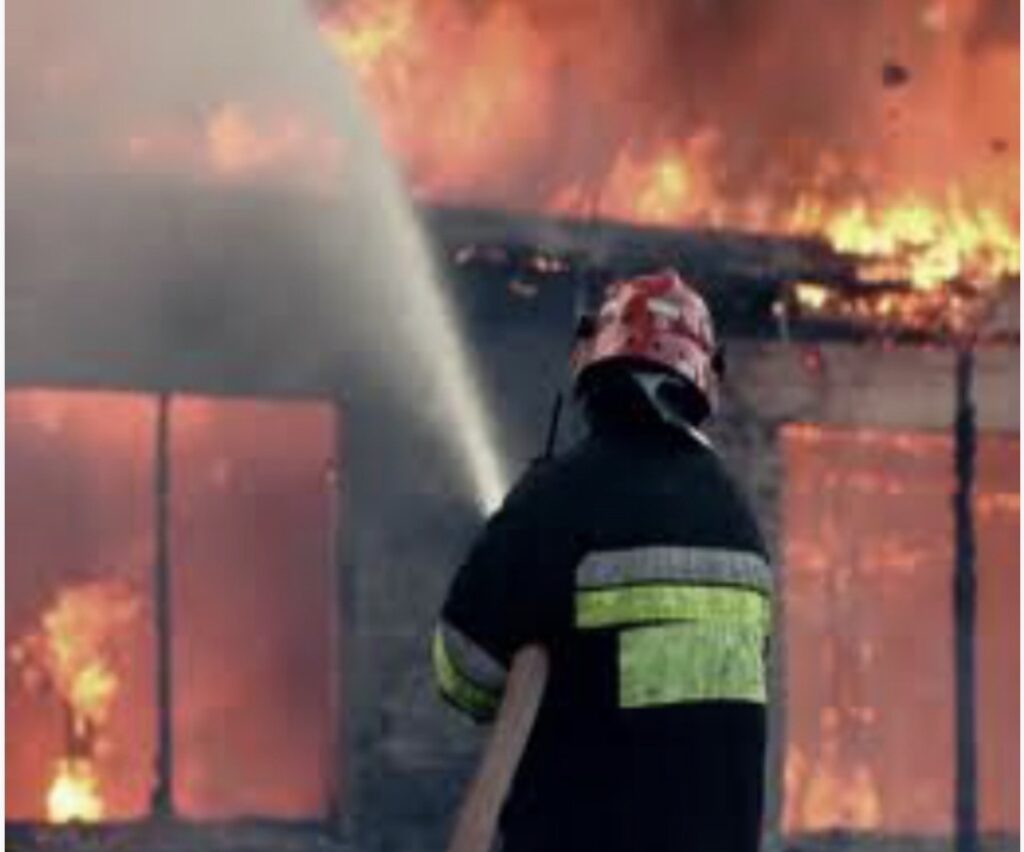
Wildfires burned across several parts of Greece for a third day on Friday, killing three firefighters, forcing residents and tourists to evacuate and prompting authorities to restrict access to forests as strong winds fuelled new and rekindled fronts.
The most severe situation was reported south of Rethymno on the island of Crete, while active or renewed fires were also reported on Paros and in Arcadia, Achaia, Boeotia and near Agrinio.
Authorities ordered the evacuation of Xironomi in Boeotia on Friday morning after flames spread through agricultural and forest land. Residents received an alert through Greece’s 112 emergency system as firefighters tried to prevent the blaze from reaching the village.
An overnight fire in Achaia also prompted an evacuation order for the community of Floka. Firefighters were working to contain the front before rising daytime temperatures made operations more difficult.
Another blaze broke out in the forested Falasia area of Megalopolis municipality in Arcadia at about 11:10 p.m. on Thursday, according to initial information from the Greek Fire Service.
Forty-eight firefighters, three specialist ground teams and 12 vehicles were deployed.
Firefighters killed in Crete and Peloponnese
Two firefighters were killed near Rethymno after becoming trapped between fire fronts while travelling in a vehicle, according to the Greek Fire Service.
A third firefighter died during an operation near Gytheio in the Peloponnese.
The service identified the three victims as Pantelis Diamantakis, Emmanouil Stratidakis and Konstantinos Laimodetis.
In southern Rethymno, the main active front was concentrated around Agia Paraskevi. Strong and shifting winds, difficult terrain and repeated flare-ups were hampering firefighting operations.
Nearly 300 firefighters, 15 specialist forest units and 66 vehicles had battled the fires around Krya Vrysi and Asomatos the previous day.
The rapid spread of the flames prompted the 112 service to issue 16 warnings and evacuation orders for settlements across the Rethymno area.
Tourists evacuated by land and sea
Some residents and tourists along Crete’s southern coast were evacuated by road and sea as the flames approached holiday resorts and beaches.
People reportedly left hotels and other accommodation without their belongings, while coastguard vessels and private boats helped remove them from danger zones.
Firefighting teams on Crete were reinforced by units from Attica, Western Greece and Thessaloniki. Police, coastguard personnel, medical services, volunteers and local residents were also involved in the operation.
Authorities said winds in parts of Crete and on Paros exceeded 100 km/h, producing thick smoke, sharply reducing visibility and creating turbulence that sometimes prevented firefighting aircraft and helicopters from operating safely.
Multiple fires flared up again on Paros, where changing wind directions repeatedly created new hot spots and threatened populated and tourist areas.
Restrictions imposed in high-risk areas
Authorities introduced temporary restrictions on access to some forest roads and protected areas around Patras because of the extreme fire risk.
The restrictions apply from 9 p.m. to 6 a.m. but do not constitute a general curfew. Permanent residents, employees, landowners, livestock farmers and people using main roads are exempt.
Greece’s Civil Protection authority declared a category-four, or very high, fire risk for Friday across Attica, Crete, the Cyclades and parts of the Peloponnese, Central Greece, Western Greece, the northern and southern Aegean, and Eastern Macedonia and Thrace.
The Greek Fire Service said the country had entered the most critical period of the wildfire season and placed firefighting and civil protection units on heightened alert.
Copernicus activated for damage mapping
The European Union’s Copernicus emergency satellite-mapping service was activated for the affected parts of Rethymno.
Satellite images will be used to assess the burned area, damage to settlements and infrastructure, and support emergency operations and the subsequent evaluation of losses.
Authorities have not released a complete assessment of the destruction in Crete. Homes, agricultural buildings, crops and livestock were reportedly damaged, but the full extent will not be known until emergency teams can safely reach all affected areas.
Prime Minister Kyriakos Mitsotakis warned that Greece faced difficult days ahead as high temperatures, dry vegetation and strong winds allowed fires to spread rapidly and change direction.