


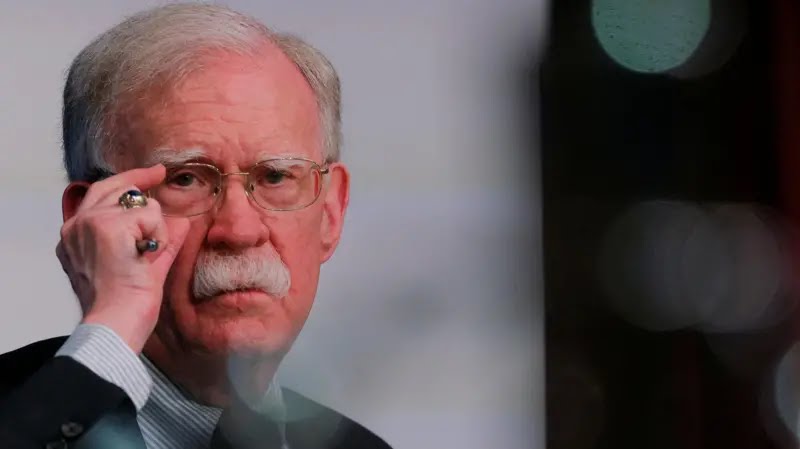
Former U.S. national security adviser John Bolton said European opposition prevented a potential territorial agreement between Serbia and Kosovo during negotiations in 2018, while warning that continued international inattention risks renewed instability in the Balkans.
In an interview with the BBC Serbian service published on Friday, Bolton said Washington had been prepared to support any mutually agreed solution between Belgrade and Pristina, including possible territorial adjustments, but European governments opposed the proposal.
“At the time, the Europeans said they did not want any territorial adjustments,” Bolton said, referring to discussions held during the first administration of .
Bolton, who served as Trump’s national security adviser from April 2018 until September 2019, said the United States did not seek to impose solutions but believed the parties themselves should have been allowed to negotiate freely.
“If two governments can reach an agreement, why stand in their way?” he said.
The proposal discussed at the time envisaged northern Kosovo, where ethnic Serbs form a majority, becoming part of Serbia, while the Presevo Valley in southern Serbia, populated largely by ethnic Albanians, would join Kosovo.
The idea generated strong opposition in both Serbia and Kosovo and faced resistance from several European Union member states, particularly Germany under then-Chancellor Angela Merkel.
Bolton said Kosovo’s leadership may ultimately have “overestimated its ability to push the agreement forward.”
The comments revive debate over one of the most controversial phases in the Serbia-Kosovo normalization process, which has since remained under European Union mediation and has repeatedly stalled amid tensions, protests and security incidents in northern Kosovo.
Kosovo declared independence from Serbia in 2008, nearly a decade after NATO’s intervention against Serbian forces during the Kosovo war. Serbia does not recognize Kosovo’s statehood, while five EU member states — Spain, Slovakia, Romania, Greece and Cyprus — also continue to withhold recognition.
Bolton argued that the Balkans have long suffered from inconsistent attention from Washington.
“When things do not seem too bad somewhere, Washington can lose focus,” he said. “And if you do not pay attention, things can spiral out of control.”
He compared the risks of neglecting geopolitical tensions to the failure of Western governments to fully anticipate the escalation of Russia’s war against Ukraine.
Although successive U.S. administrations have pledged support for Western Balkan stability and Euro-Atlantic integration, the region today occupies a lower place on Washington’s list of foreign policy priorities, overshadowed by conflicts in Ukraine and the Middle East, as well as strategic rivalry with China.
More than a year after Trump’s return to the White House in January 2025, the United States still has no ambassadors confirmed in Serbia, Bosnia, Montenegro, North Macedonia, Albania or Kosovo.
Bolton said American administrations need to better understand “political dynamics” in the Balkans, warning that instability often benefits local political actors.
“There are many people who thrive in chaos and instability,” he said. “That creates potential for greater tensions and unrest.”
Bolton also linked Balkan stability to broader geopolitical competition involving Russia and China.
“The Beijing-Moscow axis is very interested in disrupting NATO and the EU,” he said.
Russia maintains strong political and cultural ties with Serbia and Republika Srpska, the Serb entity within Bosnia and Herzegovina, while China has significantly expanded economic influence across the region through infrastructure financing and loans under its Belt and Road Initiative.
According to data from international research organization AidData, Serbia received approximately $7.7 billion from China between 2000 and 2022, much of it through loans tied to infrastructure, mining and energy projects involving Chinese contractors.
Bolton described such arrangements as “debt diplomacy,” saying Beijing gains long-term political leverage through seemingly favorable financing agreements.
The former diplomat also addressed Bosnia and Herzegovina, describing the country’s divisions as unresolved decades after the breakup of Yugoslavia.
“In Bosnia there are historical divisions, and since the dissolution of Yugoslavia there have been many attempts to somehow suppress those differences,” he said. “It will take longer than people think.”
His remarks come amid renewed political uncertainty in Bosnia after Republika Srpska leader re-established closer ties with Washington following Trump’s return to power.
Dodik had previously faced U.S. sanctions under the administration of former President over accusations that he undermined the Dayton Peace Agreement.
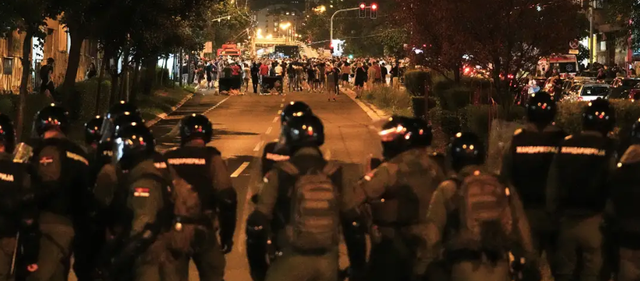
Bolton also commented on domestic unrest in Serbia, where anti-government protests led by student groups have continued for more than a year following the deaths of 16 people in the collapse of a railway station canopy in Novi Sad.
The demonstrations have evolved into a broader movement demanding elections, accountability and anti-corruption reforms, while opposition groups have accused authorities of police brutality and democratic backsliding.
Bolton said Western governments often prioritize stability over democratic concerns.
“In the State Department and most foreign ministries around the world, stability is preferred because it is predictable,” he said. “Events that threaten stability are not necessarily viewed as useful, even if they involve human rights problems or repression.”
However, he argued that the fall of authoritarian governments can create temporary instability that may ultimately be beneficial.
“On the surface things can look stable, but underneath they may be boiling,” he said.
Bolton remains one of the most prominent Republican foreign policy figures to publicly criticize Trump after leaving office.
In a 2020 memoir, he described Trump as unfit to handle major geopolitical challenges, including Iran and North Korea.
In October 2025, the U.S. Justice Department charged Bolton with allegedly mishandling classified documents and disclosing sensitive information. Bolton denied wrongdoing and described the case as political retaliation linked to his criticism of Trump.
The trial is ongoing.
Despite his split with Trump, Bolton’s foreign policy positions remain largely hawkish. He reiterated his belief that regime change in Iran is necessary for lasting stability in the Middle East and suggested Trump’s current approach toward Tehran is driven more by domestic fuel prices than by strategic calculations.
“He is not being pushed toward a ceasefire with Iran by geopolitics,” Bolton said. “He is being pushed by gasoline prices at American gas stations.”