


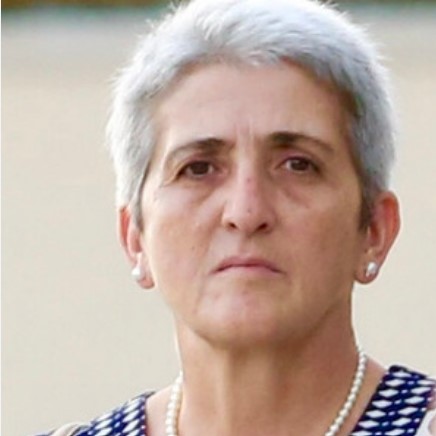
Members of Parliament have an institutional and constitutional duty to go to work, that is, to attend parliamentary sessions, regardless of how they choose to exercise their mandates. But they should never forget that those mandates were entrusted to them by the people, whose interests they are obliged to serve. The only alternative left to us is yet another election. But why? Why is the people considered good enough only when it is time to cast a vote?
By Flaka Surroi
At long last, after five weeks, the election results were certified. With that, the constitutional deadline for constituting the Assembly finally began to run.
Judging from the initial behavior of the party leaders, however, no one seems to be in any hurry to constitute Parliament. The entire game—and every political wager—has shifted to the office of the President.
This is yet another sign in a long series suggesting that the constitutional solution of having Kosovo’s President—often described as a largely ceremonial figure, though that is far from entirely accurate—elected by Parliament was a flawed judgment.
Yet we have always known that no presidential election in Kosovo has ever passed without turmoil, save perhaps the Jahjaga episode and the infamous envelope, which itself came only after the circus surrounding Pacolli. We have witnessed it all.
Even during Ibrahim Rugova’s time things were, in a sense, simpler. Rugova wanted the presidency—then genuinely ceremonial—for himself, and in return he was willing to allow someone with far fewer votes to become Prime Minister while controlling a generous share of ministerial posts.
On other occasions, the issue was usually resolved through governing coalitions, right up until the election of Vjosa Osmani. Back then, the Democratic League of Kosovo (LDK), together with a handful of individual MPs, helped secure her election.
Then came the beginning of 2026.
A string of justifications suddenly emerged explaining why some MPs would—or would not—enter the chamber to establish a quorum, or even cast a vote.
At the heart of it all surfaced Vjosa Osmani’s boundless ambition for another presidential term. She committed an unconstitutional act—although the Constitutional Court never examined it because no one referred the violation committed before the judges. She convinced her former party that she would bring back the hundreds of thousands of votes she had once enjoyed together with Vetëvendosje. And on the night the first election results came in, she declared: “Vetëvendosje has no reason not to vote for me as President.”
One reason not to support her could simply be that she was among the political protagonists who dragged the country into the June elections without the slightest necessity.
Her ambition—and the ambitions of others who believed these elections would produce a political earthquake—cost Kosovo millions of euros in European Union funds. Without a functioning Assembly to approve the legislation required for accessing the financial instruments allocated by Europe, what we were left with instead was a long list of MPs and former MPs—idle officeholders who will nevertheless collect transitional salaries for the handful of days they occupied their parliamentary seats.
The election results were disappointing for the opposition, with the exception of the Alliance for the Future of Kosovo (AAK), which managed to cross the electoral threshold under a new party leader.
For the winning party, the elections meant losing the commanding majority it had secured in December, yet it still won enough seats to potentially form a fragile government together with the non-Serb minority representatives.
Although there were proposals suggesting that Vetëvendosje should be pushed into opposition if everyone else united, it was obvious from the outset that such a scenario would only be possible with the votes of the Serbian List. In other words, only with the support of Vučić’s political representatives could the opposition reach the desired majority of 67 votes.
The result would have been a highly fragmented coalition—Haradinaj’s second government had no fewer than twenty-two coalition partners, where virtually every single vote demanded its own political reward, eventually translating into more than eighty deputy prime minister positions.
In essence, such a government would be expensive, ineffective, and unable to implement a coherent electoral program, since no one would know which party’s promises should serve as the governing blueprint.
But given that electoral platforms in Kosovo often seem to exist merely on paper, they would probably have fallen back on the old formula: carve up the state budget as generously as possible.
Something much like the current government—only somewhat different.
Still, forming a coalition with the Serbian List would have inflicted long-term political damage on the Albanian opposition parties, especially after Banjska and the terrorist attack led by the former deputy leader of that party.
I find it hard to believe they would prove so shortsighted, despite the obvious temptation that power exerts.
But then again… ambition knows no limits.
With that option effectively off the table, what remains is some form of cooperation among Albanian parties.
Unless, of course, the real objective is to drag the country into yet another election.
Albin Kurti invited the leaders of the three Albanian opposition parties to separate meetings.
Ardian Gjini declined the invitation. Shortly after the elections he had publicly presented a six-point list of conditions that Vetëvendosje would have to fulfill in exchange for the Alliance’s support.
Gjini knows full well that promises can always be made—whether they can actually be delivered is another matter entirely, especially the proposal concerning natural gas, which lacks even a feasibility study.
His ultimatum—meet our demands or we will not even participate in the vote—amounts to little more than political blackmail that ignores the broader public interest.
More intriguing than Gjini’s six conditions was Besnik Tahiri’s proposal that Ramush Haradinaj should run for Speaker of Parliament, apparently in an open contest with other candidates, with the winner simply being whoever secured the most votes.
If this truly reflects Haradinaj’s thinking—and Tahiri would hardly have floated the idea on his own—it would represent an elegant solution to the deadlock.
It would also amount to a significant political sacrifice on Haradinaj’s part, undertaken in the interest of unblocking Kosovo’s institutions.
If nothing else, he would earn the distinction of having helped the country move forward.
This time Bedri Hamza accepted Kurti’s invitation.
Before entering the meeting he declared: “We have no red lines,” leaving it deliberately unclear whether he meant a potential governing coalition or simply signaling that the Democratic Party of Kosovo (PDK) would not obstruct the election of the President and might even provide enough MPs to establish a quorum.
After the meeting he clarified matters by stating that “PDK will remain in opposition,” effectively ruling out a Vetëvendosje–PDK coalition.
Hamza also insisted that responsibility for forming the institutions belongs to Vetëvendosje and promised that PDK would act constructively.
That is precisely what they said the last time.
And yet we ended up in another election.
Considering the current circumstances, PDK’s declining electoral support, and the absence of a charismatic leader capable of reviving a party left adrift since its former leadership was transferred to The Hague, I am not convinced that another general election would serve the party’s interests.
The risk of further decline remains real—especially with the Hague verdict expected in mid-September.
The third invitee, Lumir Abdixhiku, now finds himself in the most difficult position since taking over the leadership of the Democratic League.
Despite increasing both votes and parliamentary seats, the result increasingly resembles a Pyrrhic victory.
For the first time he is openly facing calls from within his own party demanding his resignation.
Municipal branch leaders have publicly called for his dismissal, while Abdixhiku has responded with equally public accusations of internal sabotage, arguing that wherever the LDK wins at the municipal level, it somehow loses nationally.
Under such conditions, maintaining unity within both the party and its parliamentary group becomes extraordinarily difficult.
Among his MPs, at least five or six openly oppose him—roughly one-third of the parliamentary group.
Even if he somehow reached a coalition agreement with Kurti, he could not guarantee enough votes—or even enough MPs physically present in the chamber—to complete the formal election of a President.
Yet even without a governing agreement, he could still contribute to selecting a non-partisan presidential candidate, thereby helping the country overcome this entirely artificial crisis with very real consequences.
If Kosovo’s enlightened politicians have still not understood the gravity of the situation, the Kosovo Agency of Statistics has already made it abundantly clear: the Harmonised Index of Consumer Prices increased by an average of 6.0 percent in June 2026 compared with June 2025.
But few seem genuinely concerned about the condition the country is in.
If they were, Kosovo would not have gone to the polls three times within sixteen or seventeen months.
The most irritating part of all this is politicians endlessly proclaiming that they are working for the good of the people.
Nonsense.
The only thing they truly care about is themselves—their popularity, their likes, their views, their mentions across social media.
Not one of them appears to take seriously the principle repeated countless times over the years:
“Members of Parliament must act in the best interests of the citizens.”
MPs have an institutional and constitutional obligation to attend Parliament and perform their duties, regardless of how they choose to exercise the mandates entrusted to them.
But they should never forget that those mandates belong, ultimately, to the people.
And that they are expected to act in the people’s interest.
The alternative left before us is yet another election.
But why?
Why is the people considered worthy only when it is time to vote?