


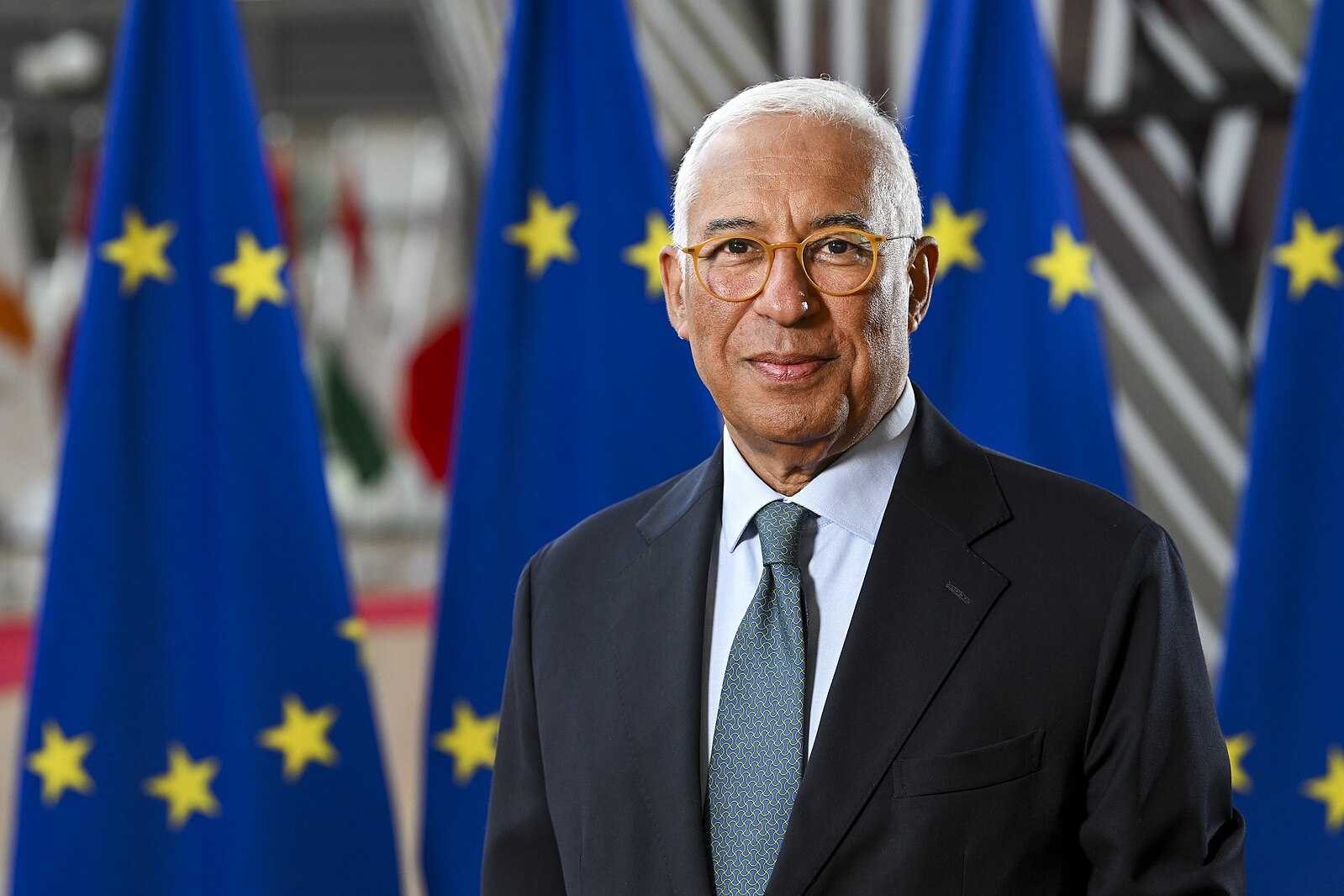
TIRANA/BRUSSELS, May 14 – Albania and Montenegro could join the European Union ahead of other Western Balkan countries if they maintain the pace of reforms, European Council President António Costa said in an interview with Euronews ahead of a regional tour starting Tuesday.
Costa, who assumed office in April, said EU enlargement remains a strategic priority, stressing that the bloc’s stability and prosperity depend on integrating the Western Balkans.
“Russia’s invasion of Ukraine has accelerated the process for Ukraine and Moldova. It would not be fair if the Western Balkans were left behind,” Costa told Euronews. “This will push them to move faster with reforms.”
The former Portuguese prime minister begins a four-day diplomatic mission with visits to Serbia and Bosnia and Herzegovina, followed by meetings with Montenegrin and Kosovar leaders on Wednesday. On Thursday, he will travel to North Macedonia, before concluding in Albania, where he will attend the European Political Community (EPC) summit in Tirana.
The EPC, established in 2022 following Russia’s invasion of Ukraine, brings together over 40 European countries. This week’s summit is expected to focus heavily on regional instability and renewed momentum for EU enlargement.
“There is a broad political consensus in the European Council that enlargement is the most important geopolitical investment for the peace and prosperity of Europe,” Costa said.
EU path under strain in Serbia
Costa expressed concern over Serbia’s trajectory, noting ongoing political tensions, a lack of reforms, and divergence from EU foreign policy.
Serbian President Aleksandar Vučić was the only Western Balkan leader to attend Russia’s Victory Day parade in Moscow on May 9, alongside Slovak Prime Minister Robert Fico—the only EU head of government present.
While Vučić framed the visit as a historical commemoration, his government’s refusal to align with EU sanctions on Russia has drawn criticism from Brussels. Serbia’s internal unrest, driven by mass protests against corruption and media restrictions, has also raised alarm.
“Serbia’s future lies in Europe,” Costa said, adding that he expects progress on reforms related to electoral law, media freedom, and anti-corruption—areas that Vučić pledged to address during a recent meeting with European Commission President Ursula von der Leyen.
Last week, the European Parliament passed a non-binding resolution critical of Serbia’s political environment, drafted by Croatian Socialist MEP Tonino Picula. The report noted insufficient progress on democratic standards, despite economic development.
No fixed accession date
While 2030 has been floated as a possible accession date, Costa said timelines should remain flexible.
“I don’t have a fixed date. Why 2030? Why not earlier? Accession is based on merit,” Costa said. “Albania and Montenegro are clearly more advanced than the others.”
The Commission has previously acknowledged Albania and Montenegro’s progress, though persistent regional tensions—particularly between Serbia and Kosovo, and in Bosnia—remain obstacles to broader enlargement.
Costa argued that EU membership offers the best opportunity for reconciliation and prosperity in the region. “It is a unique chance that cannot be matched elsewhere,” he said.
Despite some growing skepticism toward the EU in the Western Balkans, Costa urged citizens and governments alike to remember the Union’s founding purpose.
“What built the EU was the will to overcome the wounds of history,” he said, referencing the recent 75th anniversary of the Schuman Declaration, regarded as the foundation of today’s European Union.