


Serbia’s student-led victory opens the door to political change, but the Kosovo dispute, entrenched power structures and competing visions for the country’s future will test the new leadership.
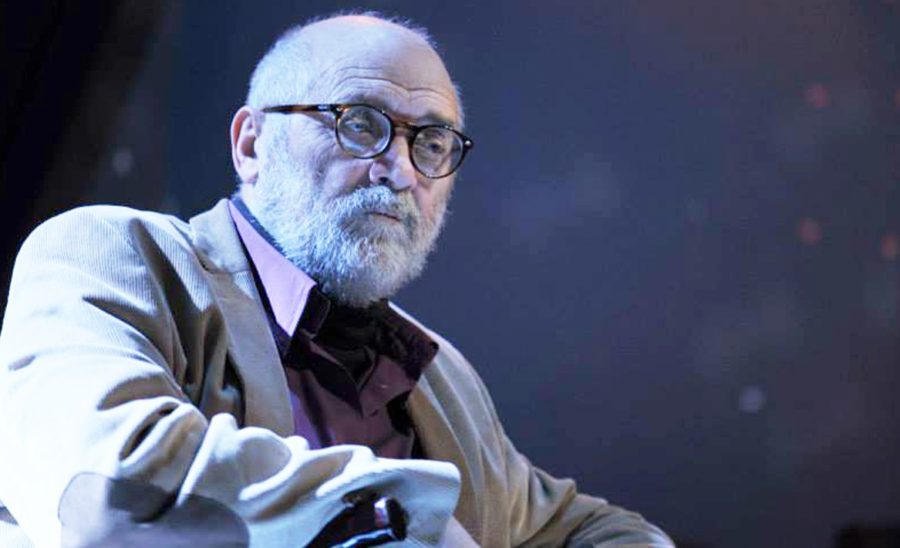
By Shkëlzen Maliqi
The elections in Serbia did not come as a surprise to me. Autocratic regimes have begun falling like dominoes (Dodik, Orbán…). And after several years of uninterrupted mass protests in Serbia, which became even more intense over the past two years, Vučić was also expected to suffer a decisive defeat.
At least in the part of the world aligned with NATO, as well as in countries that NATO considers part of its sphere of strategic interest, regimes such as those of Dodik, Orbán and Vučić cannot survive much longer if they become a threat to the security of the military Alliance or flirt with Russia.
This does not mean that these regimes are being overthrown because of foreign intervention, but rather because both the prevailing circumstances and domestic opposition are forcing a change of course.
All these regimes have been brought down through elections.
As for the political orientation of Serbia’s new leadership, which has yet to be formally constituted, the students have won the elections, but they will not take executive positions themselves. Instead, they nominated experts and professors from various fields.
It is still unknown who will become prime minister and who will serve as ministers, so I cannot make clear predictions.
Broadly speaking, however, it has been evident since the election campaign that the victorious platform of the student movement is a political amalgam.
The students decided to follow an approach similar to that of Zoran Đinđić, who in 1997 created a broad coalition bringing together parties from the left, centre and right to remove Milošević from power.
Their strategy was to defeat Aleksandar Vučić through a broad political platform capable of satisfying the entire spectrum of his opponents, from the left and centre to the right.
Consequently, those who come to power will begin with a diverse range of political positions. Even now, contradictory views are emerging. Some advocate changing Serbia’s approach towards all its neighbours, while others maintain rigid positions, particularly regarding Kosovo.
Domestic Problems and Challenges
On the domestic front, the new government will face considerable difficulties because the permanent staff throughout the ministries and other institutions of power have been filled with sympathisers of Vučić’s party.
Removing them on a large scale will be difficult. At this stage, it is impossible to assess how the process might unfold without knowing who will occupy the key positions.
Regarding Serbia’s neighbours, I believe the new government will attempt to ease tensions and improve relations with Croatia, Montenegro, and Bosnia and Herzegovina.
With North Macedonia, I expect it to pursue a cautious policy.
Relations with Albania, however, are unlikely to be as close as they were during the earlier stages of Vučić’s rule, when Edi Rama and Vučić were the driving forces behind the Open Balkan initiative, which, in fairness, is no longer active.
There are also broader questions concerning the establishment of security and stability in the region. In this respect, Brussels will be the decisive factor, particularly through efforts to facilitate and accelerate the accession of the Balkan countries to the European Union.
Kosovo: The New Government’s Central Challenge
Kosovo will be the central challenge for Serbia’s new government because the Student List made an explicit election promise not to amend Serbia’s Constitution, which defines Kosovo as an inalienable part of the country.
At the same time, the new leadership will face considerable pressure to implement the Ohrid and Brussels agreements, which provide for recognition of Kosovo’s independence, if not de jure, then de facto.
On this issue, Albin Kurti’s unwillingness to complete the implementation of the Ohrid Agreement, including the establishment of the Association of Serb-Majority Municipalities as a specific form of autonomy, could once again become an additional factor contributing to the deadlock.
The dialogue between Kurti and Vučić has been stalled for years because both leaders have benefited politically at home from the failure to implement the agreement.
Therefore, if Serbia’s new government continues with Vučić’s old approach, Kurti could also find himself effectively serving that position.
Although I cannot see how he will continue to defend his claim that, through his obstructive policies, he has liberated northern Kosovo.
For now, the generally positive developments in Serbia leave too many uncertainties to make clear predictions.
What seems certain is that change will come. What remains unknown is the pace and intensity of that change.
*Shkëlzen Maliqi is a Kosovo-based philosopher, political analyst, public intellectual, and essayist. He is widely recognised for his contributions to political and cultural debate in Kosovo and the wider Western Balkans. For decades, his work has focused on democratisation, political developments, interethnic relations, and relations between Kosovo and Serbia. He has authored numerous essays, political analyses, and publications and has played an influential role in Kosovo’s intellectual and cultural life.
This opinion article was written exclusively for BalkanView.com. The views expressed are those of the author and do not necessarily reflect the editorial position of BalkanView.