


From family savings to regional business networks, Albanian entrepreneurs have emerged as a major economic force in North Macedonia, according to businessman Xhemail Dauti. But he warns that without deeper regional integration, stronger industrial investment and more ambitious growth policies, Western Balkan companies risk falling behind European competitors.
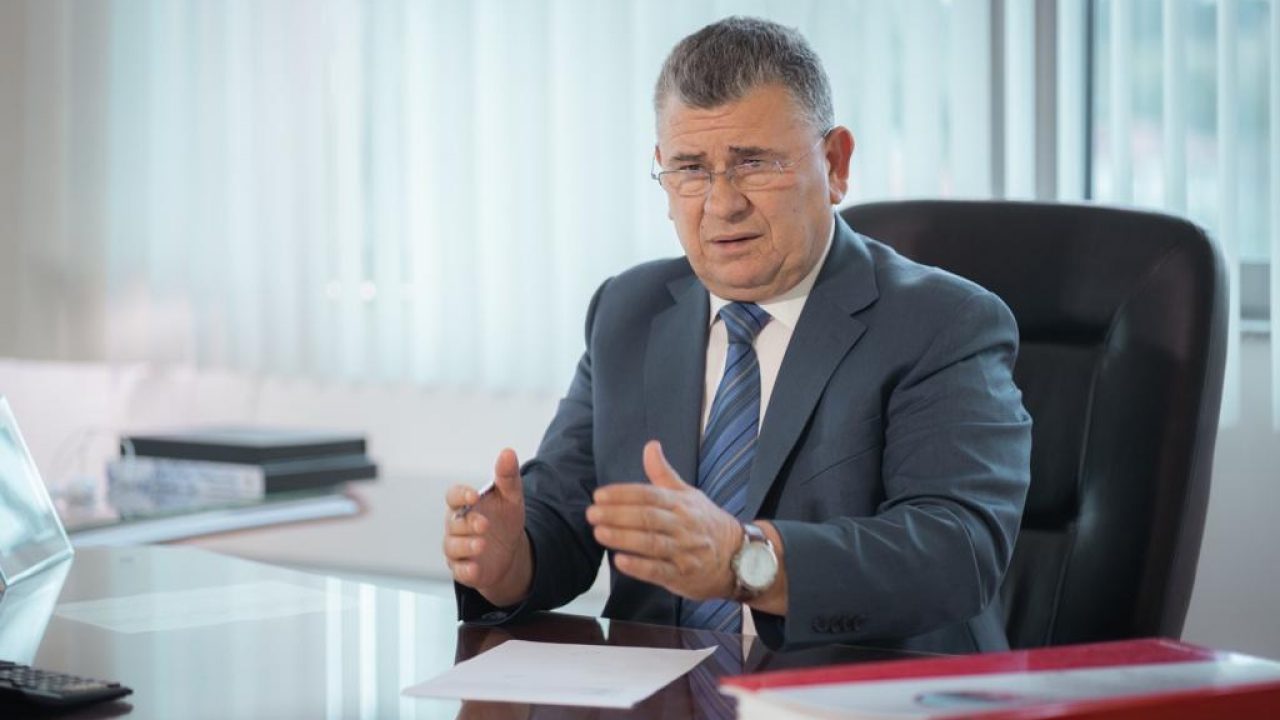
SKOPJE, Nov. 17, 2026 (BalkanView) – Albanian-owned companies have grown from small family enterprises established during the collapse of Yugoslavia into a major force in North Macedonia’s economy, contributing an estimated 40% or more of gross domestic product, according to businessman Xhemail Dauti.
Dauti, founder of Dauti-Komerc and honorary president of the Economic Chamber of North-West Macedonia (ECNWM), said the expansion of Albanian entrepreneurship had taken place despite what he described as unequal access to state-owned assets during the country’s transition to a market economy in the 1990s.
In an interview with Albania’s economic magazine Monitor, published on Nov. 14, Dauti argued that the next challenge was no longer simply building successful domestic businesses, but developing companies capable of competing across the Western Balkans and in the European Union.
His assessment comes as the region faces pressure to improve productivity, attract investment and integrate its fragmented national markets ahead of eventual EU membership.
From exclusion to economic influence
Dauti and his three brothers established Dauti-Komerc on May 29, 1990, shortly before Yugoslavia began to disintegrate.
At the time, the economic system was undergoing a transition from socially owned enterprises towards private ownership.
Dauti said Albanian entrepreneurs in North Macedonia were largely excluded from the privatisation of socially owned companies, forcing them to build businesses without inheriting factories, industrial assets or established distribution networks.
“Albanian businesses were, for the most part, created as private enterprises from scratch, without inheriting the assets of socially owned enterprises,” he told Monitor.
He argued that entrepreneurs instead relied on family savings, trading experience, individual initiative and private investment.
The result, he said, was a business community that initially concentrated on sectors where entry did not depend on acquiring former state-owned enterprises.
These included wholesale and retail trade, construction, tourism and services.
Over time, many of those businesses expanded into manufacturing, logistics and regional distribution.
Dauti described the transformation as a shift from economic survival to consolidation and expansion.
Albanian-owned companies contribute more than 40%, chamber estimates
According to Dauti, analyses conducted by the Economic Chamber of North-West Macedonia estimate that companies owned by ethnic Albanians account for more than 40% of North Macedonia’s GDP.
The figure is a chamber estimate cited by Dauti rather than an independently verified breakdown of national economic output by business ownership.
He said the chamber identified 6,354 Albanian-owned companies in 2018–2019, employing between five and 1,500 workers each.
Many established companies have recorded double-digit annual growth rates, he added.
Dauti said their economic influence was now reflected not only in employment and investment, but also in their participation in discussions about taxation, competitiveness and development policy.
He founded the Economic Chamber of North-West Macedonia in 2004 and became its first president.
The organisation was established to represent business interests and strengthen the participation of Albanian-owned enterprises in economic policymaking.
Dauti said its members had become an important part of North Macedonia’s private sector.
However, he warned that the traditional family-business model would need to evolve further.
Companies must invest in professional management, technology, innovation and production if they want to compete internationally, he said.
North Macedonia needs more ambitious economic growth
Dauti said North Macedonia’s economic performance remained similar to that of other Western Balkan countries, with growth rates too modest to produce rapid improvements in living standards.
Positive GDP figures alone were insufficient, he argued, unless they translated into higher purchasing power, better employment opportunities and increased productivity.
He called for more ambitious economic policies, including a long-term aspiration for double-digit GDP growth.
Such growth would be difficult to achieve, he acknowledged, but he said the region had underused advantages in geography, natural resources, tourism, agriculture and private entrepreneurship.
North Macedonia and its neighbours needed stronger investment policies, better infrastructure, more support for manufacturing and a public administration more responsive to business needs.
“Modest growth may preserve stability, but it is not enough to rapidly narrow the economic gap with European Union countries,” Dauti said.
Agriculture remains an untapped opportunity
While construction, trade, tourism and services have expanded, Dauti identified agriculture and livestock production as sectors with substantial unrealised potential.
North Macedonia has favourable natural conditions, an agricultural tradition and access to regional markets, he said.
But development policies had failed to modernise the sector sufficiently.
He called for investment in agricultural technology, food processing, storage, packaging, standardisation and organised supply chains.
The objective should be to transform agriculture from a largely traditional activity into a modern industry capable of producing higher-value exports.
That would require stronger connections between farmers, food processors, distributors and retailers.
Dauti argued that simply producing fruit and vegetables was insufficient if businesses lacked the capacity to store, process, transport and market them competitively.
Albania and North Macedonia: Uneven investment flows
Dauti also pointed to an imbalance in investment between Albania and North Macedonia.
He said North Macedonian companies had demonstrated greater interest in investing in Albania than Albanian businesses had shown in entering the North Macedonian market.
Businesses from North Macedonia have invested in Albanian tourism, construction and trade, while a range of North Macedonian products are already available to Albanian consumers, he said.
The reverse flow remains more limited, according to Dauti, although Albanian agricultural products, particularly fruit and vegetables, have established a presence in North Macedonia.
He argued that the two economies had complementary strengths.
Albania offers tourism opportunities, access to Adriatic ports and investment potential, while North Macedonia has established capacities in trade, distribution, industry and services.
But geographical proximity and cultural ties were not enough to guarantee deeper economic cooperation.
Businesses needed to identify shared interests, develop partnerships and move beyond traditional trade relationships.
Corridor VIII could reshape regional trade
Dauti identified Corridor VIII, the transport route intended to connect the Adriatic and Black seas, as a potential catalyst for closer economic integration.
Improved road and rail infrastructure could reduce transport costs, strengthen supply chains and create new opportunities for investment between Albania and North Macedonia.
Albanian ports could become increasingly important gateways for North Macedonian companies seeking access to international markets.
At the same time, manufacturing and distribution businesses in North Macedonia could benefit from more efficient logistics networks.
Dauti warned, however, that infrastructure projects would deliver their full economic benefits only if accompanied by improved border procedures, logistics facilities and industrial investment.
He argued that Corridor VIII should be treated as an economic development strategy rather than simply a construction project.
Regional companies must prepare for EU competition
The Western Balkans’ gradual integration into the EU single market presents opportunities but also significant challenges for domestic businesses.
Dauti said the Berlin Process had contributed to reducing barriers and promoting regional cooperation, but administrative, procedural and trade obstacles continued to restrict the movement of goods, services and capital.
He described the Common Regional Market as an essential step towards preparing companies for competition in the EU.
The region’s relatively small national economies limited the scale at which individual businesses could operate, he said.
A more integrated regional market would allow companies to expand production, increase exports, attract investment and develop more competitive business models.
Dauti called for joint ventures, business consortia and coordinated investment projects, particularly among companies from Albania and North Macedonia.
Combining capital, expertise and commercial networks would enable businesses to pursue opportunities that might otherwise be beyond their individual capacities.
He said governments should accelerate the removal of unnecessary trade barriers, harmonise procedures and expand mutual recognition of business documentation and certificates.
Business chambers should also strengthen direct cooperation through investment forums, business-to-business meetings and joint projects.
Such initiatives should be measured by concrete investments and commercial partnerships rather than the number of conferences or agreements signed.
A new phase for Albanian entrepreneurship
Dauti’s message reflects a broader challenge facing private businesses across the Western Balkans.
Companies that emerged during the transition from socialism have established themselves in domestic markets, but their future competitiveness increasingly depends on their ability to innovate, professionalise management and expand beyond national borders.
For Albanian-owned businesses in North Macedonia, Dauti sees the next phase as a transition from consolidation to international competition.
The objective, he argued, should be to build stronger regional enterprises capable of entering larger European markets.
The same logic applies to cooperation between Albania and North Macedonia.
Rather than operating as two relatively small and separate economies, the countries should create conditions for goods, services, capital and business ideas to circulate with fewer obstacles.
For Dauti, economic integration is not merely a political aspiration associated with EU accession.
It is a practical requirement for companies seeking to grow.
The challenge now is whether governments and businesses can turn that ambition into investment, higher productivity and a more competitive regional economy.