


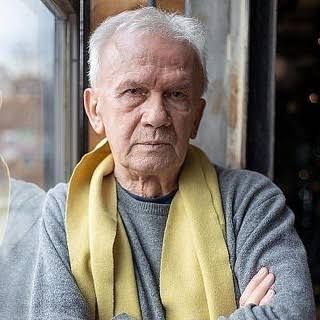
Prominent Belgrade journalist Slobodan Stupar, a longtime BBC correspondent, addresses key questions in an opinion for BalkanView: What will Serbia look like after these elections? What direction will its foreign policy and relations with the West and the East take? How will Belgrade approach its neighbours, including North Macedonia, and what policy can be expected towards Kosovo?
By Slobodan Stupar
Although Serbia’s new government has yet to be formed, I will try to answer these questions based on more or less logical assumptions.
Much remains uncertain, but the key question is this: will Serbia get a new policy, or are we merely witnessing a change of regime that has pursued the same policy for more than 40 years? That is precisely the crux of the matter.
The student list was supported by both left- and right-wing political circles, as well as civic political groups, with a common goal – removing Vučić’s regime. Therefore, while we await the name of the new prime minister and his policy address, we can only speculate about the future direction of Serbia’s foreign policy.
My view is that Belgrade will initially seek to maintain some semblance of relations with China and Russia, while simultaneously working to strengthen its ties with the West.
The key question, however, is Serbia and its relations with its neighbours. It is already clear that the new government will want to establish considerably better relations with all neighbouring countries, with one exception – Kosovo, at least for now.
Kosovo remains something of a taboo subject. On this issue, only the United States might be able to exert some influence on Serbia’s new government, and perhaps also on the Serbian Orthodox Church (SOC), which represents one of the most entrenched obstacles to a change in Belgrade’s policy towards Kosovo.
The question of how united the new government will be also remains open. Everyone readily agreed on the need to remove Vučić, but given the considerable political differences among them, we will only be able to assess the stability of the future government after several months.
As far as domestic policy is concerned, the goal is clear – establishing democratic institutions and building a stable, Western-oriented economy.