


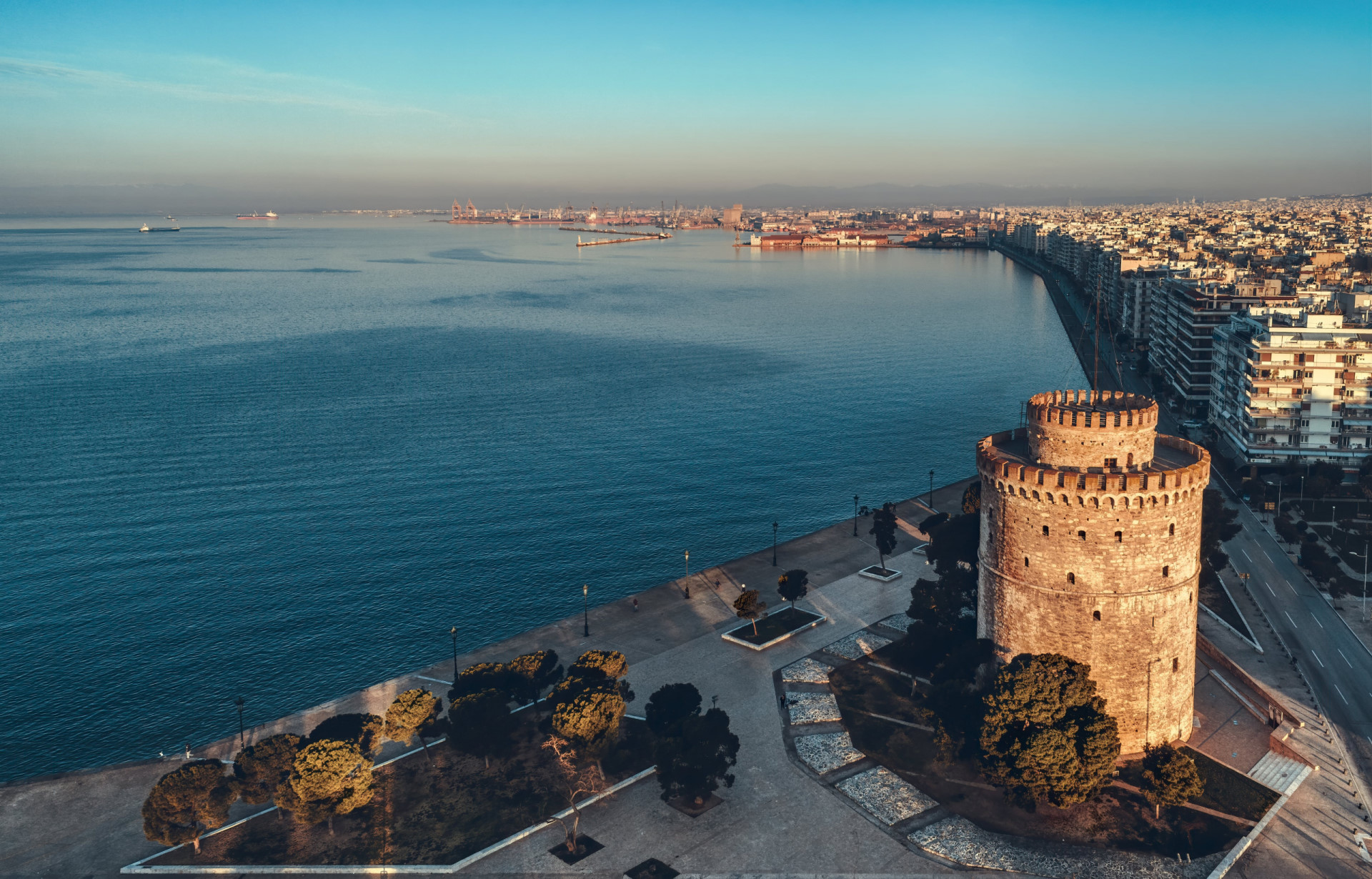
Thessaloniki should move beyond its role as the capital of northern Greece and become an economic, transport and logistics hub for the entire Balkans, Greek Prime Minister Kyriakos Mitsotakis said.
Presenting the government’s development strategy for the city and northern Greece, Mitsotakis said Thessaloniki was reclaiming its natural regional role.
“Thessaloniki is transforming and reclaiming its natural role, not only as the capital of northern Greece, but as the capital of the Balkans as a whole,” he told a forum on the National Strategy for Regional and Local Development.
Behind the political message is a series of major infrastructure projects through which Athens aims to turn Thessaloniki into a key gateway linking the Mediterranean, the Balkans and Eastern Europe.
One of the central projects is the city’s metro. With the extension to Kalamaria and the addition of five stations, the network will reach 14.4 kilometres and 18 stations. The government is also preparing a further expansion towards the city’s northwestern districts.
Construction is proceeding on the new “Flyover” along Thessaloniki’s ring road. The project is expected to become operational in May 2027 and significantly reduce traffic congestion around the city.
The Port of Thessaloniki occupies a central place in the strategy. Investments in port infrastructure, railways and a new logistics centre at the former Gonu military complex are intended to transform the city into an entry point for goods heading towards the Balkans and Eastern Europe.
The strategy also has direct implications for North Macedonia. Thessaloniki is the country’s nearest major Mediterranean port and one of its main trade routes.
Improved rail, road and port connections to the north could further increase the economic importance of the Thessaloniki–Skopje corridor and its extension towards Serbia and Central Europe.
The Greek government also plans to invest around €300 million in modernising the Egnatia motorway over the next two years. The motorway is one of the main transport routes across northern Greece.
Beyond transport, Thessaloniki is seeking to establish itself as a regional centre for education, healthcare and innovation.
A new children’s hospital financed by the Stavros Niarchos Foundation is expected to be completed in early 2027. Mitsotakis described it as the most modern paediatric hospital in the Balkans.
A major redevelopment of the Thessaloniki International Fair site is also planned by 2030. The project includes a new congress centre and around 120,000 square metres of green space.
The phrase “capital of the Balkans” represents a political and development ambition rather than a formal status. However, the announced projects indicate that Greece has a clear strategy to turn Thessaloniki into one of the region’s leading economic crossroads.
Thessaloniki wants to become the main gateway connecting the Mediterranean with the Balkans and Eastern Europe. Investments in its port, metro, railways and motorways could also increase the economic importance of the Thessaloniki–Skopje corridor.