


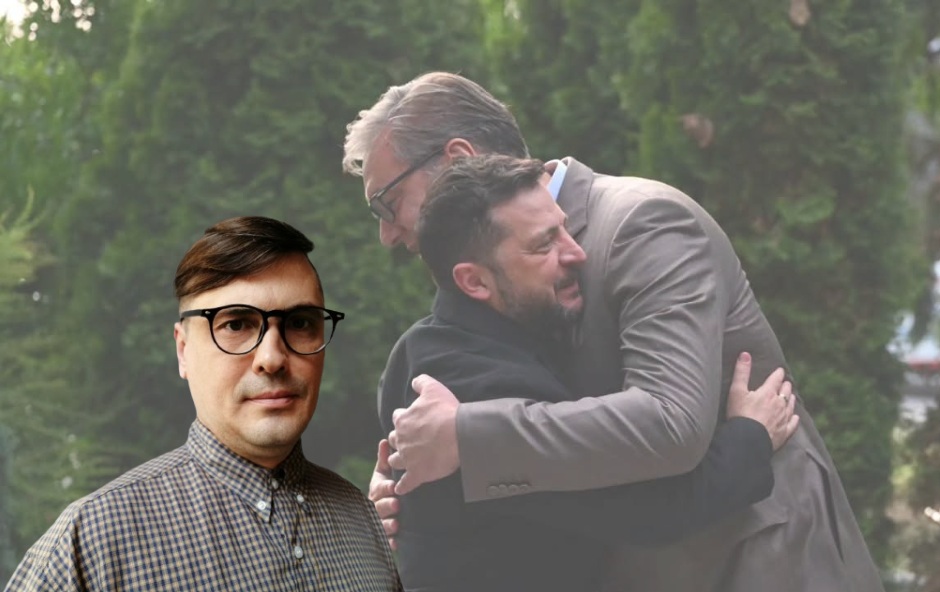
Ukrainian President Volodymyr Zelenskyy’s visit to Belgrade has brought Serbia’s delicate balancing act between Moscow, Kyiv and the West back into focus. His reaffirmation that Ukraine will not recognise Kosovo disappointed Pristina, even as Serbia continues to avoid sanctions against Russia while supporting Ukraine’s territorial integrity and indirectly supplying ammunition to Kyiv.
By Xhelal Neziri
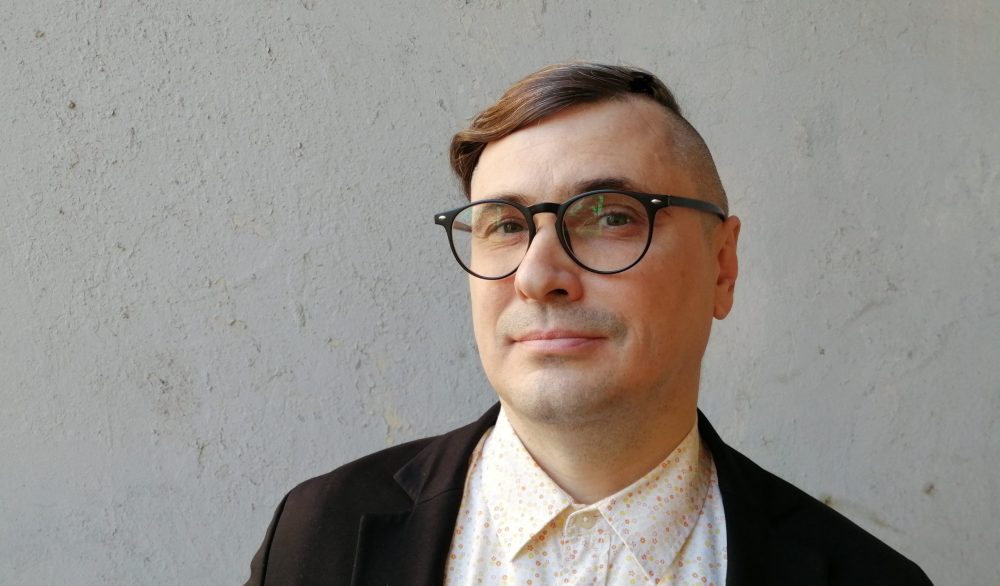
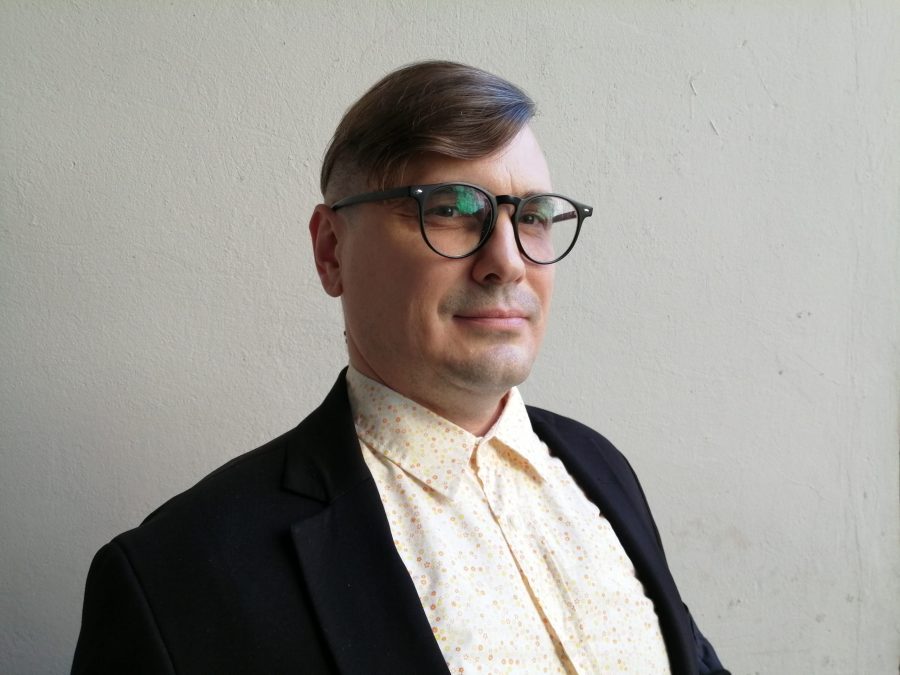
In an interview with BalkanView, political scientist and journalist Boris Varga from Novi Sad, Vojvodina (Serbia), examines the geopolitical calculations behind the visit, the limits of Ukrainian-Serbian cooperation and the consequences for Kosovo and the wider Western Balkans. He argues that the meeting was an example of pragmatic realpolitik—and a symbolic setback for Russian influence in the region.
BalkanView: President Zelenskyy chose his first official visit to Belgrade to explicitly reaffirm that Ukraine will not recognise Kosovo. How significant is this statement, and why did Kyiv consider it important to make it now?
Varga: It was expected that, if Zelenskyy visited Belgrade, one of the more sensitive issues the Ukrainian president would have to address in Serbia would be his position on Kosovo’s independence. That is what happened. It was known what Zelenskyy’s response would be, and it was assumed that a harsher reaction from Pristina and parts of the region would follow.
Ukraine’s position on Kosovo has so far been principled and in no way refers exclusively to support for the policy of Serbian President Aleksandar Vučić and official Belgrade, which has been almost continuously “Greater Serbian” and expansionist in the region for the past three and a half decades. Ukrainians themselves are fighting against a similar policy of bloody Russian imperialism.
Kyiv’s position that it supports the territorial integrity of Serbia is something else. It is a constant message to Putin that Ukraine will not give up Crimea and the eastern parts of Ukraine that Russia has occupied and annexed, and that it also wants to prevent Russia from completely conquering as much of Ukraine as possible. Russia’s aggression and the entire five-year war are about these Ukrainian lands, and future peace negotiations on this issue are the most sensitive for Ukraine because territorial concessions are being demanded from Kyiv. Even Washington, under the Trump administration, is closer to Moscow on this issue.
BalkanView: Albania says comparing Kosovo with Ukraine or other territorial disputes is “wrong, opportunistic and entirely inaccurate.” Does Tirana have a point?

Varga: Absolutely. There is no analogy between Kosovo’s declaration of independence and the annexation of Crimea, although Moscow constantly emphasises this. Among Putin’s main arguments for the annexation of Crimea in 2014 were the West’s support for Kosovo’s independence and the NATO intervention in 1999.
The authorities in Belgrade and Slobodan Milošević had a plan to ethnically cleanse Kosovo of Albanians. The action was carried out with elements of genocide, and Serbia no longer has any right to take care of these citizens or govern the territory of Kosovo. No conflict occurred in Crimea, nor was there any mass ethnic war crime that would have given Russia a reason to intervene—although such a scenario had been prepared earlier. The Russian army simply occupied and seized that territory from Ukraine.
Albanian Prime Minister Edi Rama recently stated—I am paraphrasing—that it is not good that Ukraine does not recognise Kosovo, but that Tirana will not stop supporting Kyiv because of this. All of these countries will one day find themselves integrated into the EU. They should cooperate and defend Ukraine because that is also a defence of the EU and its values.
Kyiv is aware of all this. The Ukrainian people are now especially aware of the suffering of the Albanian people in Kosovo in 1998 and 1999 because, since 2022, they themselves have been going through ethnic cleansing, war crimes and genocide. However, as long as Russia’s aggression against Ukraine continues, Kyiv’s position is unlikely to change. Ukraine’s recognition of Kosovo’s independence could have a particular impact on the attitudes of countries outside Europe—in Latin America, Africa and Asia—in the UN General Assembly towards Crimea and other Ukrainian territories occupied by Russia. When Ukraine liberates Crimea and its eastern parts, I am almost certain that it will immediately recognise Kosovo. Crimea and Kosovo are simply not the same.
BalkanView: Pristina responded symbolically by removing the “Free Ukraine” flag. Was this an understandable diplomatic response, or could Kosovo risk damaging relations with a country it has strongly supported since 2022?
Varga: The removal of the “Free Ukraine” flag and banner was symbolic, and such a gesture of dissatisfaction by the authorities in Pristina can be understood. Personally, my heart ached when I watched the removal of the Ukrainian flag from the facade in the centre of Pristina because I know how sincere the Albanian people’s support for the Ukrainians was. Kosovo went through a similar wartime experience. However, Albanians in Kosovo and Ukrainians need to overcome this moment of geopolitical contradiction and misunderstanding.
I personally travel to Pristina and Kyiv, and I am mindful of the situation on the ground. There are many points of contact between the two states—Ukraine and Kosovo. Both peoples are victims of aggression in which civilians suffered the greatest losses. I believe that more work should be done to strengthen direct cultural ties and mutual familiarity between Kyiv and Pristina, as well as between Kyiv and Tirana. Ukrainian and Albanian cultures are little known to each other. It is necessary to translate more Albanian authors into Ukrainian and vice versa. There is a team of Ukrainian journalists in Pristina actively working to establish and strengthen good Albanian-Ukrainian relations. Ukraine, Kosovo and Albania are the countries with the highest levels of Euro-enthusiasm in Southeast Europe, and this potential should be used to bring them closer together, especially now, amid the very complex geopolitical circumstances in Europe and the world.
BalkanView: What does Zelenskyy gain from Aleksandar Vučić? Serbia has not imposed sanctions on Russia, but it has supported Ukraine’s territorial integrity and has also been linked to ammunition reaching Ukraine indirectly. Has Belgrade become more important to Kyiv than it appears publicly?
Varga: Zelenskyy in Belgrade, above all, symbolically means that Russian influence in Serbia and the Western Balkans has weakened. For Serbian Russophiles, this is a clear sign that Putin is not winning the war in Ukraine. However, this does not mean that Russian influence in Serbia and the region will disappear. Russia’s presence in the Balkans is a historical constant, and the core electorate of Serbian President Aleksandar Vučić is tied to it.
Neither country has high expectations for direct cooperation between Kyiv and Belgrade. However, relations between Ukraine and Serbia have never officially been bad. The most important thing for Serbia is that Ukraine has not recognised Kosovo, which is why Serbia has supported most UN resolutions and other international initiatives that also support Ukraine’s territorial integrity. In the last three years, since mid-2023, there have been more than 10 direct political contacts between Zelenskyy and Vučić, including various meetings on the sidelines of summits and telephone conversations. The official visit to Belgrade is at the highest level.
Most important is cooperation in the arms trade—or, more precisely, in ex-Soviet-type ammunition—which was crucial to Ukraine’s defence at one point. Then there is the energy sector, or electrical industry, which Russia is constantly destroying in Ukraine and which offers potential for Ukrainian-Serbian cooperation. Ukraine and Serbia are candidates for EU membership, and economic cooperation—or, more precisely, a free-trade agreement—is one of the important steps towards which we are moving very slowly, but moving nevertheless.
However, the image in the media, especially the Serbian media, makes it appear as if Ukraine and Serbia are enemies. This is precisely because Vučić’s voter base consists of Serbian nationalists, who are also Russophiles. Research shows that Russian President Putin is still popular in Serbia, but his portrait and the symbol of the Russian occupation, “Z,” are worn less and less often on T-shirts. For Serbia, these are no longer symbols of victory…
The general approval in Serbia of Putin’s war campaign in Ukraine leaves a bitter taste, as does the lack of understanding of why Ukrainians have the right to decide their own fate and defend themselves. All of this is a consequence of not confronting responsibility for the wars of the 1990s, which is why Serbia still has an attitude towards its neighbours similar to Russia’s.
BalkanView: Does Zelenskyy’s visit represent a geopolitical success for Vučić by allowing him to demonstrate that Serbia can maintain relations with Moscow, Kyiv, Brussels, and Beijing simultaneously?
Varga: This is a complex issue. I am not sure that Vučić can present Zelenskyy’s visit as a success to his Russophiles and Putinophiles. In Serbia, it is more likely to be interpreted as Vučić’s weakness, and he will try to present it “to his own people” as pressure from the West.
In the case of Ukraine, the most important foreign-policy support for Vučić personally comes from the West. Still, that support has begun to decline during two years of student and civil protests in Serbia. The US has always been unsympathetic to Vučić’s attempt to “sit on the chairs” of Moscow and Beijing. For several reasons, Trump personally still “does not like” Vučić, as he did, for example, former Hungarian Prime Minister Viktor Orbán, although Vučić and Orbán are politicians of the same calibre. The EU is trying not to lose political contact with Serbia, as happened in 1998–99 before NATO’s intervention, and is ready to tolerate Vučić’s autocracy and completely turn a blind eye to the collapse of democracy and institutions in Serbia. This will have long-term negative consequences not only for Serbia but also for the region.
The political crisis that arose in Serbia following the tragedy in Novi Sad in 2024, along with the mass protests by students and citizens, has attracted Brussels’ attention. It is no longer “turning a blind eye” to the harassment of young people and the opposition, or to the persecution and imprisonment of dissenters. The EU is already making financial support to Serbia conditional. Vučić has announced elections, but there are no conditions for them to be fair and democratic. He again needs a “stabilocracy” supported by the West—that is, Western tolerance of his dictatorship in Serbia and the Western Balkans. That is why he is helping Ukraine with weapons; that is why Zelenskyy was able to visit Belgrade.
However, the picture will change significantly immediately before the announced elections in Serbia, when we will once again hear the worst pro-Russian propaganda from the Progressive Party and Vučić all day long. The regime will fight for every vote and will once again mobilise the right with the worst Russophile and Putinophile propaganda, as it did in the spring of 2022, when the war in Ukraine began, and everything made it seem as though Serbia was on the side of the aggressor, Russia.
BalkanView: Vučić did not sign the recent Ukraine–Southeast Europe declaration calling for greater pressure on Russia. Why, despite this, is Kyiv investing politically in its relationship with Belgrade?
Varga: Ukrainians are also outraged by Vučić’s eccentric behaviour among European leaders and representatives of EU candidate countries. Serbia and Vučić’s behaviour have been tolerated with the aim of keeping the country away from Moscow. Here, it seems that Vučić’s balancing act is yielding results. But this is short-term. Such policies ultimately leave leaders and their countries alone and isolated. The EU will not take him seriously, and Moscow will not trust him.
Vučić did not even pay tribute at a memorial to fallen Ukrainians, which is immoral when you are a guest in a country. Although such gestures seem completely scandalous, in a very tense international atmosphere and amid war in Europe, such behaviour by Vučić is still tolerated in Ukraine and the West. The result is what is measured, not the way it was achieved.
BalkanView: Could closer Ukrainian-Serbian relations actually help pull Serbia away from Moscow, as Albania has suggested, or is Serbia more likely to continue its policy of balancing between Russia and the West?
Varga: Exactly. The West’s goal is to separate Serbia from Moscow because the Kremlin has established itself in Serbia and is expanding its influence in the region from there. That influence is certainly decreasing, primarily because Russia is focused on the war in Ukraine. In recent months, Ukraine has taken the initiative with drones, and the war is returning to Russia. We see refineries, energy infrastructure, warehouses and military bases burning in Russia… Russian influence is also decreasing in other parts of the world. At the beginning of the Russian aggression against Ukraine, there were fears that the Western Balkans could become a “second Russian European front” that Moscow would create there. There are still unresolved security issues in the former Yugoslavia, and stability has not been fully established in Bosnia and Herzegovina. Kosovo is rapidly taking advantage of the moment to eliminate Serbia’s parastatal structures—a process agreed upon in negotiations between Pristina and Belgrade—which pose a permanent threat to the young state.
Serbia is a society in deep crisis, divided between those who favour EU membership and those who favour cooperation with Russia or China. However, the Western Balkans are physically cut off from direct Russian influence because they have no border with Russia and are surrounded by NATO and EU countries, so Russian influence is practically limited. Nevertheless, the Kremlin’s subversive potential should not be underestimated. The best example is Moscow’s attempt to prevent Montenegro from joining NATO in 2016, but there are also the more recent examples of two attempts at subversion in Moldova’s elections in recent years.
Russia can still destabilise the Balkan region, and its influence should continue to be suppressed. In media terms, Zelenskyy’s visit was also one of the successes in the fight against Russian influence. However, Serbia still receives cheap gas from Moscow, and energy dependence remains a lever of Russian influence.
On the other hand, Serbia will continue to cultivate Russophilia in its politics and society in general. This is a historical constant, regardless of who is at the helm of Serbia and Russia and whether war is being waged in Ukraine.
BalkanView: The two presidents discussed defence cooperation and Ukraine’s experience with drones. How important could military-industrial cooperation become in relations between Serbia and Ukraine?
Varga: Although military cooperation was not officially the topic of the meeting, it is assumed that it has been present all along and is one of the key points of connection between Kyiv and Belgrade. This concerns ammunition exported through intermediaries and third countries from Serbia to Ukraine, worth several hundred million—and even more than a billion—euros. This was confirmed in a conversation with former US Ambassador Christopher Hill, who said that everything is happening with the “blessing” and at the initiative of the West, especially Washington.
And it is not just about Russian influence in the Balkans. The West must not allow Ukraine to “fall” into Russian hands because the EU is Putin’s next target. That is why Kyiv is receiving much more help than the public knows about, yet still not enough to defend Ukraine against an aggressor such as Russia.
BalkanView: Could deeper Serbian-Ukrainian defence cooperation eventually create tensions between Belgrade and Moscow? Where would Russia draw the line?
Varga: It could, but most likely it will not. Belgrade is currently testing red lines, and Moscow is seeking an adequate response to the current situation. Moscow’s reaction to any cooperation between Belgrade and Kyiv will always be harsh. However, Russia will not completely cool its relations with Serbia because it is not in a position to do so at the moment. Vučić is aware of this, which is why he is quietly turning to the West: he currently needs the support of the EU and the US more than the support of an isolated Putin. In general, Putin needs Serbia more than Vučić needs Russia. Given the entire domestic – and foreign-policy situation, including the crisis that has been ongoing in Serbia for two years because of student and civil protests, Vučić needs the West.
BalkanView: There is also an EU dimension. Both Serbia and Ukraine are candidates for membership. Could their improving bilateral relationship change political dynamics within the enlargement process?
Varga: Ukraine and Serbia are candidate countries for EU membership, and in a way they are rivals there. But competence and competition in reforms and integration towards the EU would be healthiest and most beneficial for both countries. However, Ukraine and Serbia have different motives for applying to join the EU.
Although Vučić has consistently said publicly that Serbia’s foreign-policy priority is joining the EU, his actions suggest otherwise. The Serbian president has ruined democracy, the rule of law and other institutions in the country. Serbia is an autocracy experiencing a constant decline in democratic values, which Brussels and Washington have tolerated for more than a decade. For the sake of economic stability and apparent security in the region, the EU and the US do not respond to the repressive nature of the regime in Belgrade. Media close to Vučić have consistently promoted an anti-EU narrative.
Serbia has been hit by a political crisis since 16 people died in November 2022 when a canopy collapsed at the recently renovated Novi Sad railway station. This triggered the mass student and civil protests that have been taking place in Serbia for the last two years and have led to increased repression against dissenters. Vučić has created a repressive system that resembles Lukashenko’s in Belarus after the rigged elections there and the failed revolution in 2020. Activists are being imprisoned and beaten, expelled from the country, and disloyal people are being dismissed en masse. Brussels no longer looks favourably upon all of this.
Serbia has already had its EU funds informally frozen. Early or regular elections will soon be held in Serbia, but the conditions do not exist for them to be fair and democratic. To regain the support of the EU and the US—and to have them once again “turn a blind eye” to electoral theft in Serbia and the repression of dissenters—Vučić allowed Zelenskyy’s visit to Belgrade to take place.
The motives behind the European integration of Ukraine and Serbia are completely different. For Ukraine, the process of European integration is also a means of existential survival, while anti-EU and anti-Western sentiment is very strong in Serbia. Serbia’s motives for EU accession are most often financial support and the business risk of isolation, which Belgrade interprets as blackmail and pressure on Serbs. Vučić is already helping Ukraine with its European integration because he himself is hindering Serbia’s integration into the EU. This is a good opportunity for Kyiv, and it should be used.
BalkanView: Looking at the bigger picture, does Zelenskyy’s Belgrade visit show that the war in Ukraine is reshaping old alliances in the Western Balkans, or are we simply seeing pragmatic diplomacy without any fundamental geopolitical realignment?
Varga: This is pragmatic realpolitik. With the collapse of the former socialist Yugoslavia, Serbia was thrown off the path of transition followed by the other post-communist states of Southeast Europe. Wars in Croatia, Bosnia and Herzegovina, and Kosovo were supported from Belgrade. The International Criminal Tribunal for the former Yugoslavia in The Hague issued key verdicts but did not achieve the secondary goal of transitional justice. There has been no confrontation with the past. In Serbia, nationalism has been the dominant ideology for 35 years, and for two-thirds of that transitional period the country has been an autocracy, with Serbian nationalist leaders maintaining a hard line. The biggest problem is that such a Serbia is an obstacle to other neighbouring countries on the path to the EU. This is the “Serbian world” (Srpski svet), a chauvinistic project that has emerged in the last decade as a revival of the defeated idea of a “Greater Serbia” from the 1990s. It was created on the model of the “Russian world” (Ruskyy myr).
Belgrade is trying to exert political influence over Sarajevo—or, more precisely, Banja Luka—as well as Podgorica and Pristina—or, more precisely, Kosovska Mitrovica. This is not just about removing Russian influence in the region, but also about the Serbian expansionist policy that has been present in various forms for three decades. Even the student and civic protests that have been taking place in Serbia since 2024 do not indicate that a more moderate and conciliatory current towards the region will come to power after Vučić. Kosovo is constantly discussed in Serbia as a loss of territory, without regard for its people, and that is morally unacceptable. Serbia cannot cope with the “ghosts of the past” on its own, and it does not want outside help. That is why the West is doing what is realistically possible.
BalkanView: If you had to identify the biggest winner from Zelenskyy’s visit to Belgrade—Ukraine, Serbia, Russia, the EU or Vučić personally—who would it be, and why?
Varga: The visit of Ukrainian President Volodymyr Zelenskyy to Belgrade will definitely be one of the most important events of the year in Serbia’s political life. There are very different views on the meeting between Zelenskyy and Vučić; polarised views and divided sides have produced many arguments for criticism. The geopolitical benefits of this meeting are undoubted, primarily, I would say, for Ukraine and the West—the EU and the US. Zelenskyy in Belgrade is a “slap in the face” to Putin.
Although pro-Western forces in Serbia were dissatisfied that Vučić was allowed to “redeem himself” and gain the support of the West, the Serbian president has politically worn himself out even more in front of his voters with this visit.
Ukraine also won its small regional victory over the “Serbian” and “Russian worlds” in the Balkans, and this international political publicity will be useful to Zelenskyy amid the decline in his political rating in Ukraine. During a war, political support is measured, and for various reasons—the situation on the front, mobilisation and corruption—Zelenskyy’s political support varies. When the war ends, we should soon expect elections there as well.
Russia has fared the worst as a result of Zelenskyy’s visit. Moscow is preparing a response and should not be underestimated. Until the war is completely over, let us hope for Putin’s military defeat in Ukraine.
***
Boris Varga is a political scientist and journalist. He earned his master’s degree from the Department of International Media and Information at the Faculty of Journalism of Lviv National University in Ukraine (2000), and his PhD from the Faculty of Political Sciences at the University of Belgrade in Serbia (2012). He is an author and long-standing contributor to several international and regional media outlets (BBC Ukrainian, Al Jazeera Balkans, Vreme and Autonomija) and non-governmental organisations (the Helsinki Committee for Human Rights in Serbia, the Forum for International Relations and the Independent Association of Journalists of Vojvodina). In his journalism and research, he mainly covers international affairs, the republics of the former Yugoslavia and the former Soviet Union. He specialises in transition, democracy and authoritarianism. To date, he has published eight academic and journalistic books and publications on geopolitics and contemporary political systems. A more detailed biography, together with his books and publications, is available at www.borisvarga.com.
 Boris Varga is a political scientist and journalist. He earned his master’s degree from the Department of International Media and Information at the Faculty of Journalism of Lviv National University in Ukraine (2000), and his PhD from the Faculty of Political Sciences at the University of Belgrade in Serbia (2012). He is an author and long-standing contributor to several international and regional media outlets (BBC Ukrainian, Al Jazeera Balkans, Vreme and Autonomija) and non-governmental organisations (the Helsinki Committee for Human Rights in Serbia, the Forum for International Relations and the Independent Association of Journalists of Vojvodina). In his journalism and research, he mainly covers international affairs, the republics of the former Yugoslavia and the former Soviet Union. He specialises in transition, democracy and authoritarianism. To date, he has published eight academic and journalistic books and publications on geopolitics and contemporary political systems. A more detailed biography, together with his books and publications, is available at