


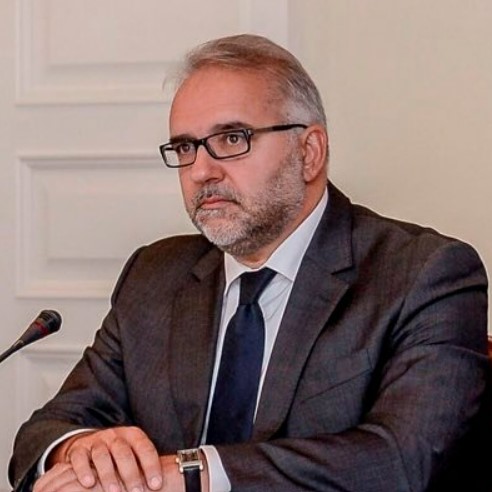
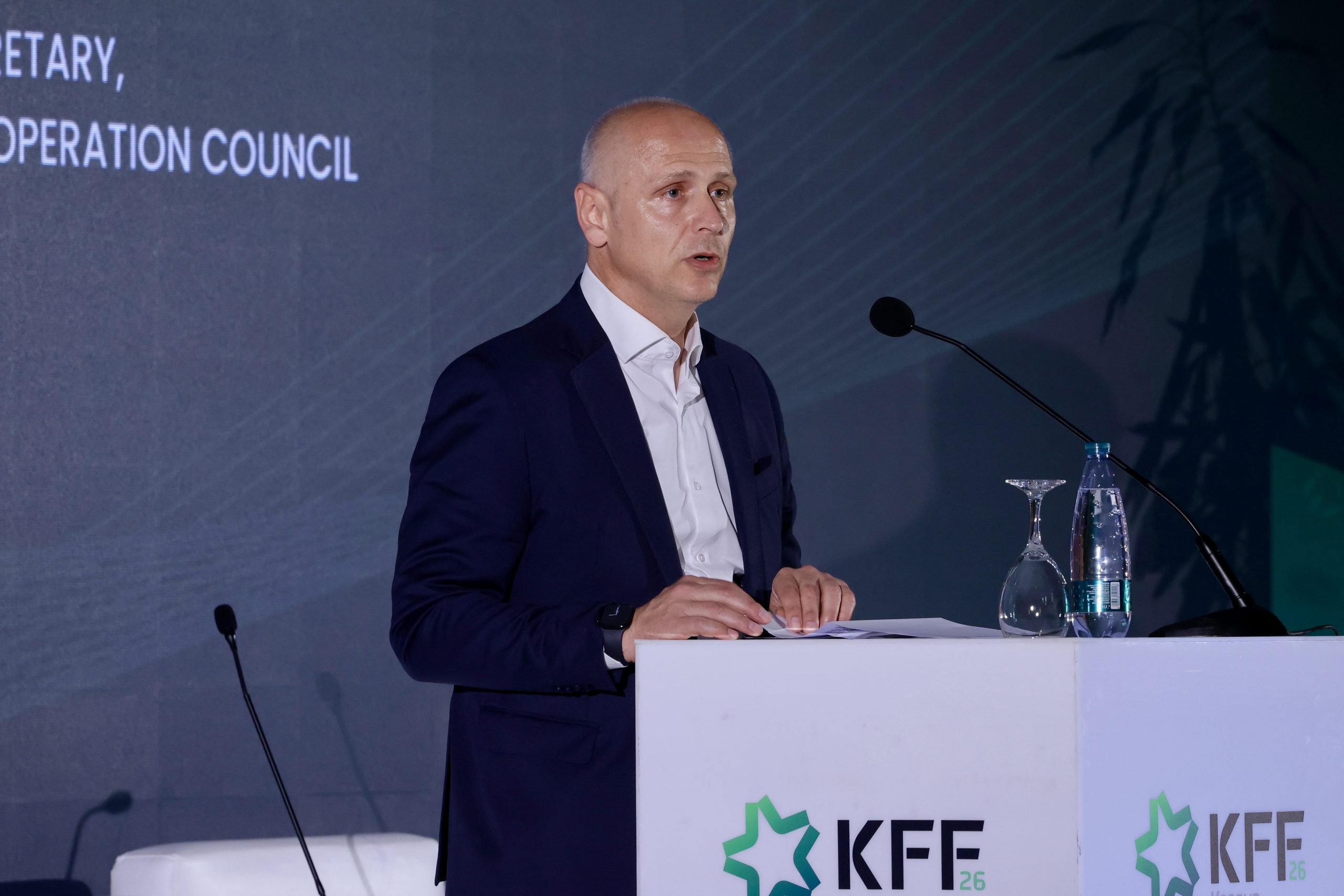
The Western Balkans Six must shift to a productivity-driven growth model or risk long-term economic stagnation amid rising labour shortages and demographic decline, the head of the Regional Cooperation Council said on Tuesday.
RCC Secretary General Amer Kapetanović said the region faces a “strategic choice” between transforming its economies or falling into a cycle of labour scarcity, fiscal pressure and incomplete convergence with the European Union.
“The Western Balkans Six face a strategic choice: either they move towards a productivity-led model, or they risk becoming economies of labour scarcity, fiscal pressure and permanent semi-convergence,” Kapetanović said in a keynote address at the KFF2026 business forum in Pristina.
Labour shortages and demographic pressure
Kapetanović warned that the region’s working-age population is projected to shrink by nearly 20% by 2050, while a shortage of more than 190,000 workers could emerge within the next five years.
At the same time, labour productivity in the Western Balkans remains at around 40% of the EU average, highlighting a significant structural gap.
“Growth alone will not deliver convergence without transformation,” he said. “Our region cannot indefinitely rely on cheaper labour, remittances, public spending or construction-led expansion.”
Without a substantial increase in productivity, he added, economic growth would continue but fail to produce meaningful structural change.
Regional integration as a growth driver
Kapetanović pointed to the Common Regional Market as a key mechanism to boost productivity and competitiveness, particularly for small and medium-sized enterprises.
He said deeper regional integration could expand market access, enable labour mobility, reduce fragmentation costs and align standards with the EU Single Market.
The initiative could also strengthen regional value chains and improve the region’s credibility as an economic partner for the EU, he added.
Trust deficit remains a barrier
The RCC chief also highlighted what he described as a “structural trust deficit” across the region, warning that uncertainty continues to limit economic potential.
“Productivity does not grow in uncertainty,” he said, stressing the need for stronger institutions, policy consistency and regional cooperation.
From brain drain to brain regain
Kapetanović said that improving regional functionality and deepening ties with the European economic space could help reverse the long-standing trend of emigration.
“With stronger regional functionality, deeper integration with the European economic space and a renewed focus on delivery, the Western Balkans can move from brain drain to brain regain,” he said, adding that this would create opportunities for talent to return, invest and lead.
Meetings in Pristina
During his visit to Pristina, Kapetanović met senior officials to discuss advancing regional cooperation and economic integration.
Talks focused on concrete outcomes in areas such as talent mobility, entrepreneurship, innovation and the further development of the Common Regional Market as a tool for growth and competitiveness.
The Regional Cooperation Council is a regional framework established in 2008 as the successor to the Stability Pact for South Eastern Europe. It serves as the operational arm of the South-East European Cooperation Process, supporting political and economic cooperation across the region.
Based in Sarajevo, with a liaison office in Brussels, the RCC brings together 25 participants, including EU member states and G20 countries, acting as a bridge between regional priorities and broader European and global agendas.