


The victory of Péter Magyar and his Tisza party in Hungary’s parliamentary elections has been welcomed across much of the European Union, where leaders expressed relief at the departure of Viktor Orbán after 16 years in power.
Orbán had been seen as an obstacle in Brussels, particularly in aligning positions related to Ukraine. However, in parts of the Balkans, including North Macedonia and Serbia, the outcome did not spark the same enthusiasm. Ruling parties in both countries had maintained close ties with Orbán’s Fidesz and openly supported him during the campaign.
Serbian President Aleksandar Vučić appeared in a campaign video, while North Macedonian Prime Minister Hristijan Mickoski publicly endorsed Fidesz from Budapest ahead of the vote.
North Macedonia’s close relationship with Orbán’s government resulted in two key agreements – one on strategic partnership and another on a loan – whose future is now uncertain under the new Hungarian leadership.
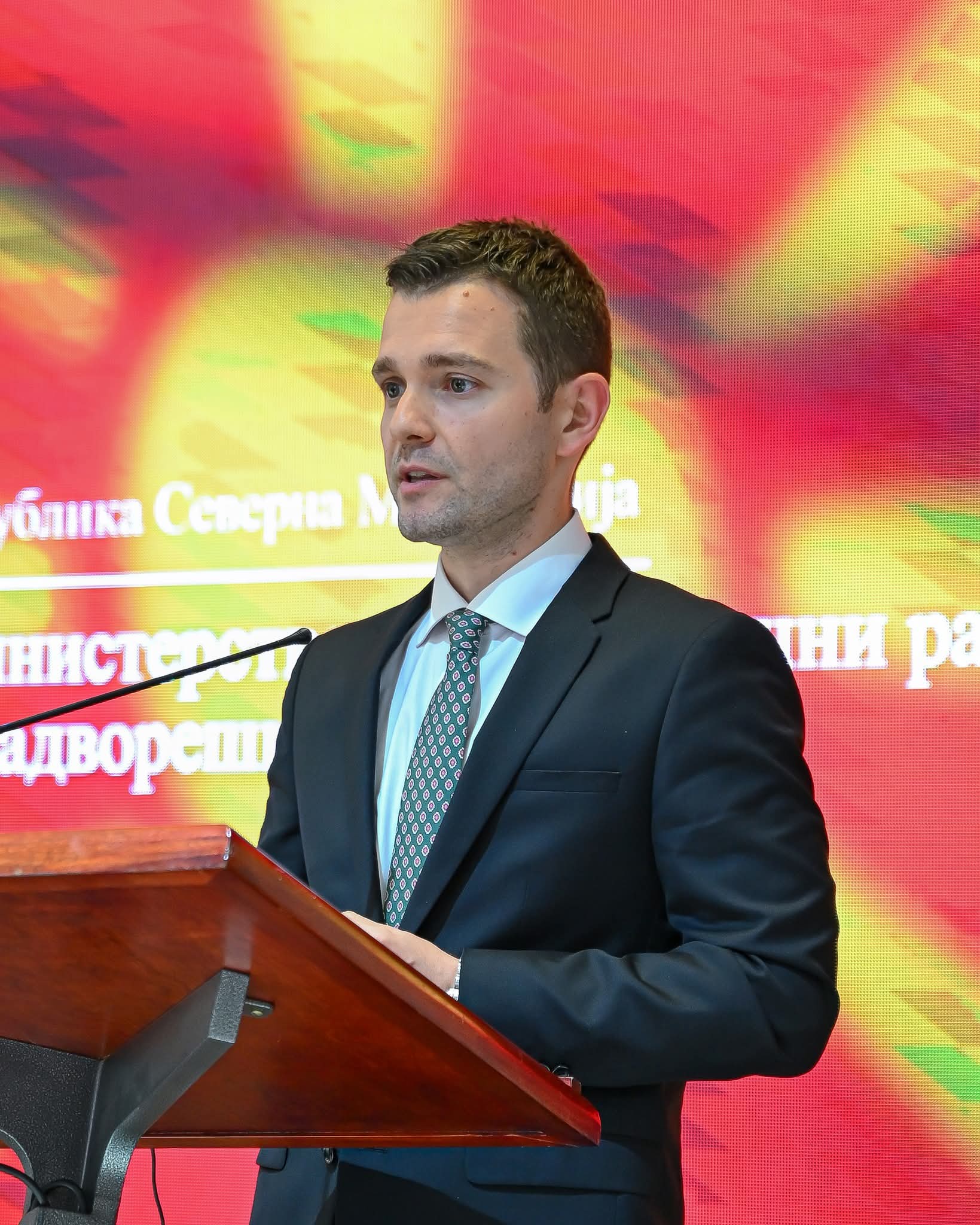
In an interview for BIRN, Foreign Minister Timčo Mucunski said he remains optimistic about continued cooperation, stressing that “if challenges arise, we will find appropriate solutions.”
“Our country has a long-standing continuity of good bilateral relations with Hungary,” Mucunski said, noting that ties had further strengthened since the formation of the VMRO-DPMNE-led government in 2024.
He added that recent communication with representatives of the incoming Hungarian government suggests that Budapest’s commitment to the Western Balkans will remain unchanged, including its willingness to maintain strong bilateral relations.
Regarding the strategic partnership agreement, Mucunski said it provides a framework for political, economic and security cooperation and should continue to serve the interests of both countries.
“It is our expectation that the implementation of this agreement will continue, and it will be one of the key topics in future dialogue with the new government,” he said.
He emphasized Hungary’s importance due to its geographic proximity, its role in Corridor 10, and its continued support for EU enlargement in the Western Balkans.
On the loan agreement with Hungary’s state-owned export-import bank, Mucunski said such arrangements are governed by clear legal and financial frameworks, adding that both sides are expected to honor their obligations.
“It is difficult to speculate how the incoming government will approach specific agreements, but our initial contacts indicate goodwill and a willingness to cooperate,” he said.
Asked about the case of former Prime Minister Nikola Gruevski, who lives in Hungary under asylum, Mucunski said the Foreign Ministry has not been involved so far.
“If necessary, we will act within our constitutional and legal competencies,” he said, adding that discussions with Hungarian officials have so far focused on bilateral relations and EU integration.
Mucunski concluded that, based on early signals, relations between the two countries are likely not only to continue but potentially improve in the period ahead.