


North Macedonia has formally adopted its first national plan for responding to mass casualty incidents, along with the country’s inaugural national protocol for burn treatment, government officials said on Sunday.
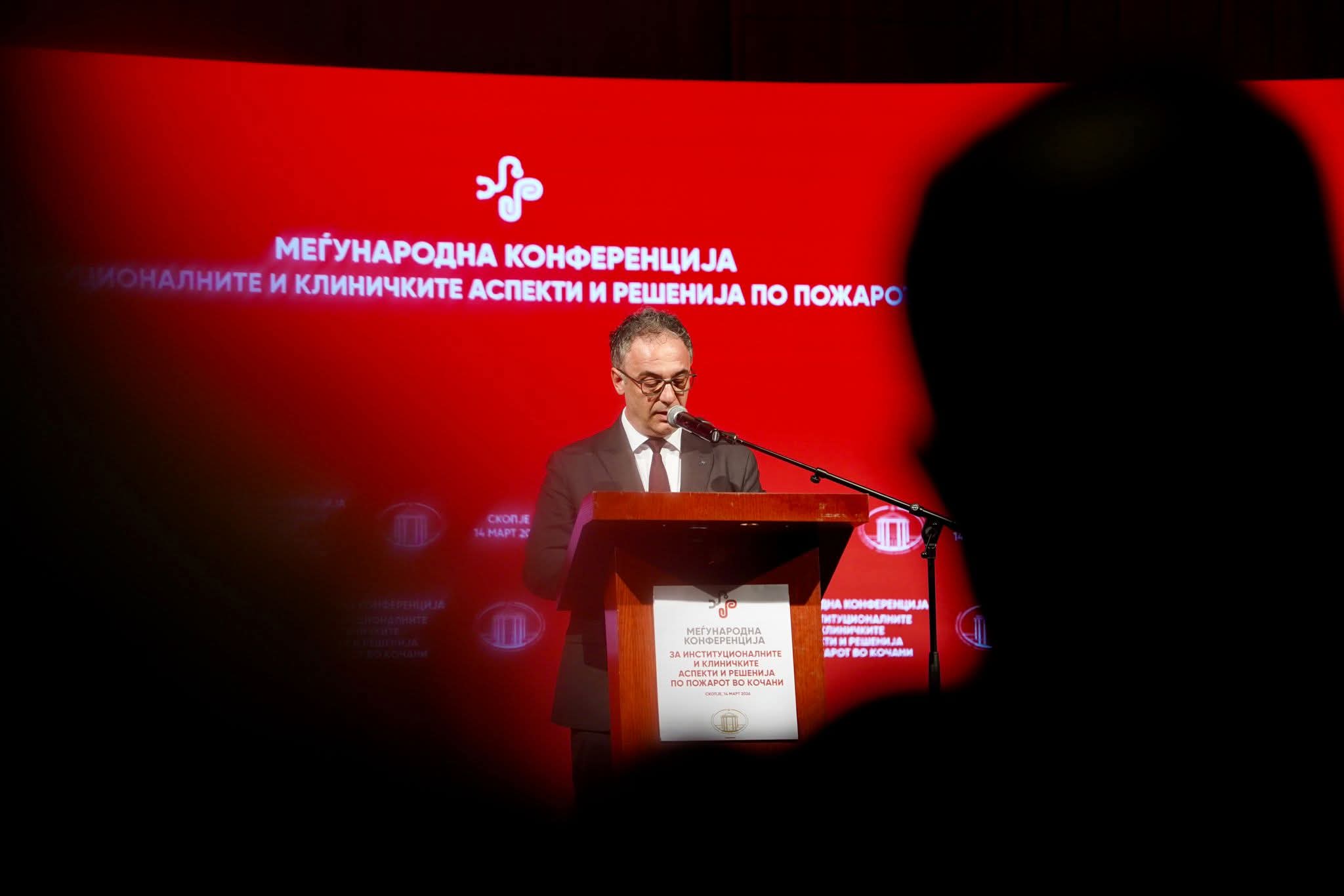
The announcement came during the closing session of the International Conference on “Institutional and Clinical Aspects and Solutions Following the Kočani Fire – One Year Later,” organized by the Ministry of Health. The conference brought together domestic and international experts, health institutions, and practitioners to share lessons learned and strengthen systemic responses to emergencies.
Health Minister Azir Aliu said the Kočani tragedy, in which a fire caused multiple fatalities and injuries, highlighted that rapid response alone is insufficient. “Our priority was to transform the lessons learned into concrete, sustainable, and actionable mechanisms,” Aliu said.
At the government’s most recent session, the National Mass Casualty Plan was approved. The plan aligns North Macedonia’s emergency preparedness with guidelines from the World Health Organization (WHO), the European Civil Protection Mechanism, NATO standards, and international health regulations. It aims to reduce fatalities, increase survival rates, enhance inter-agency coordination, and accelerate response times in large-scale incidents.
“The plan is both an institutional and operational tool designed to rationalize limited human and material resources, improve communication between agencies, and enable faster, more efficient responses,” Aliu said. “It also provides the foundation for regular training, simulation exercises, and continuous improvement of emergency preparedness.”
In addition, Aliu presented the country’s first national burn treatment protocol. Developed by a multidisciplinary working group, the protocol sets national standards for patient assessment, triage, transport, intensive care, surgical intervention, and rehabilitation. The team reviewed leading European and U.S. guidelines and adapted them to local needs and resources.
The conference also addressed broader reforms in North Macedonia’s emergency medical services. These include modernizing ambulance services, introducing paramedic roles, and licensing EMT Type 1 teams according to international standards, creating new operational capacity for structured and rapid medical response. The government has allocated funding for 100 new ambulances this year, with a total project value of approximately €7.5 million.
The closing session featured President Gordana Siljanovska-Davkova and Minister Aliu, who emphasized that lessons learned from Kočani form the foundation for a sustainable and functional national system for managing mass casualty events.
The conference included three panels:
- Panel 1: “European Civil Protection Mechanism and International Response: Coordination, Solidarity, and Experience.” Experts highlighted the importance of timely coordination, international cooperation, and institutional readiness in large-scale emergencies.
- Panel 2: “National and International Health Response and Acute Burn Treatment.” Discussions focused on triage, emergency medical response, and inter-clinic coordination, with an emphasis on multidisciplinary approaches and timely intervention.
- Panel 3: “Multidisciplinary Approach, Rehabilitation, and Recovery.” The panel examined coordinated collaboration among medical disciplines and institutions in patient recovery, including rehabilitation, psychological support, and long-term follow-up.
The new measures mark North Macedonia’s first structured national approach to mass casualty management and burn care, aiming to strengthen the country’s health system resilience and improve outcomes in future emergencies.
The Kočani nightclub fire occurred on 16 March 2025 at the Pulse nightclub in eastern North Macedonia, when pyrotechnics used during a live concert ignited a blaze that rapidly engulfed the crowded venue. The fire killed 63 people and injured over 150, many of them young adults, marking one of the deadliest peacetime disasters in the country’s recent history. The tragedy exposed serious safety violations, overcrowding, and regulatory failures, prompting national mourning, international offers of medical assistance, and a formal investigation into the incident.