



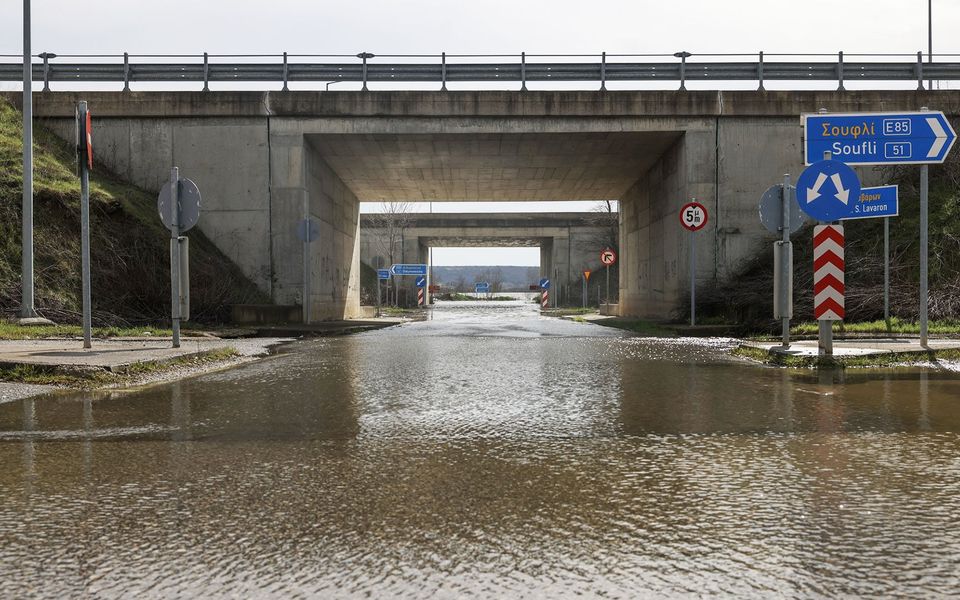
Flooding in northeastern Greece’s Evros region has inundated tens of thousands of acres of farmland after heavy rainfall and water releases upstream, highlighting longstanding challenges in managing the transboundary river.
Meteorologists had warned of intense rainfall, while Bulgarian authorities alerted Greece to the risk of dam overflows and increased water volumes flowing downstream. Despite the warnings, local authorities and residents had limited means to prevent the flooding.
As the Evros River swelled, fed by its tributaries, the Ardas and Erythropotamos, strong currents breached embankments and spilled into the plains around Orestiada and Soufli. The river, which empties into the Thracian Sea, is vital for irrigation in the fertile border region but has a long history of destructive flooding.
The Evros is shared by Bulgaria, Turkey, and Greece, complicating efforts to manage water flows. Unlike other rivers that flow into the northern Aegean, the Evros basin spans three countries, requiring cross-border coordination.
Greece and Turkey have demarcated their border along the river’s midpoint, and any engineering intervention to alter its course can raise sensitive territorial issues. Sediment buildup frequently shifts the river channel, at times affecting the precise boundary line.
During a recent visit to Turkey, Prime Minister Kyriakos Mitsotakis agreed with Turkish officials to deepen cooperation on sustainable water management, including coordination with Bulgaria to mitigate flood risks across the basin.
Seasonal drought poses an additional challenge. In summer, reduced water flows from Bulgaria can leave farmland around Orestiada and Didymoteicho short of irrigation supplies. Greece receives water from the Ardas River under a World War Two-era reparations agreement with Bulgaria, but that arrangement is nearing expiration. Political instability in Bulgaria has complicated negotiations on a new accord governing water releases in exchange for payment, with nationalist parties criticising any extension as a concession.
Mitsotakis is expected to visit Evros on Wednesday, where announcements related to flood management may be made, according to Greek media.
Experts say that while cross-border cooperation is essential, domestic infrastructure gaps also contribute to the problem. Two dams in northern Evros intended to regulate incoming water from Bulgaria remain incomplete or underperforming. The Komara Dam has been unfinished for around two decades, while the Therapio Dam holds limited reserves due to maintenance issues. Existing embankments have repeatedly proven vulnerable during peak flows.