


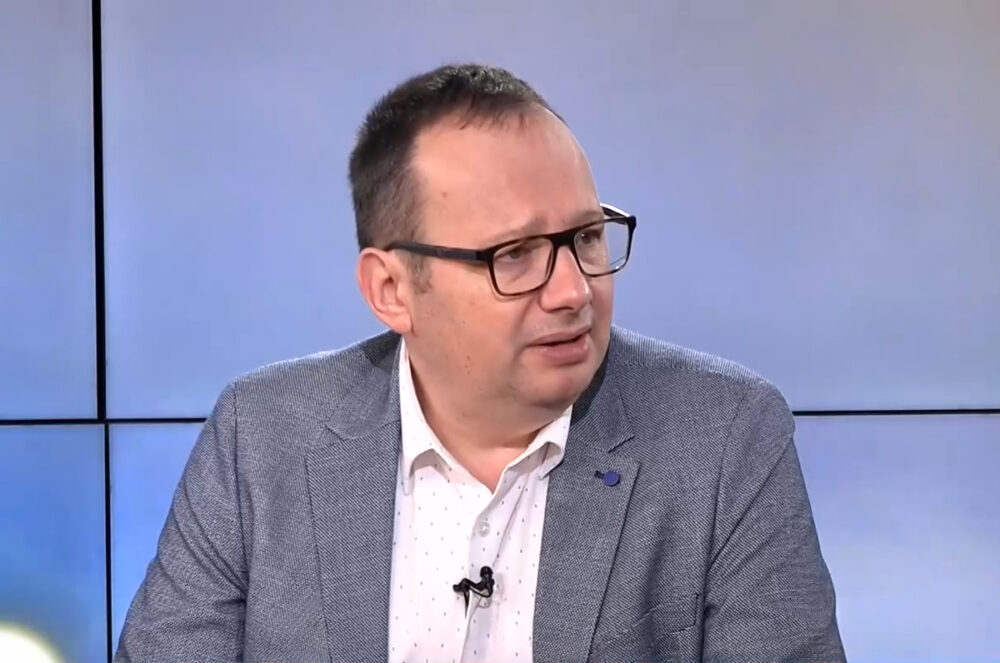
Nikolai Krastev, a Sofia-based journalist and Balkan affairs expert with decades of reporting experience, says Bulgaria’s latest wave of street protests signals deep public frustration with the political establishment. In this interview, Krastev explains how discontent over a disputed draft budget quickly escalated into nationwide calls for the government’s resignation, examines the role of influential power brokers, and assesses the growing mobilisation of Generation Z ahead of Bulgaria’s planned adoption of the euro on Jan. 1, 2026.
By BV Team
BalkanView: Mr. Krastev, how do you interpret the fact that the protests escalated from dissatisfaction with the budget into a mass demand for the government’s resignation? Is this a crisis of politics or a crisis of legitimacy?
Nikolay Krastev: What happened in Bulgaria was not unexpected. The arrogance shown by the DPS – New Beginning party of Delyan Peevski during the debate over the state budget disgusted people and pushed them onto the streets to demand the resignation of the government that depends on him. When citizens saw videos on social media and TikTok showing Peevski’s MP Hamid Hamid pulling out microphones during a parliamentary budget committee debate and preventing the opposition from presenting its counter-arguments, this brought young people out into the streets. This impunity among members of the ruling majority, the attempt to divert public funds to pay bonuses to the state administration by taking money from working people who pay taxes, triggered a wave of dissatisfaction among both workers and employers.
At the same time, an earlier scandal contributed to the tension: several months ago, Toshko Jordanov of the ITN party – part of the governing coalition – told young trainee doctors that if they didn’t like their salaries, Bulgaria could simply “import doctors from Asia” who would work for USD 500. The speed with which the ruling majority, under pressure from Peevski’s party, tried to push through the budget, the lack of genuine debate, and the refusal to consider the views of workers and businesses, exploded public anger in Bulgaria.
There was also a covert attempt to privatize the Lukoil refinery in Burgas, which had been placed under special supervision after the U.S. sanctioned Russian energy companies linked to Peevski, as well as an attempt to grant a concession for the national lottery to his associates. All this led to protests and created a political crisis, reviving talk of early elections just as Bulgaria prepares to join the Eurozone on 1 January 2026.
BalkanView: Delyan Peevski and Boyko Borissov were central figures in the protest chants. What does this show about the public’s perception of their power and role in Bulgarian politics?
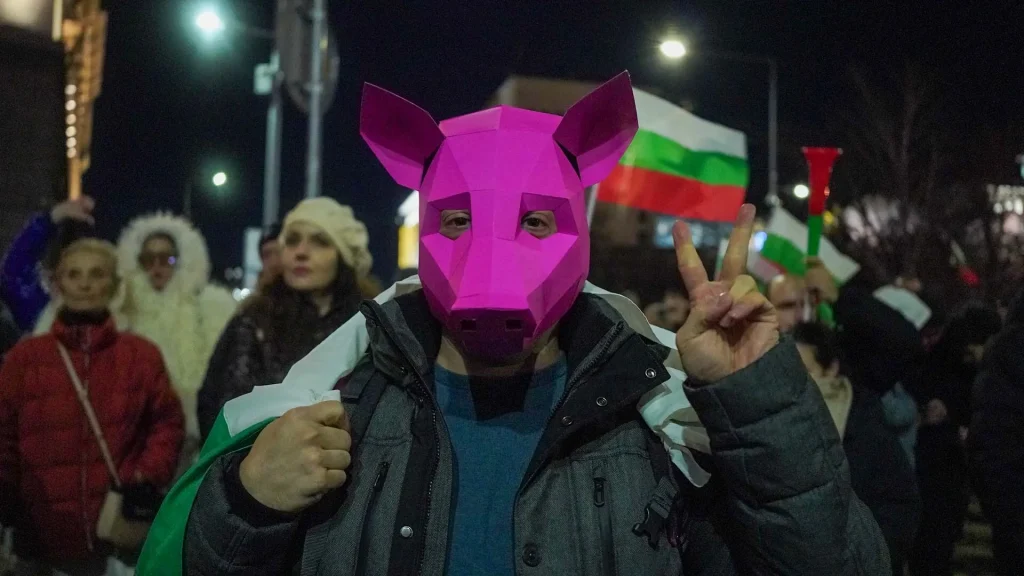
Nikolay Krastev: A large part of the young people from Generation Z, as well as those living in Bulgaria’s cities, oppose the actions of Boyko Borissov and Delyan Peevski. They chant their names because the governance of Borissov’s party, GERB — which depends on the parliamentary support of the oligarch Delyan Peevski, who is under U.S. “Magnitsky” sanctions — has become entirely dependent on him. According to most analysts in Bulgaria, Borissov today is largely reliant on Peevski, limiting his ability to act independently. Even though Borissov dislikes being publicly associated with Peevski, this dependency is increasingly evident in the public consciousness.
After Peevski managed in 2024 to push aside Ahmed Dogan, the long-time leader of the Movement for Rights and Freedoms (MRF), he is now seen as capable of exerting influence over any politician from any party. Young people once stopped Peevski from becoming head of DANS (the counterintelligence agency), forcing him to resign just a few hours after he was appointed by the Bulgarian Socialist Party (BSP) in 2013. The government of Prime Minister Plamen Oresharski was then forced to resign 10 months later, in the spring of 2014, under sustained public pressure. Today, there is a similar sense that a new generation of young people wants once again to block Delyan Peevski’s path to consolidating control over Bulgaria, just as they did 12 years ago.
BalkanView: Groups of “men in black” were seen on the ground, throwing pyrotechnics and provoking clashes. Who benefits from such scenes, and is an organized undermining of the mass civic protest possible?
Nikolay Krastev: Provocateurs from one of Sofia’s football fan groups were sent to trigger incidents and cause clashes between protesters and the police. This was part of a scenario to discredit the protests and portray protesters as anti-euro or supporters of President Rumen Radev. Many factors mobilized Bulgarians against the rule of GERB, BSP, ITN and their backers from DPS–New Beginning. GERB and DPS–New Beginning had an interest in such clashes to discredit the demonstrations, but people understand this clearly.
BalkanView: The police reacted passively, unlike previous cases where interventions were much harsher. How do you assess this selectivity, and what might it mean for public trust in institutions?
Nikolay Krastev: According to Interior Ministry officials, their plan to maintain public order worked until football hooligans intervened. After that, police were unable to act effectively and their response was delayed. Borissov praised his interior minister, Daniel Mitov, saying the goal was to avoid the violence seen in autumn 2020 during protests against his government, when many young people were subjected to police abuse, prompting strong reactions from human rights groups.
There is also public confusion about why police and state administration salaries were raised so sharply instead of increasing social benefits for young families, specialists or doctors entering the labour market. Trust in parliament and other institutions has eroded due to Peevski’s behaviour, driven by both internal factors and Russian propaganda efforts aimed at weakening support for Ukraine and undermining European unity.
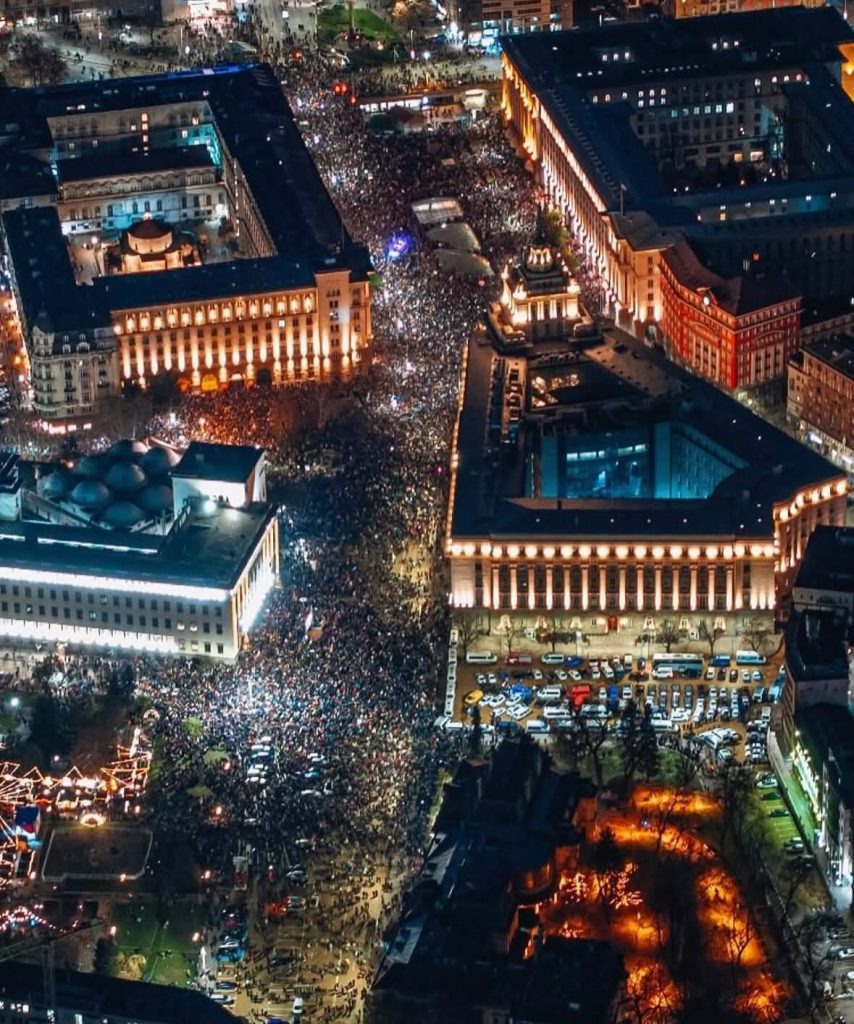
BalkanView: Protests spread to almost all large cities. Does this suggest a coordinated national movement or spontaneous, accumulated dissatisfaction?
Nikolay Krastev: Protests spreading so widely beyond Sofia is happening for the first time since 1997, when Bulgaria faced bank closures, hyperinflation and a collapse of the lev due to the socialist government of Zhan Videnov. The lev was then pegged to the German mark, later to the euro, saving it from collapse, while Russia tried at that time to buy Bulgaria’s gas infrastructure cheaply.
Back then, citizens across Bulgaria—Sofia, Plovdiv, Varna, Burgas, Ruse, Vidin, Blagoevgrad, Dupnitsa, Stara Zagora—blocked streets and forced the government to resign. The opposition UDF withdrew its MPs from parliament, depriving the government of legitimacy and leading to early elections in 1997. This ushered in 15 years of stability and efforts to join NATO (2004) and the EU (2007).
Today, 28 years later, the wave of public anger is similar and may produce similar outcomes. Bulgaria is again at a decisive moment—finalizing its European integration by entering the Eurozone. The attempt by the ruling majority to undermine the very first budget denominated in euros brought masses to the streets. The proposed tax hikes and new debt increased fears that Bulgaria could follow the path of Greece or Romania, which experienced severe financial problems.
Generation Z actively joined the protests, signalling they reject old dependencies and want to build a modern Bulgaria. Alongside them were small groups opposed to adopting the euro or to the government’s pro-Ukraine policy due to Kremlin influence. Overall, the protests represent a broad coalition of dissatisfied citizens united against a government backed behind the scenes by Peevski. Pro-Western parties PP–DB aim to return Bulgaria to the European path and stop Peevski’s harmful influence.
New protests are expected on December 10, when the confidence vote on the budget will take place.
BalkanView: Part of the criticism of the budget relates to higher contributions, dividend taxes and at the same time salary increases for the administration. How polarizing are these measures, and does the government have the credibility to implement them?
Nikolay Krastev: After the budget was withdrawn under public pressure, Prime Minister Rosen Zhelyazkov said it would be reviewed.
The opposition PP–DB coalition argues that the GERB–BSP–ITN government, supported by DPS–New Beginning, lacks public legitimacy and must call early elections. According to Asen Vasilev, public dissatisfaction could give reformers more votes and curb Peevski’s influence.
If the government tries to reintroduce essentially the same budget, even with small changes, this may intensify public anger and further radicalize protests. Zhelyazkov argues that early elections now would be harmful because the first 12 months of Eurozone membership are crucial, which some Bulgarians agree with. But the growing influence and arrogance of Peevski is intolerable for many. The opposition believes early elections would not hinder euro adoption.
According to a Mjara poll, 71% support the protests, 49.8% want the government to resign, 32.6% oppose resignation and 17.6% are undecided. About 48% favour early elections, while 35.8% oppose them. Bulgaria faces an important choice.
Although President Rumen Radev’s powers over caretaker governments are limited, no one can guarantee that ministers appointed by a future caretaker PM won’t obstruct a smooth euro transition. Radev is nearing the end of his second term and appears increasingly eager to remain politically active, potentially shifting Bulgaria toward closer ties with Viktor Orbán and Robert Fico—raising concerns about the country’s international standing.
The year 2026 is crucial: euro adoption, presidential elections, and possibly early parliamentary elections. As Asen Vasilev noted, if all young people vote en masse, Peevski’s electoral result could be cut by half. Political analysts warn that if Radev enters the elections as an independent player, there is no guarantee he will maintain his current high approval levels.
BalkanView: Next month Bulgaria introduces the euro—a process supported by only half the population. How might fears over sovereignty and rising prices escalate political unrest?
Nikolay Krastev: Less than 20 days remain until Bulgaria enters the Eurozone and adopts the euro. Some older citizens in smaller towns fear the currency change, largely due to pro-Kremlin propaganda that has gained ground since Russia’s invasion of Ukraine. False claims spread through online groups—such as the EU supposedly seizing people’s savings or restricting access to them. The pro-Russian party “Vazrazhdane” and its MEPs fuel these fears, claiming the fixed conversion rate of 1 euro = 1.95583 leva is a “lie,” even though it has been approved by parliament.