


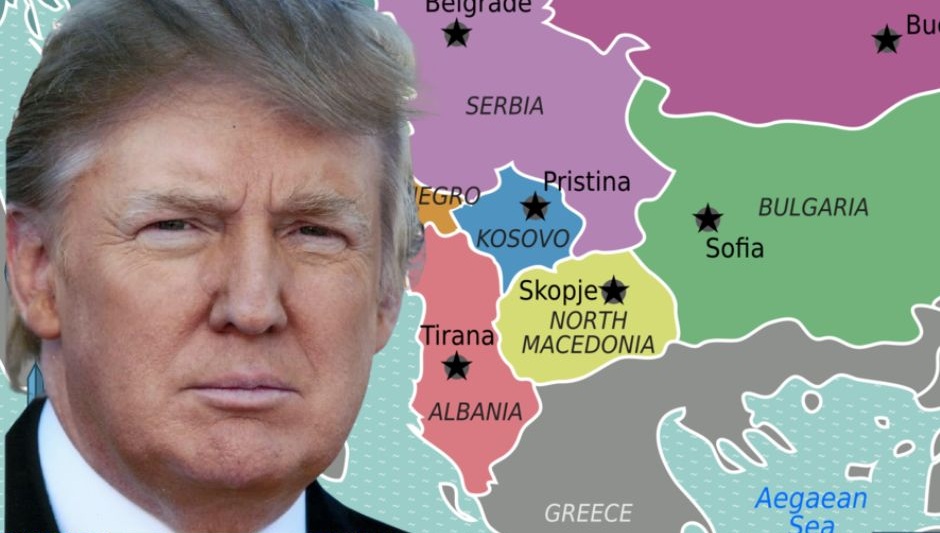
The United States has extended for another year a national emergency declaration related to the Western Balkans, maintaining a sanctions framework first introduced during the 2001 conflict in what is now North Macedonia and later expanded to address corruption, organized crime and threats to regional stability.
In a notice published in the Federal Register, the White House said that actions threatening peace, international stabilization efforts and democratic governance in the Western Balkans continue to pose “an unusual and extraordinary threat” to U.S. national security and foreign policy.
The decision extends Executive Order 13219, signed by then-President George W. Bush on June 26, 2001, which targeted individuals involved in extremist violence in the former Republic of Macedonia and those obstructing the implementation of the Dayton Peace Agreement in Bosnia and Herzegovina and U.N. Security Council Resolution 1244 on Kosovo.
The order was expanded in 2003 to include individuals undermining the Ohrid Framework Agreement that ended the armed conflict in North Macedonia. In 2021, President Joe Biden broadened the sanctions regime to target corruption, democratic backsliding and efforts to undermine post-war institutions across the Western Balkans.
On Jan. 8, 2025, President Donald Trump further expanded the framework through Executive Order 14140, citing continued attempts to challenge the sovereignty and territorial integrity of Western Balkan states, evade U.S. sanctions and weaken democratic governance.
“The actions of persons threatening the peace and international stabilization efforts in the Western Balkans, including acts of extremist violence and obstructionist activity, continue to pose an unusual and extraordinary threat to the national security and foreign policy of the United States,” the White House said.
The annual extension preserves the legal basis for Washington to impose sanctions on individuals, companies and organizations deemed responsible for corruption, organized crime, destabilization activities or violations of international agreements in the region.
The move comes amid persistent tensions in Southeast Europe, including disputes between Kosovo and Serbia, political instability in Bosnia and Herzegovina, and growing concerns in Washington and Brussels over corruption, democratic backsliding and foreign influence in the region.
Although the declaration does not indicate an imminent security crisis, it underscores that Washington continues to view the Western Balkans as a region requiring sustained international engagement and oversight, despite more than two decades having passed since the end of the Yugoslav wars.
The national emergency will remain in effect until June 26, 2027, unless terminated earlier by the U.S. president or Congress.