


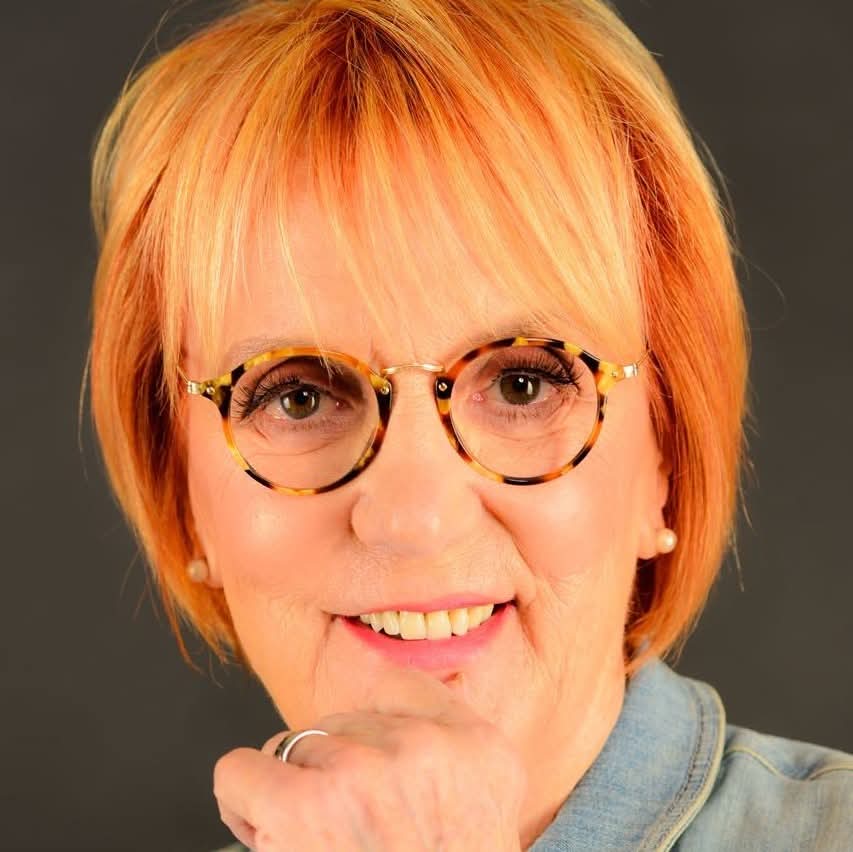
ZAGREB/RIJEKA, Aug. 18 (Balkan View) – Croatian writer and columnist Vedrana Rudan has died at the age of 77, leaving behind 17 books, decades of provocative journalism and a final published text in which she turned her attention to overworked medical staff and what she described as the failures of Croatia’s healthcare system.
Rudan was one of the region’s most recognisable literary voices, known for an abrasive, confrontational style that mixed dark humour, political commentary, anger and autobiography. Her books were translated into English, Hungarian, Slovenian, Polish, French, Italian, Russian and Macedonian, while stage adaptations of her work were performed in cities including Rijeka, Zagreb, Belgrade, Warsaw, London, Santa Monica and Budapest.
She had worked as a journalist, columnist, Croatian Radio editor and television presenter. According to her own blog, she repeatedly lost jobs during her media career.
Her final book, “To Die Without Stress”, was published in 2024.
Among her best-known titles were “Ear, Throat, Knife” from 2002, “Love at Last Sight” from 2003, “I, the Unbeliever” from 2005, “Black People in Florence” from 2006, “May Your Mother Give Birth to You” from 2010, “The Skeletons of Madison County” from 2012, “In the Land of Blood and Idiots” from 2013, “Why I Swear” from 2015, “A Man in My Throat” from 2016, “Life Without Ticks” from 2018, “Dance Around the Sun” from 2019 and “Life Imprisonment” from 2022.
Her writing repeatedly returned to subjects that many authors avoided or softened: dysfunctional families, violence, sex, ageing, nationalism, religion, political hypocrisy, Croatia’s post-Yugoslav transition and the relationships between women and men.
Her final piece: cancer, nurses and the state
Rudan’s last piece published on her blog, dated July 26, 2026, was titled “The Nurses Will Breathe Easier When I Breathe My Last.”
Written while she was living with metastatic cancer, the piece turned her own treatment into a broader indictment of conditions facing medical staff at the oncology department in Rijeka.
She described nurses working gruelling shifts in extreme summer heat while continuing to care for seriously ill patients.
Rudan wrote that she herself belonged to the group of patients “for whom it is hardest”, before immediately rejecting the idea that her suffering was the only one that mattered.
She described being cared for at home by her family and feeling ashamed at needing help with eating, washing and basic bodily functions.
In hospital, she wrote, the nurses performed the same intimate and exhausting tasks, often in the middle of the night.
She asked how much they earned and wrote that nurses in Croatia were receiving between about €1,200 and €2,000 a month, including overtime.
The piece centred on a doctor named Ivana who, according to Rudan, had become overwhelmed by the conditions under which her colleagues were working.
Rudan described 12-hour shifts stretching from 7 a.m. to 7 p.m. and then 7 p.m. to 7 a.m.
According to Rudan, Ivana rented a boat, organised music and invited colleagues who were able to attend for a day trip between the islands of Cres and Krk.
For several hours, she wrote, the exhausted healthcare workers danced, sang and laughed.
The story became a vehicle for one of Rudan’s characteristic political attacks.
She urged Croatians not to remain passive while patients were being consumed by cancer and nurses were being pushed to exhaustion.
Her concluding message was directed not at doctors or nurses but at the state.
She called on citizens to take to the streets and fight against what she described as a system that had itself become “a cancer for Croatia.”
Seventeen books, one unmistakable voice
Rudan built much of her reputation on refusing polite language.
In “Why I Swear”, she explicitly defended profanity as part of her refusal to behave like the socially acceptable older woman expected to remain quiet and wait for death.
In “In the Land of Blood and Idiots”, she wrote about Croats and Serbs, the United States, Israel and Palestinians, the Catholic Church, marriage and herself.
Her autobiographical “Dance Around the Sun” traced her life from a difficult childhood through work, motherhood and her rise to become one of the region’s most widely read authors.
Her fiction often focused on damaged family relationships and women living with abuse, frustration and rage.
“May Your Mother Give Birth to You” confronted a woman’s relationship with an abusive father and the unresolved question of maternal responsibility.
“Love at Last Sight” centred on an abused woman accused of killing her husband.
And in her debut novel “Ear, Throat, Knife”, the character Tonka Babić became a vehicle for the kind of unfiltered, furious monologue that would come to define Rudan’s public voice.
Other titles included “Lifetime Sentence”, “Vanilla Pudding”, “When a Woman Is a Whore / When a Man Is a Faggot”, “Amaruši” and “Fear of Knitting.”
A writer who made discomfort part of her method
Rudan’s work divided readers precisely because she rarely tried to soften a point.
She wrote about nationalism without reverence, motherhood without sentimentality, marriage without romanticism and ageing without euphemism.
She could be offensive, vulgar and deliberately cruel, but that was often part of the literary mechanism: forcing readers to confront subjects they might otherwise avoid.
Her public life followed the same pattern. She was frequently criticised and just as frequently read.
That contradiction became central to her place in the post-Yugoslav cultural landscape.
Rudan’s death closes a career built on saying what was usually left unsaid.
Her final piece was consistent with that body of work: even while writing about her own mortality, she shifted attention away from herself and towards workers she believed society had learned to overlook.