


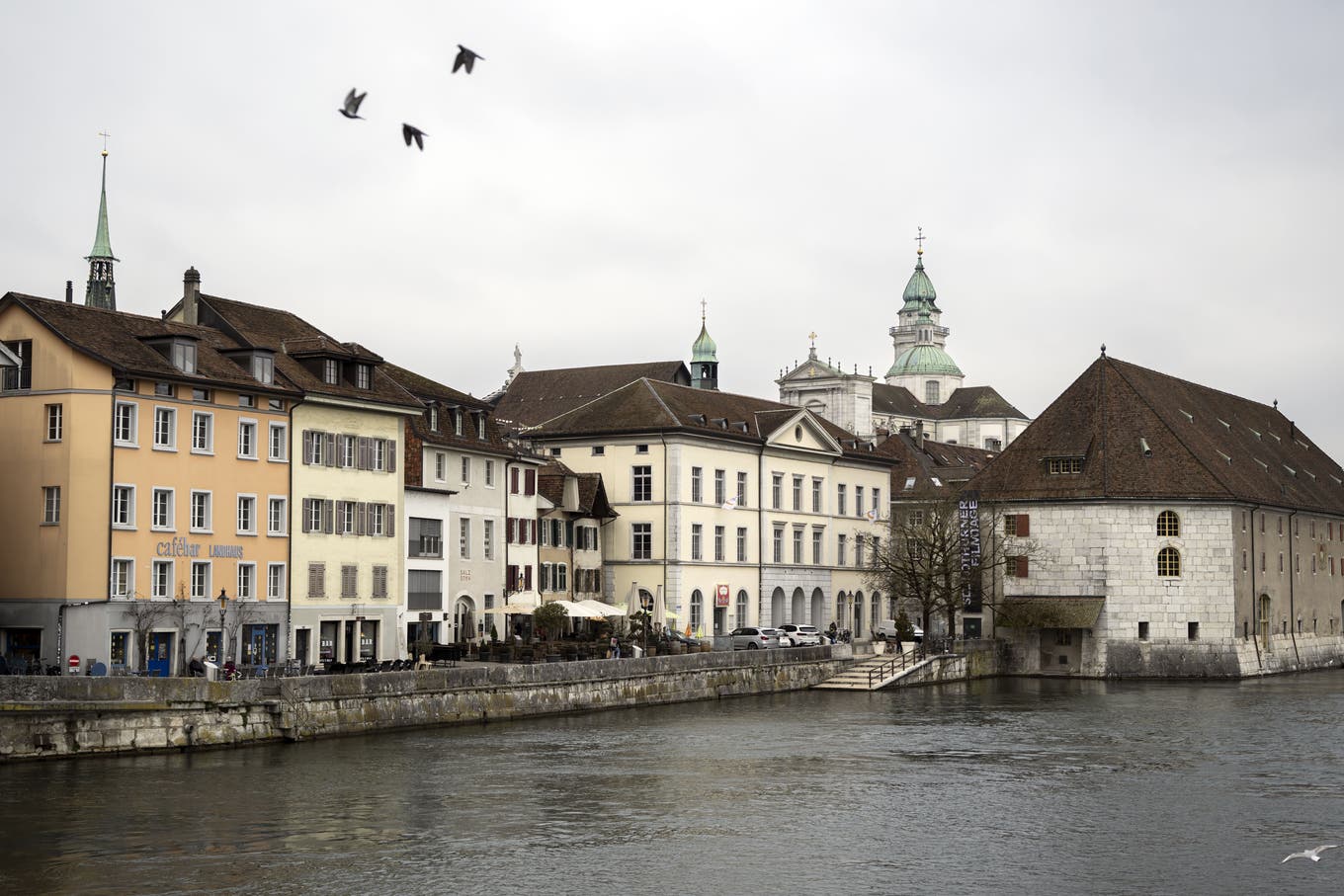
Switzerland has been hosting informal talks between Kosovo and Serbia in the small town of Solothurn in an effort to normalize relations between Belgrade and Pristina. Swiss officials describe the initiative as part of Bern’s “good offices,” aiming to facilitate dialogue and build trust away from the public eye, NZZ newspaper reported.
A Kosovar and a Serbian senior politician were seen walking through Solothurn’s old town after dinner, heading back to their hotel, according to sources familiar with the confidential talks. While hardline voices dominate public debates on both sides, the Swiss-mediated discussions have reportedly allowed politicians to speak candidly, surprising even experts familiar with the conflict.
For years, the informal meetings were kept under wraps. The first media report appeared in 2022 in NZZ am Sonntag, followed by a November 2025 article in Blick describing a gathering with about a dozen politicians. Until recently, it was not publicly known that ministers from both sides regularly participated. Sources say Kosovo’s Vice President Besnik Bislimi, responsible for negotiations with Belgrade, and Serbia’s Foreign Minister and former U.S. ambassador Marko Djuric were among the participants.
The Swiss Federal Department of Foreign Affairs (FDFA) confirmed that it organizes the Solothurn talks two to three times a year. Roland Salvisberg, head of the Peace and Human Rights section at the FDFA, said the dialogue has always focused on exchanges between key figures from all major Serbian and Kosovar parties. “Each side decides whom to send,” he said.
Hardline Politics on Both Sides
The American NGO Council for Inclusive Governance partners in the process. The most recent meeting took place in early December, including government and opposition representatives and members of civil society. The goal is to build trust and facilitate a framework for normalizing relations.
The conflict between Kosovo and Serbia has been ongoing since Kosovo declared independence in 2008. Kosovar Prime Minister Albin Kurti’s government has taken a hard line toward the Serbian minority, prompting EU sanctions. The minority has been affected by unilateral measures from Pristina.
Belgrade continues to refuse recognition of Kosovo’s statehood and has repeatedly issued threats, including violations of agreements barring obstruction of Kosovo’s international participation. Both Serbian President Aleksandar Vucic and Kurti have leveraged the conflict for domestic political purposes. Kurti’s party won the parliamentary elections decisively in late December, while Vucic maintains strong political control despite protests.
Switzerland’s Interest and “Good Offices”
Switzerland initiated the confidential talks. Salvisberg said Solothurn provides a small, discreet space for honest dialogue away from cameras, contrasting with high-profile diplomacy. “We do not dictate solutions; we ask questions,” he said. The Swiss aim to create conditions conducive to normalization.
The dialogue illustrates Bern’s continued role as a mediator despite Russian criticism of Swiss neutrality. Switzerland’s approach demonstrates that “good offices” can align with national interests. A large Kosovar diaspora and roughly 60,000 Serbs, along with people of Serbian descent, live in Switzerland, giving Bern a more direct interest in stability than in many other conflicts.
“The Swiss have a vested interest in resolving differences between Serbia and Kosovo peacefully, sustainably, and according to the rule of law,” said Salvisberg. Since 1999, Switzerland has contributed troops to the NATO-led Kosovo Force (KFOR), which remains the main guarantor of security in Kosovo. Swiss troops constitute the largest Swiss contingent in any peacekeeping mission.
Complementary Role to EU Negotiations
Formally, the EU leads negotiations between Serbia and Kosovo, using a structured process with top-level government representatives. In the past, EU officials, including former Special Envoy Miroslav Lajcak, questioned Switzerland’s relatively prominent role. Today, Brussels views the Swiss contribution more positively. Lajcak’s successor, Danish diplomat Peter Sörensen, has also participated in Solothurn talks.
“These discussions complement the EU-led process,” Salvisberg said. Germany, France, and other EU countries regard Switzerland’s engagement as useful. When appropriate, Switzerland invites EU representatives and key member states. Italy has funded around 20% of costs since last year, reflecting its historical ties to the region.
Switzerland has been organizing these meetings for over 11 years. The aim was never to deliver a final peace agreement, but the discreet dialogue has fostered mutual understanding. Participants know each other personally and maintain direct contact, which can help de-escalate tensions.
Despite nearly a decade of dialogue, Salvisberg acknowledges that the obstacles to full normalization are significant. “It is clear that this requires a lot of patience,” he said.
Positive developments in the Western Balkans provide some context. Croatia adapted its nationalist policies to join the EU in 2013, and the arrest of former General Ante Gotovina in 2005 paved the way for accession talks. However, EU enlargement has since slowed, and unresolved border issues between Serbia and Kosovo remain a key hurdle. Switzerland’s efforts in Solothurn represent a small but meaningful contribution to preventing the conflict from escalating.