



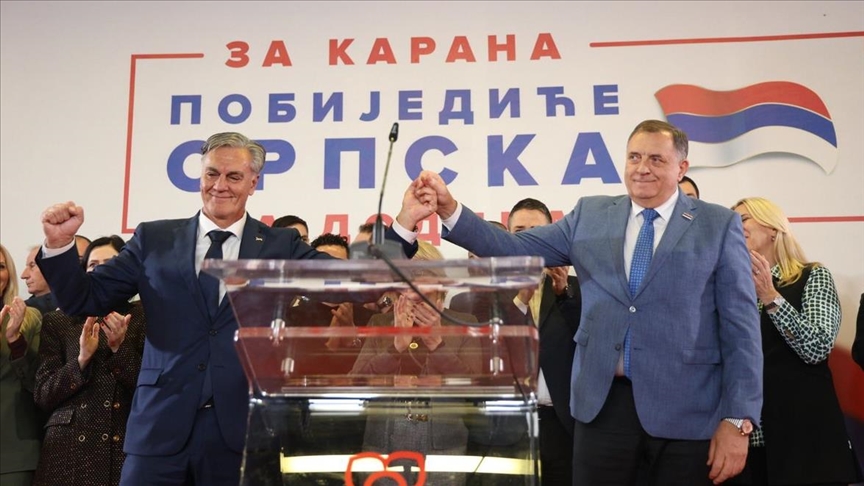
Siniša Karan of the ruling Alliance of Independent Social Democrats (SNSD) has won the repeated presidential elections in the Bosnian Serb entity of Republika Srpska (RS), finalizing a months-long electoral saga. Analysts, however, say the result represents continuity rather than a substantive shift in power, with SNSD leader Milorad Dodik continuing to wield significant influence over the entity’s political agenda.
According to the Central Election Commission (CIK) of Bosnia and Herzegovina, Karan received 224,384 votes, representing 50.54% of the electorate, narrowly defeating opposition candidate Branko Blanuša of the Serb Democratic Party (SDS), who secured 48.09%. The elections were rerun in 136 polling stations after the commission identified irregularities during the original November 2025 vote.
Two hours after polling closed, Dodik, a former RS president and head of SNSD, declared Karan’s victory, framing it as a validation of the ruling party’s policies and a rebuke to perceived threats from Sarajevo. In subsequent remarks, Dodik signaled continued strategic control over the entity, promising to “strengthen Republika Srpska’s position” and dismissing the role of Brussels in RS affairs.
SNSD officials hailed the election as a message from voters rejecting “traitors” and supporting policies of stability, while also indicating intentions to challenge CIK members in court and pursue adjustments to RS’s electoral law.
Karan, who ran as Dodik’s endorsed candidate, urged political unity across parties within RS, advocating for a “single party, the party of Republika Srpska,” and emphasized that his administration would work for all citizens, including those who did not vote for him.
Political analysts say Karan’s presidency is largely symbolic in the current power structure, where Dodik continues to dominate policy decisions. Dodik has repeatedly asserted RS’s right to self-determination and maintains close ties with international allies, including Russia, Israel, Hungary, and Serbia.
The elections reflect persistent political polarization in Republika Srpska, with commentators noting that while Karan assumes the official presidency, substantive governance and strategic decision-making are likely to remain under Dodik’s influence. The SNSD’s continued dominance underscores the challenges faced by opposition parties in shifting the political balance within the entity ahead of the next general elections scheduled for October.