


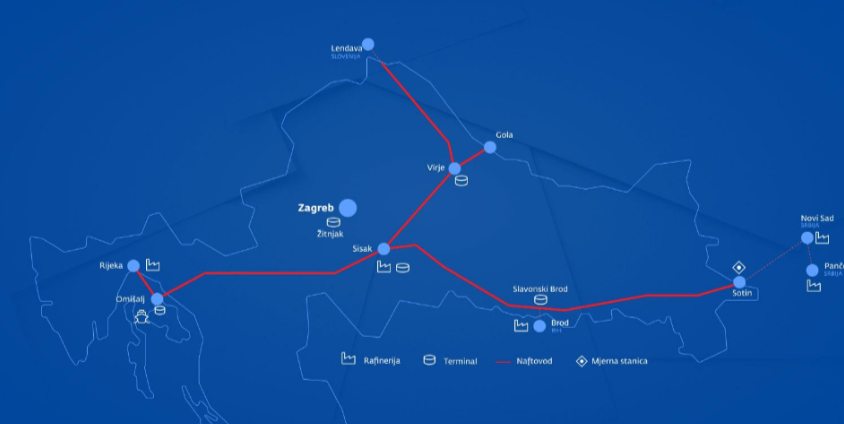
Hungarian energy group and its Slovak subsidiary have filed a formal complaint with the European Commission, alleging that Croatia’s oil pipeline operator is abusing a dominant market position.
The complaint was submitted to the Commission’s Directorate-General for Competition (DG COMP), MOL said on Wednesday, claiming JANAF has misused its control over oil transport infrastructure supplying Hungary and Slovakia.
JANAF rejected the allegations, saying it provides crude oil transport services to all users “under equal conditions” and that supplies to Slovakia and Hungary are not at risk.
Supply not threatened
In a statement, JANAF said MOL Group had itself demonstrated that supply was secure by organizing the arrival of eight tankers carrying non-Russian crude to the Omišalj terminal in the current period.
“From MOL Group’s own statements, it is evident that this is not a matter of energy security, but rather an attempt to preserve commercial advantages linked to the import of sanctioned Russian oil,” JANAF said.
The Croatian operator added that the energy security of Croatia and the European Union “must not be held hostage to individual interests,” particularly when non-Russian crude supplies are proceeding regularly and in sufficient quantities.
MOL noted that crude deliveries to Hungary and Slovakia via the Druzhba pipeline were halted on Jan. 27, increasing reliance on JANAF as an alternative route for landlocked refineries in Central and Eastern Europe.
The company said EU sanctions allow Hungary and Slovakia to import certain Russian crude by sea if pipeline routes are disrupted, and alleged that JANAF has delayed accepting such shipments, citing additional legal checks.
Dispute over pricing
MOL and Slovnaft also argued in their letter to the Commission that JANAF has charged three to four times what they describe as a fair market price for oil transport since 2022.
JANAF said pricing agreements are part of standard commercial negotiations and that unit transport fees depend on contracted volumes.
“Higher volumes mean lower prices,” the company said, adding that there is no single “market price” for oil transport because each pipeline system operates under specific technical, geographic and market conditions.
JANAF said it would continue to comply with decisions of relevant authorities and ensure the smooth functioning of the system, reiterating its role as an energy hub for the European Union, including the transport of non-Russian crude to refineries in Slovakia and Hungary in quantities sufficient to meet their annual needs.