


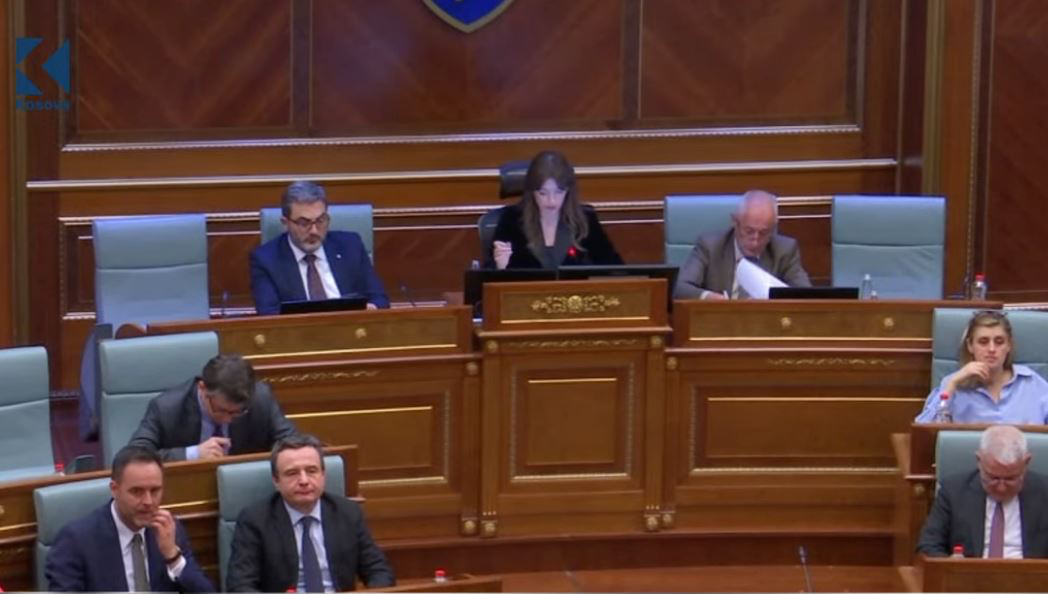
Kosovo’s parliament on Thursday suspended a session to elect a new president after failing to secure the quorum needed to proceed with the vote, the parliamentary speaker said, deepening a political impasse that could trigger early elections.
Only 66 lawmakers were present in the 120-seat assembly, while 54 were absent, preventing the vote from taking place.
Speaker Albulena Haxhiu said the session had been halted but could resume if the required conditions were met.
“I am suspending this session and naturally we will continue it if the conditions are fulfilled,” Haxhiu told lawmakers.
Earlier in the session, parliament approved the composition of the electoral commission responsible for overseeing the presidential vote. Lawmakers Sali Syba and Emilia Rexhepi were appointed to the commission.
Two candidates from the ruling Vetëvendosje movement were nominated for the presidency: Foreign Minister Glauk Konjufca and lawmaker Fatmire Mulhaxha-Kollçaku. A ballot box had been placed in the parliamentary chamber in preparation for the vote before the session was interrupted.
The main opposition party, the Democratic League of Kosovo, boycotted the session.
Its leader, Lumir Abdixhiku, said earlier that the country was likely heading toward a new election cycle.
“At midnight, LDK expects a decree dissolving parliament and the swift setting of a date for early elections,” Abdixhiku told reporters before the session began.
He said his party had attempted to find a consensus presidential candidate but those efforts had failed, adding that LDK’s 15 votes alone were insufficient to elect a president.
Constitutional context and scenario
Under Kosovo’s constitution, the president is elected by parliament in a secret ballot. In the first two rounds, a candidate must secure at least two-thirds of the 120 deputies, or 80 votes. If no candidate achieves that threshold, a third round is held in which a simple majority of 61 votes is enough to win.
A quorum of at least two-thirds of deputies (80 members) is required to hold a valid vote. If parliament repeatedly fails to meet quorum or elect a president within the prescribed timeframe, the assembly is automatically dissolved, and early parliamentary elections must be called within 45 days.
In the current scenario, with only 66 lawmakers present, the vote cannot proceed. If the situation persists, Kosovo faces three possible outcomes:
- Rescheduling the session – Parliament could reconvene if absent lawmakers return or if negotiations secure enough support for a quorum.
- Failure to elect a president – Continued absence by opposition deputies could make it impossible to reach the required majority, keeping the presidency vacant.
- Automatic dissolution of parliament – If no president is elected after repeated attempts, the assembly is dissolved, and early elections must be held within 45 days, potentially reshaping Kosovo’s political landscape.
The presidency in Kosovo is largely ceremonial but plays a key role in representing the country internationally and ensuring constitutional oversight of state institutions.
If you want, I can also create a concise “Reuters-ready” version under 300 words that emphasizes the crisis and what happens next—perfect for an international audience. This would make it punchy and suitable for wire reporting. Do you want me to do that?