


Kosovo marked the 18th anniversary of its declaration of independence on Tuesday with military and police parades, diplomatic messages of support, and renewed debate over the legacy of its 1998–99 war, as Western allies reiterated backing for the country’s sovereignty.
The United States Secretary of State, Marco Rubio, congratulated the people of Kosovo in a message marking Independence Day, reaffirming Washington’s “unwavering support” for Kosovo’s sovereignty and territorial integrity.
Rubio said the United States was ready to expand economic cooperation that would benefit both countries and welcomed Kosovo’s global engagement, including what he described as its leadership as a founding member of the Peace Board. He expressed optimism for stronger ties in the years ahead as Kosovo “builds a secure and prosperous future.”
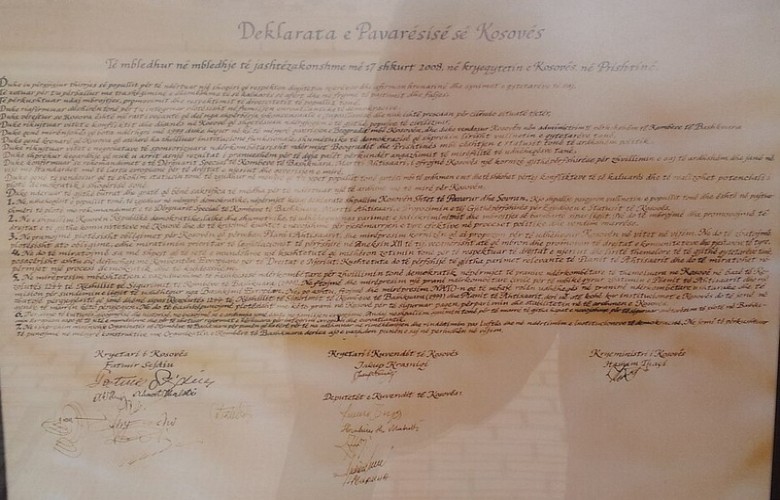
The United States was among the first countries to recognise Kosovo after it declared independence from Serbia on Feb. 17, 2008, nearly a decade after a war between Serbian forces and ethnic Albanian insurgents that ended following NATO’s air campaign against Yugoslav forces.
Ceremonies and security display
Main streets in Pristina were draped in the colours of the Kosovo Security Force (KSF) and Kosovo Police as troops and officers marched in a ceremony marking the anniversary. Large crowds gathered to watch what officials described as a display of professionalism rather than force.
President Vjosa Osmani, who serves as commander-in-chief, addressed the central ceremony near the NEWBORN monument, a symbol of Kosovo’s statehood first unveiled on the day of independence in 2008.
Speaking on Luan Haradinaj Street, named after a Kosovo Liberation Army (KLA) fighter, Osmani said the state was built on the sacrifice of those who resisted injustice. She also referred to the Heroinat memorial, dedicated to women who survived sexual violence during the 1998–99 war, saying the wounds of conflict “will never be forgotten” and that justice for thousands of victims remained a lasting obligation.
“Today stands before you an 18-year-old Republic born of sacrifice, strengthened by the spirit of its people,” Osmani said. “Kosovo is a free, sovereign state, determined to defend its liberty in every inch of its territory.”
Prime Minister Albin Kurti said the anniversary was a celebration but also a moment to confront what he called injustices, referring to the ongoing war crimes trials of former KLA leaders at a Hague-based court.
“We believe in justice, but we do not accept rewriting history,” Kurti said, describing the KLA’s war as a “just liberation struggle.” Several former leaders are being tried at the Kosovo Specialist Chambers on charges of war crimes and crimes against humanity, which they deny.
Kurti said defence spending had increased in recent years, with more than 450 million euros invested in modern equipment, vehicles, and communications systems. He said the number of KSF personnel had grown and that the government had launched the development of a defence industry, including a munitions factory.
He added that Kosovo had expanded strategic partnerships with the United States and NATO members and was strengthening regional security cooperation with Albania and Croatia.
International support
Austria’s embassy in Pristina also congratulated Kosovo, saying the partnership between the two countries was “strong and rooted in friendship.” Austria was among the early recognisers of Kosovo’s independence and remains a supporter of its Euro-Atlantic integration.
Albanian President Bajram Begaj, speaking at a solemn parliamentary session in Pristina, said leaders who guided Kosovo to freedom were now facing what he described as unjust accusations before an international court. He said Kosovo’s history could not be written without the names of former KLA leaders, including Hashim Thaci, Kadri Veseli, Jakup Krasniqi and Rexhep Selimi.
Begaj described the 18th anniversary as a sign of state maturity, calling Kosovo “an irreversible reality” and a sovereign state rooted in sacrifice and resilience.
Symbolism at NEWBORN
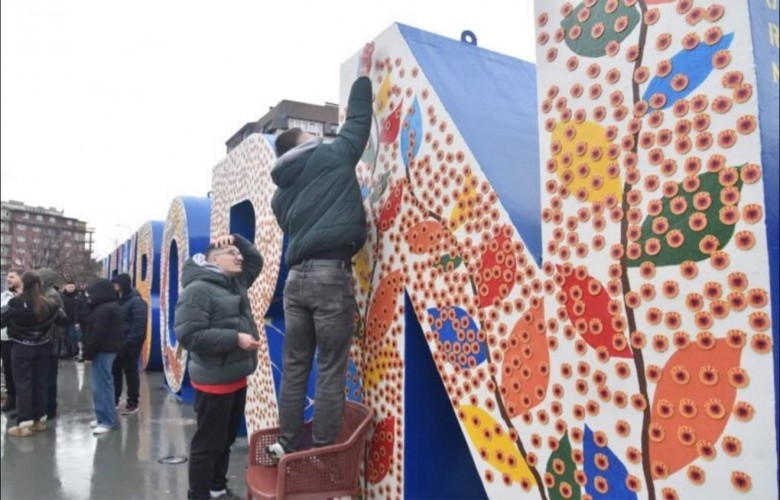
The NEWBORN monument once again became a focal point of the anniversary. Activists from the “Freedom Has a Name” platform covered it with 5,000 magnetic KLA emblems in a symbolic gesture of solidarity with former fighters on trial in The Hague. A day earlier, the monument had been temporarily enclosed with iron bars and the inscription “Kosovo in Prison.”
The monument’s creator, Fisnik Ismaili, said this year’s transformation centred on the theme of freedom and reflected Kosovo’s ties with the United States and its historical struggle for independence.
Kosovo has been recognised by more than 100 countries but not by Serbia, which still considers it part of its territory. The European Union has been facilitating a dialogue between Belgrade and Pristina aimed at normalising relations, a key condition for both sides’ EU aspirations.