


Albania has continued to lag behind regional peers in wage growth, with average salaries remaining significantly lower than in neighbouring countries despite steady economic expansion, according to recent data.
The average gross monthly wage in Albania reached around 84,000 lek ($860) in 2025, marking a 10.3% increase from the previous year, official statistics show. However, this remains the lowest level in the region, excluding Kosovo.
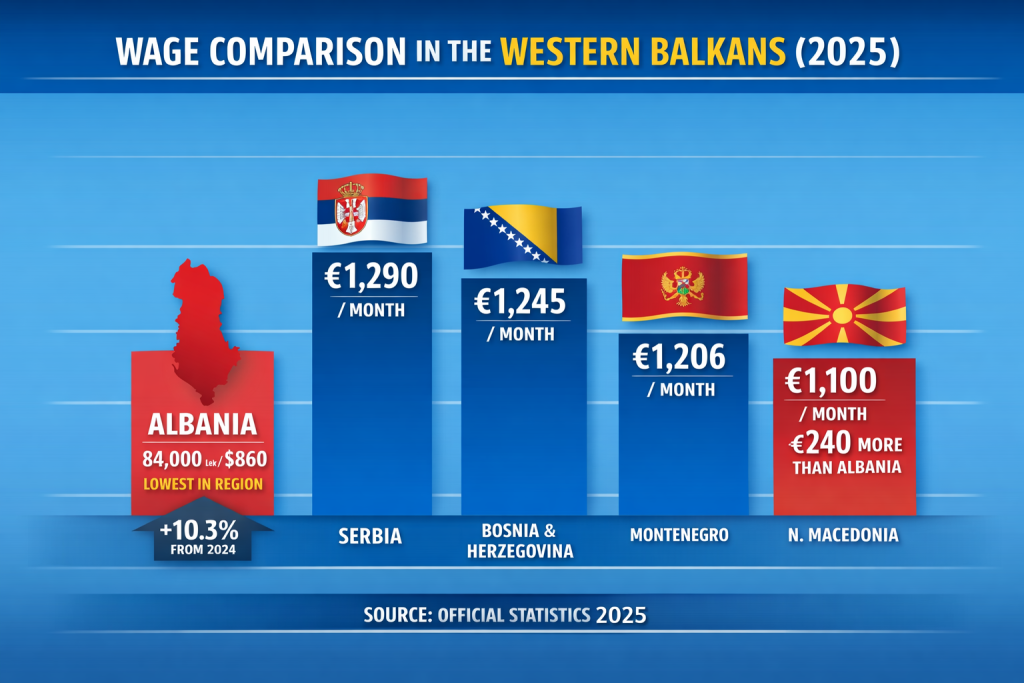
By comparison, Serbia recorded the highest average wage at about €1,290 per month, followed by Bosnia and Herzegovina at €1,245 and Montenegro at €1,206. North Macedonia’s average stood at roughly €1,100, still about €240 higher than in Albania.
Regional wages were between 30% and 50% higher than in Albania, highlighting a widening income gap despite similar or even lower growth rates in some neighbouring economies.
Analysts say Albania’s growth has been driven largely by public sector wage increases, construction and real estate activity, rather than productivity gains in higher-value industries.
“This has created a fragile model where macroeconomic indicators appear stable, but the benefits are not translating into higher living standards for citizens,” the report noted.
High consumer prices, particularly for food and fuel, combined with relatively low wages, have pushed some Albanian consumers to shop in neighbouring countries, reducing domestic consumption and impacting local businesses.
Economists warn that this trend could create a negative cycle of weaker internal demand, lower tax revenues and fewer opportunities for sustainable job creation.
Despite positive headline growth figures, the gap between economic performance and household purchasing power remains a key challenge for Albania’s long-term competitiveness and social stability.