


Albania was confronting extraordinary questions about its intelligence service, classified information and the relationship between former SHISH chief Vlora Hyseni and businessman Ergys Agasi. Then intimate videos involving composer Adrian Hila and prominent entertainers flooded social media. There is no evidence the second scandal was engineered to bury the first — but the speed with which Albania’s news agenda changed raises a broader question about how scandal, algorithms and voyeurism can overwhelm stories of greater institutional consequence.
TIRANA, Oct 3 (BalkanView) — In late September, Albania was gripped by a scandal reaching into the heart of the state.
Vlora Hyseni, the former head of the State Intelligence Service, or SHISH, was under house arrest as investigators examined suspicions involving classified information and her contacts with businessman Ergys Agasi.
Investigative material reported by Albanian media described hundreds of calls, messages, video communications, photographs and videos between Hyseni and Agasi over a period when he was wanted by authorities.
Hyseni has denied providing Agasi with classified state material.
The case raised questions extending far beyond the personal relationship between two individuals: about the integrity of Albania’s intelligence service, the handling of sensitive information and potentially national security.
Then Albania started talking about sex.
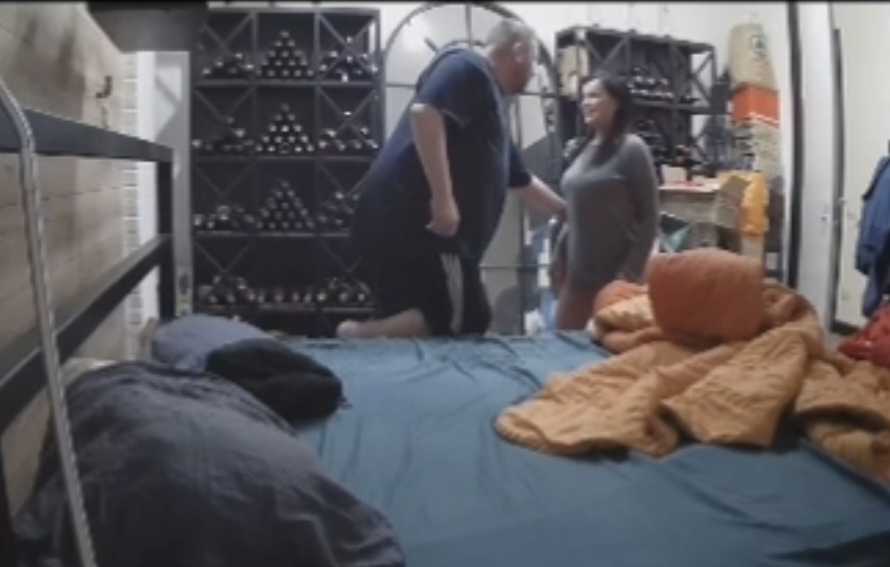
Within days, intimate videos involving prominent composer Adrian Hila and public figures were circulating online.
Celebrity names, allegations, speculation over hidden cameras and increasingly explicit descriptions spread rapidly through social networks and news portals.
The political-security scandal had suddenly acquired competition from something far more powerful in the digital attention economy: sex, celebrities and secretly recorded private lives.
Was that coincidence?
Or was Albania being deliberately distracted?
For now, there is no publicly established evidence connecting the release of the intimate videos with the Hyseni-Agasi investigation.
But the chronology provides a revealing case study of how quickly a serious institutional scandal can lose public attention when confronted by viral content.
A scandal reaching into Albania’s intelligence service
The Hyseni case was not an ordinary political controversy.
Hyseni had headed SHISH, the institution entrusted with some of Albania’s most sensitive intelligence and national-security information.
Media reports citing investigative material described extensive communications between Hyseni and Agasi.
According to investigative reporting, more than 500 communications — including calls, messages and video exchanges — were identified during the period examined by investigators.
Material resembling SHISH documents was also reported to have been discovered in a vehicle belonging to Agasi.
Hyseni has acknowledged communications with Agasi but denied giving him classified information.
She has also disputed allegations concerning the nature of their relationship.
Then, on Saturday, opposition leader Sali Berisha escalated the accusations further.
Berisha alleged that SHISH under Hyseni had conducted surveillance against opposition figures, government politicians and foreign diplomatic representatives.
He also claimed that he had received a photograph showing Hyseni entering Agasi’s villa.
Those are allegations by the opposition leader and have not been established as findings by investigators.
Their significance, however, illustrates the political stakes surrounding the affair.
If substantiated, questions about improper access to intelligence or misuse of surveillance capabilities would concern the functioning of one of Albania’s central security institutions and, potentially, its relationships with NATO partners.
Then came the videos
Around the end of September, an entirely different scandal began spreading online.
Intimate recordings involving Adrian Hila and other people, including well-known figures from Albania’s entertainment industry, circulated through social media and online outlets.
The story expanded rapidly.
Initial reports focused on who appeared in the recordings. Then came allegations about how many people were involved, whether they knew they were being recorded, who obtained the footage and who uploaded or redistributed it.
Some claims went far beyond what authorities had established.
Police subsequently questioned Hila.
According to his reported testimony, he acknowledged installing cameras at his property but said they had been installed for security after burglaries in the area.
He denied publishing the intimate material.
Authorities are investigating how the recordings were made, accessed and ultimately distributed.
One woman appearing in the material filed a complaint asking investigators to determine who circulated the footage.
Singer Eli Fara, whose name became publicly associated with the scandal, responded on Saturday by describing the publication of intimate material as a violation of her privacy.
She said private intimacy did not deprive a woman of her dignity and called on the public to stop distributing the footage.
The police investigation has therefore increasingly shifted the story away from celebrity gossip and towards potential violations of privacy and cybercrime.
The irresistible economics of scandal
Yet by then the intimate videos had become an enormous media event.
The mechanism is familiar across digital journalism.
A national-security investigation requires readers to understand institutions, legal proceedings, classified information and relationships between state officials.
A celebrity sex scandal requires almost no background knowledge.
It is immediate, emotional and highly visual.
Every new name potentially produces another headline. Every rumour generates another social-media discussion. Every reaction can become another article.
That creates an attention multiplier which conventional political reporting struggles to match.
The Hyseni-Agasi case asks the audience to consider how Albania’s intelligence system works.
The Hila story asks: who is in the next video?
In the algorithmic economy, the second question has an obvious advantage.
Defocusing — or simply the internet doing what it does?
That does not prove manipulation.
For the Hila affair to be described responsibly as an organised attempt to divert attention from Hyseni and Agasi, evidence would be needed linking the timing or distribution of the recordings to people with an interest in suppressing coverage of the intelligence investigation.
No such link has been publicly established.
The two cases also have their own independent investigative trajectories.
The Hyseni case predates the intimate-video scandal and remains subject to judicial proceedings.
The Hila case has generated its own police investigation into the recording and distribution of private material.
It is therefore possible that their collision in the news cycle is simply that — a collision.
But deliberate coordination is not necessary for defocusing to occur.
A story can push another story from public attention without anyone centrally organising the process.
Social-media algorithms reward engagement. News organisations follow audiences. Audiences click on celebrity scandals. Other outlets then publish competing versions, creating a feedback loop in which the most sensational subject occupies ever more space.
The result can resemble an organised diversion even when no one organised it.
Two scandals, very different consequences
That is what makes the contrast between these two Albanian stories particularly revealing.
One concerns private sexual behaviour between adults and the potentially unlawful recording or distribution of intimate material.
The people whose privacy was violated may themselves be victims, irrespective of their celebrity status or private relationships.
The other concerns allegations involving a former head of Albania’s intelligence service and a businessman caught up in a criminal investigation.
The institutional consequences are fundamentally different.
One raises questions about privacy, consent and cybercrime.
The other raises questions about state institutions, classified information and national security.
Yet the volume of media attention does not necessarily correspond to the scale of the public interest.
Sexual content has an enormous competitive advantage over intelligence documents.
The unanswered question: who released the recordings?
There is one question that could change that assessment.
Who obtained the Hila recordings and who first released them?
That remains central to the police investigation.
Hila has denied publishing them and has reportedly suggested that his camera system may have been compromised.
Journalist Elton Tozaj, who helped bring the material into Albania’s public media space, has made statements about receiving and circulating information about the recordings.
Investigators are trying to reconstruct how the footage travelled from a private recording system into the public domain.
Until that chain is established, theories about the motive behind the leak remain theories.
If investigators eventually establish that someone deliberately released the recordings at a particular moment to manipulate the political news cycle, the story would change dramatically.
At present, the available evidence does not establish that.