


Greece closed 2025 with strong economic and diplomatic gains in Europe, but the year was also marked by social unrest, natural disasters and corruption scandals that tested the government’s narrative of stability.
One of the most serious challenges came early in the year, when persistent seismic activity struck the Aegean island of Santorini and nearby Cyclades. More than 12,800 earthquakes were recorded from February onwards, later linked by scientists to a magmatic intrusion beneath the seabed. The tremors forced authorities to declare a state of emergency, evacuate more than 11,000 residents and tourists and suspend early cruise arrivals, dealing a blow to tourism.
During the summer, Greece faced another environmental crisis as wildfires tore through parts of Chios. Fanned by strong winds and extreme heat, the fires burned around 6,200 hectares of forest and farmland, highlighting the growing impact of climate change in the eastern Mediterranean.
Politically, Prime Minister Kyriakos Mitsotakis’ New Democracy party remained dominant in opinion polls but faced erosion of public support amid rising living costs, lingering anger over the 2023 Tempi rail disaster and corruption allegations at OPEKEPE, the agency responsible for agricultural subsidies.
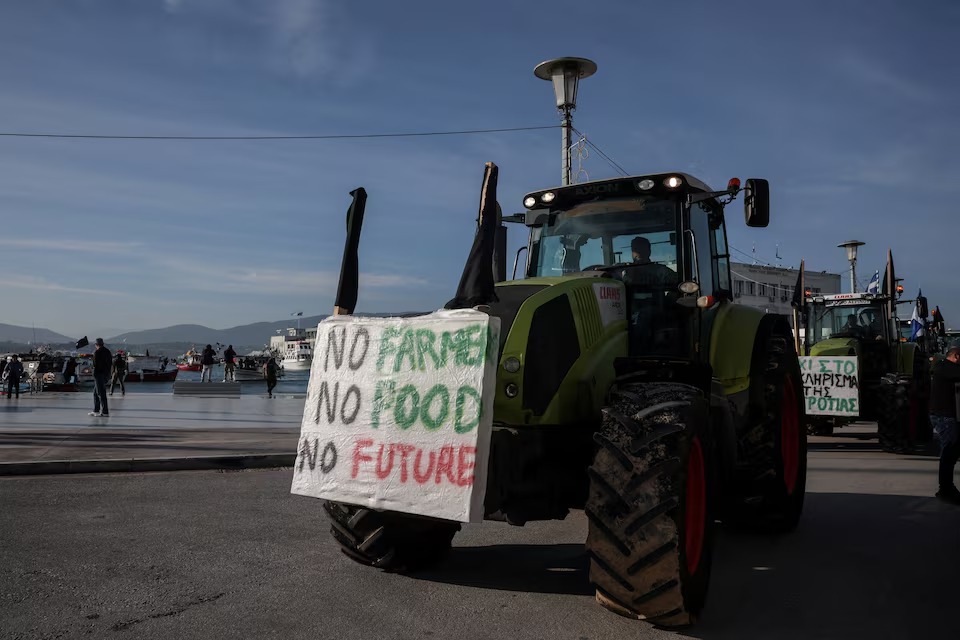
Public discontent peaked in February with mass rallies across the country over the Tempi tragedy, while late 2025 saw the most intense farmer protests in decades. Thousands of tractors blocked major highways, and demonstrators disrupted transport hubs after investigations by the European Public Prosecutor’s Office uncovered more than $23 million in alleged fraud at OPEKEPE, delaying EU subsidy payments to tens of thousands of farmers.
Despite domestic pressures, Greece posted solid economic performance. The economy grew by 2.1% in 2025, unemployment fell to 8.1% – its lowest level since 2009 – and the government remained on track for a primary budget surplus of about 3.6% of GDP. Public debt continued to decline, with the debt-to-GDP ratio projected to fall to about 146.7% by year-end, down from over 200% at its peak.
In a symbolic boost to Greece’s standing in Europe, Finance Minister Kyriakos Pierrakakis was elected president of the Eurogroup in December, a move widely seen as recognition of the country’s fiscal turnaround after years of crisis.
Athens also strengthened its role as a regional energy and security hub. Greece signed a major offshore energy agreement with ExxonMobil in the Ionian Sea, brought the Alexandroupolis LNG terminal fully online and expanded renewable energy capacity. On defence, it advanced a €25 billion modernisation programme, receiving its first Belharra frigate and completing deliveries of Rafale fighter jets.
In September, the arrival of Kimberly Guilfoyle as the new U.S. ambassador to Greece signalled a shift toward a more security- and energy-focused relationship with Washington, officials said.
As Greece heads into 2026, analysts say the challenge for the government will be to balance its economic and diplomatic momentum with mounting social pressures over living costs, accountability and climate resilience.