


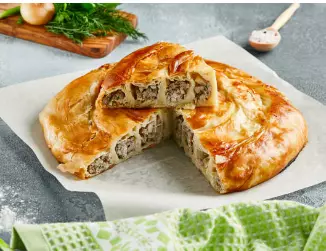
From Kosovo-style burek to Bosnian pastries and Balkan desserts, a growing number of bakeries are bringing the flavours of Southeast Europe to German cities. The trend reflects changing eating habits, the entrepreneurial ambitions of Balkan migrant families and Germany’s increasingly multicultural identity.
BERLIN, Oct. 11 (BalkanView) — Balkan bakeries are becoming an increasingly familiar sight across Germany, introducing burek, baklava, krempita and other Southeast European specialities to customers well beyond the region’s diaspora communities.
The expansion reflects changing German eating habits, the growing visibility of Balkan culture and opportunities created as traditional bakeries struggle with rising operating costs and labour shortages, according to industry representatives and researchers interviewed by German media DW and DPA.
Although no official statistics track the number of Balkan bakeries operating in Germany, representatives of the country’s baking industry say their presence is growing, including in smaller towns outside major urban centres.
From Kosovo to Ravensburg: A family tradition becomes a business
In Ravensburg, a town in southern Germany, 42-year-old Imrane Baftiu has turned her family’s Balkan heritage into a business.
Her parents migrated to Germany from Kosovo as guest workers, part of the wider labour migration that helped shape Germany’s post-war economy.
Baftiu opened Balkan Bakery in late July, offering cheese- and spinach-filled burek, breads, creamy desserts, grilled ćevapčići and other specialities from across Southeast Europe.
Her ambition extends beyond selling food.
“My goal was to create a place where people feel comfortable,” she told Deutsche Welle, describing the warmth and hospitality she associates with her family’s place of origin.
Rather than limiting her menu to Kosovo cuisine, Baftiu offers products associated with several Balkan countries, alongside German bakery favourites.
The approach is designed to attract both customers seeking familiar tastes from home and Germans discovering the region’s food traditions.
According to Baftiu, customer interest has been encouraging since the bakery opened.
Why Balkan bakeries are expanding
Frank Sauter, a representative of the bakers’ association in the German state of Baden-Württemberg, says the industry has noticed an increasing number of Balkan bakeries.
Their expansion comes as Germany’s traditional bakery sector faces structural challenges.
Rising production costs, staff shortages and changing consumer habits have put pressure on established businesses, while vacant commercial premises in town centres have created opportunities for new operators.
Gunter Hirschfelder, a cultural studies professor at the University of Regensburg, sees the trend as part of a broader transformation of German eating habits.
Traditional large meals are gradually giving way to smaller meals, snacks and food that can be eaten quickly.
Balkan bakeries are well positioned to serve that demand.
Their products occupy a space between conventional baked goods and fast food, offering customers pastries and savoury dishes that can function as either a snack or a complete meal.
This combination allows them to compete in a market where convenience has become increasingly important.
The Balkans are no longer unfamiliar to German consumers
The growth of Balkan bakeries also reflects changing perceptions of Southeast Europe.
For decades, the Balkans were often associated in German public debate with political instability, conflict and migration.
Today, the region is increasingly familiar to German consumers through tourism, business connections and personal relationships.
Croatia remains a major holiday destination, while cities such as Sarajevo and Belgrade attract visitors and Albania is gaining attention as a tourism market.
At the same time, generations of people with roots in the former Yugoslavia, Romania and Bulgaria have established their lives in Germany.
Their children and grandchildren are increasingly active in business, including food services and hospitality.
Hirschfelder argues that these developments have made Balkan cuisine more familiar and accessible.
For many German customers, burek or baklava is no longer an unfamiliar foreign speciality but something associated with holidays, friends, colleagues or family connections.
Competition for traditional German bakeries?
The growing number of Balkan bakeries raises questions about their impact on Germany’s traditional baking industry.
Sauter acknowledges that new competitors can attract customers who might otherwise visit established bakeries.
However, he does not regard them as an existential threat.
Traditional German bakeries often offer a wider selection of breads and conventional cakes, while Balkan businesses tend to concentrate on distinctive savoury pastries, desserts and prepared foods.
Both also face similar pressures from labour, energy and ingredient costs.
Germany’s Central Association of the Bakery Trade believes the two business models can coexist.
A spokesperson said the growing diversity of bakery products reflects Germany’s increasingly international society.
As people with different culinary traditions settle in the country, demand grows for foods that connect them to their family backgrounds.
More than a business: A new generation of Balkan entrepreneurs
The expansion of Balkan bakeries illustrates a broader shift within Germany’s Southeast European communities.
Earlier generations of migrants often entered Germany as industrial or manual workers.
Their descendants are increasingly establishing businesses that draw on both their cultural heritage and their experience of German society.
Food offers a particularly visible example of that transition.
A bakery can serve as a meeting place for diaspora communities while simultaneously introducing their traditions to a wider public.
Baftiu’s business in Ravensburg reflects that combination.
Alongside Balkan pastries and desserts, she offers wholegrain products and pretzel-style baked goods associated with German baking traditions.
Her aim is to create a place where customers from different backgrounds can find something familiar.
A changing German food landscape
The spread of Balkan bakeries does not necessarily signal the decline of traditional German baking.
Instead, it points to a market adapting to changing demographics, consumer preferences and the country’s increasingly international character.
For Balkan communities, the businesses preserve culinary traditions while creating new economic opportunities.
For German consumers, they expand the range of affordable, convenient meals and baked goods available in everyday life.
And for Germany’s food industry, the trend demonstrates how migration, entrepreneurship and cultural exchange can reshape even long-established culinary traditions.
From Berlin to smaller southern German towns, burek is increasingly becoming part of Germany’s everyday food culture.